All of Us are Hungry

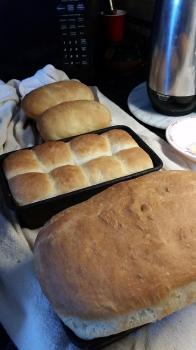
bread

All of Us Are Hungry by Marcia Lee Laycock

I grinned as the commercial advertisement began. I’d seen variations of it many times on TV. They always involve well-known celebrities, and the scenario is the same. I especially liked the one in which actor Robin Williams appears in the middle of a football huddle and tells the players to “get out there and make balloon animals” and “kill them with kindness.” Then someone hands him a Snickers™ chocolate bar. When he takes a bite he turns back into the real football coach. I also like the one in which Mr. Bean lands in trouble with a bunch of Ninja Warriors until he eats the chocolate bar and becomes one of them again. The tag line is always the same: ‘You’re not you when you’re hungry.’

The first time I saw one of these commercials I thought of a time during my first pregnancy. I hadn’t had much for breakfast one Sunday morning and by the time our church service was over, all I could think about was the fact that I needed to put something in my stomach. My husband and I went to a local restaurant and ordered quickly. Then he began talking about our finances. I tried in vain to follow the conversation, to no avail. Finally, I said, “I can’t wrap my brain around anything, especially our finances, until I’ve had something to eat!” There have been occasions since that time when my husband has jokingly said, “I think you need a Snickers™ bar.”

When you get right down to it, we are all hungry for the same things – love, acceptance, fulfillment. None of us will feel that we are able to live up to our true potential until we feel that those longings have been satisfied.

This has application in our spiritual lives as well. In one of his recent sermons my husband put it like this: “You can’t know yourself until you know Jesus.” It is only by getting to know Jesus that we begin to understand who we truly are as His dearly loved children. None of us can be our true selves until we are filled with the Spirit of Christ. Then and only then are we free to become our true selves, a being created in His image. Like the various characters in that TV commercial, it is by taking in, ‘eating’ His word that we grow in that understanding. Psalm 34:8 says, “Oh taste and see that the Lord is good; Blessed is the man who trusts in Him!”

Wandering around in a state of constant hunger is neither good for our physical nor spiritual selves. We need to be fed. We have been provided with a bountiful banquet of spiritual food that will sustain us. All we have to do is open a Bible and read.

Been There, Done That, Burnt the Tshirt

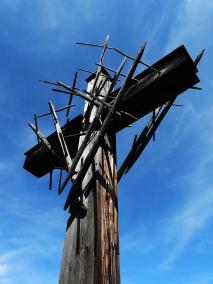
The Cross

My daughter’s eyes glistened with tears that were about to spill over. “I just feel like I’m never good enough for you!” She blurted.

My husband had just been chastising her for her messy room, but those words stung him to the heart. He gathered Katie in his arms and assured her that he still loved her, would always love her, no matter what. Then he helped her clean up her room.

Many of us feel that we aren’t good enough. The thought may come when we fail in some way, or when we see “friends” go off together, leaving us alone, or when we are passed over for a promotion at work or an award we felt we deserved. There are many circumstances in life that make our heads drop and our shoulders slump as our self esteem sinks to new depths. These feelings can lead to frustration, anger and even depression. The pressure to be perfect is self-defeating. You know you can’t do it. You know you never will. So what’s the point in even trying?

But, the good news is, as a famous theologian once said, God knows us best yet loves us most. He knows all our failings and weaknesses, all our bad motivations and self-serving decisions, yet He still, as my husband did with our daughter that day, wraps us in His arms and tells us he loves us, no matter what.

He can do that because, when we acknowledge Him as our Saviour and Lord we are able to receive His forgiveness. Then He wipes away all that is flawed and ugly in our lives. He took all of it away the day he was nailed to a cross in a faraway place called Palestine, over 2,000 years ago. In the moment we accept the forgiveness He offers us through that ultimate sacrifice, He clothes us in His righteousness. We become holy, not because of what we do, but because of what He has done. That’s why he was able to tell that thief on the cross beside Him that He would see Him in Paradise that day. The man was forgiven because of his faith in the One whose sacrifice tore the curtain in the temple and made the very ground tremble.

Once we grasp that concept, the self-deprecating feelings of never being good enough fade away. When we understand the depth of His love none of our failings can defeat us. When we know we are loved and accepted we are able to lift our heads and straighten our shoulders. We are good enough for God. Nothing else matters.

Jesus didn’t die for those who were already perfect and righteous. He died for the ungodly. He died for you and me.

“But God demonstrates His own love toward us, in that while we were still sinners, Christ died for us” (Romans 5:8).


What’s Holding You Back?

City on Fire

I glanced at my cell phone, pleased to see it was our youngest daughter. “I need some advice,” she said.   My heart fluttered just a bit as I put the phone on speaker so my husband could listen too. My fears were quickly dispelled when she said she’d been offered another job, in another city. We listened as she explained the situation, giving us the pros and cons to leaving or staying in her current position.

“It’s a good opportunity,” she said.

“But?” My husband responded.

“But I like where I am now, like the people, like my church, like my friends.”

Those were all good and valid reasons to keep her there. “But what do you sense God saying?” he asked.

My daughter was quiet for a moment. “I think He wants me to stay,” she said. “So I guess it’s a no brainer. I’m staying put.”

There’s a story in the Bible, in Genesis 18, about a family that had to decide weather to leave or stay.  It’s a well known story about the destruction of a city and the warning God gave to that family. He sent three angels to tell them to leave. Some of them refused to go. Lot and his wife and two daughters left only when the angels took them by the hand and led them out of the city.

It made me wonder why they hesitated. It’s hard to know what was in their minds, but I’m thinking their prosperity in that place was probably a big factor. Lot and his family had become comfortable where they were, in spite of the fact that the city was so full of evil God wanted to destroy it.  

That begs another question. How could a “righteous man” be comfortable in such a place? No doubt Lot’s life was full of testing and compromise. You can’t live in the midst of evil and not be affected by it. Yet he was reluctant to leave. Was it fear of the unknown? Was it doubt that God would really destroy the city? Or doubt that He would really take care of them if they left? Or was it simply that he liked where he was too much to leave.

It’s a frightening thing to think that we would like living in a place of sin but sadly, we all do. We like our “momentary pleasures.” We like our secret fantasies and those things that taste sweet in our mouths. We like our sin too much to leave it.

But God is faithful. He will lead us out of it, if we let Him. Staying where we are will lead to death – the death of spiritual life. Moving forward in obedience, in repentance, is the only thing that will lead to life.

What’s holding you back?

“By faith Abraham, when called to go to a place he would later receive as his inheritance, obeyed and went, even though he did not know where he was going” (Hebrews 11:8).

I’m Sorry

Maybe it’s because the winter has been hanging on, the spring has been long in coming, and the fact that the blizzard on Good Friday prevented my girls from all being home for Easter, that I’ve slumped into a bit of a pity party lately.

To be honest, that party has been dragging on too, like this winter. I recently sent out a newsletter to twenty-some wonderful people who agreed to pray for me and my writing/speaking ministry and I just whined and whined. The discouragements have gotten the better of me lately.

I was in the midst of my ‘poor me’ thought processes the other day, when we skyped with the refugee family we are hoping to sponsor. They looked and sounded like they’ve been through a long winter too. But they’re in Bangkok. Living in a 12 x 14 foot room with three kids who can’t go outside for fear of all kinds of evil. No, there’s no winter in Bangkok. Just tyrants and brutal police and overcrowded detention centres and millions – yes, millions – of refugees who can’t go home because it’s worse there.

I’ve been on the edge of tears for weeks, for my own selfish reasons, but when this lovely, intelligent, gentle soul leaned forward and said quietly, “Please, we beg you, if something happens to us, please, please, take care of our children…” my breath caught in my throat and my silent groans, for once, were not for myself.

So I need to say I’m sorry. To you who have prayed for me, to you who tried to make me smile and you who have wondered why I haven’t, to all those whose suffering is real and unimaginable, and most of all to my God.

Forgive me.

I will try to do better in the days ahead.

Love Transforms, Love Demands

heartredwhite

Do you remember your first love?

Picture a sixteen-year-old girl. She’s walking home from school, her shoulders hunched, her eyes on the ground. She’s wearing dark, somber clothing. Her hair often goes unwashed. She rarely makes eye contact with anyone and doesn’t smile much. She doesn’t have many friends.

Fast forward four years. That same girl is wearing a flowing floral dress. Her head is high and her eyes sparkle. Her hair flows out behind her, gleaming in the sun as she runs across her neighbour’s lawn. He hardly recognizes her. “You’re in love,” he says. She laughs and admits that it’s true. And it has made all the difference.

Love does that. It transforms us, it makes us believe that life is good and worth living. It makes us believe we are worthy of being loved. Yes, the discovery of love, especially God’s love, transforms us.

And the Demands of Love work to continue that transformation. Love is never easy. People tend to be complicated and their lives are often messy. Loving well inevitably leads to the need for sacrifice and a selflessness that most of us resist. But we are called to love unconditionally, as Christ loved us. We are called to give much, because much has been given to us. Luke chapter 7: 36 to 47 teaches us this truth. Jesus was invited to have dinner with a Pharisee. A woman who, the Bible tells us, had “lived a sinful life,” arrived with a jar of perfume, poured it on Jesus’ feet and washed them, wiping them with her hair.

When the Pharisee saw this, he said to himself, “If this man were a prophet, he would know who is touching him and what kind of woman she is—that she is a sinner.”

Then Jesus tells the Pharisee a story about two people who owed money to a moneylender. One owed him five hundred denarii, and the other fifty. Neither of them had the money to pay him back, so he forgave the debts of both.

“Now which of them will love him more?” Jesus asked. Of course, the Pharisee said the one who had the bigger debt forgiven.

Then Jesus said to him, “Do you see this woman? I came into your house. You did not give me any water for my feet, but she wet my feet with her tears and wiped them with her hair. You did not give me a kiss, but this woman, from the time I entered, has not stopped kissing my feet. You did not put oil on my head, but she has poured perfume on my feet. Therefore, I tell you, her many sins have been forgiven—as her great love has shown. But whoever has been forgiven little loves little” (v. 43-47).

Have you been forgiven a little or a lot? I think we can all agree that it is the latter. Yes, we have been forgiven much, we have been given much, and we are expected to forgive, to love well, and give much in return.

Love transforms but love also demands.


Moving Forward in Faith

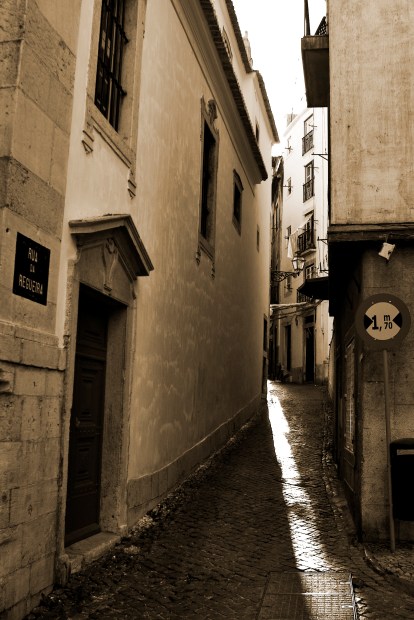
Lisbon street


I’ve never been much of a planner. When writing, I rarely outline the story. I do eventually make a timeline of sorts, once I get into it, but that’s about it. I love the excitement of not knowing where I’m going.

Both in writing and in life, this can have some interesting consequences. Many times I’ve ended up in places I would never have even thought about, let alone planned for. When I was travelling in Portugal many years ago, for instance, I was sitting by a fountain looking at a map when a young man approached and asked what I was looking for. I told him I wanted to go to the Castle of San Jorge. He offered to take me there. Yes, I did hesitate for a moment, but, being a rather naïve university student at the time, I agreed. The young man said he would take me a way that no tourists would normally go. That sounded exciting.

It wasn’t until I found myself in the oldest part of Lisbon, moving through streets so narrow the sun did not reach them, and surrounded by loitering men, dirty, raucous children and old women cooking on open braziers, that I realized perhaps I should have thought more carefully before saying yes. All was well in the end, we ascended a steep stone stairway and emerged into bright sunlight, at the gates of the castle.

It was only in looking back at that time that I realized what a risk I had taken. And I thank the Lord for His protection. I was of the mindset that I could take such risks because I believed God would protect me. Perhaps I should have remembered an old Irish proverb – “Trust God but don’t dance in a small boat!”

In life, as in writing, it is wise to be at least a little bit prudent in planning for the future. Yes, God will lead and direct and we should trust Him, but we should also realize that He gave us a mind with which to think, and plan. This doesn’t mean that we make plans and than ask God to bless them, but rather that we open our minds, our eyes and our ears to see and hear what God might be planning for us. If we are attentive, we will discover that He is leading and guiding in all aspects of our lives, confirming the direction in many ways.

When I get an idea, in life, or in writing, I let it sit for a while, watch for further direction and advice that might come from other believers, or from the reading of God’s word, or some other reliable source. Then I move forward in faith and confidence and see where He will take me.

“Now faith is confidence in what we hope for and assurance about what we do not see” (Hebrews 11:1).

As we move into 2018, why not discover the excitement of not knowing where you’re going?


Did Someone Say Christmas?

Did Someone Say ChristmasPhoto by Kimberley McClafflin

Yes, I’m looking forward to it. I love all that Christmas is, and symbolizes. I love the tree with its tinsel and baubles; I love the presents tucked under it; I love the lights that decorate it, and I love the food – turkey, mashed potatoes and dressing and of course, home made pumpkin pie. I most especially love the fact that my family will gather to enjoy all these things with me.

All of these things are wonderful, yet they can be a distraction from the real message of Christmas and I wondered how I could connect them in my mind with the truths of the season.

The tree, for instance. Not all Christmas trees have needles. One of the most beautiful Christmas trees I’ve ever seen was a spindly birch decorated with tiny white lights. That tree often reminds me that Christmas is not the same for all people – many have different traditions and ways of celebrating the birth of the Saviour, but the Christ came for all, no matter their nationality, language or ethnicity.

As I thought about the lights of Christmas, I remembered that Jesus called himself the Light of the world in John 8:12. Isaiah 60:1 tells us to “Arise, shine, for your light has come.” John calls Jesus the true light that gives light and Ephesians 5:8 tells us we ourselves are “now light in the Lord.”

And the Lord himself is our food, our nourishment. He said, “I am the bread of life. Whoever comes to me will never go hungry…” (John 6:35). “For the bread of God is the bread that comes down from heaven and gives life to the world” (John 6:33).

And what about the presents? We know Jesus was God’s gift to us, a gift that ‘keeps on giving’ because once we have sought his forgiveness and accepted the sacrifice he made for us, He lives in us. If you have not accepted Jesus as your brother, your friend, your saviour, you have left a priceless gift unopened. That gift is offered to us all at no cost. All you have to do is say yes. Christmas gives us all a new opportunity to celebrate the gift of God’s Son, the gift of the forgiveness He has offered to us.

The tree, the lights, the food, the presents. As I began to connect all the trappings of Christmas to the truths of Christmas, I realized that it’s just a matter of seeing what is really right in front of us at any given time, and connecting it to the mercy and love of Christ.

“For to us a child is born, to us a son is given … And he will be called Wonderful Counselor, Mighty God, Everlasting Father, Prince of Peace (Isaiah 9:6).

Front coverChristmas_Cover_for_Kindle  Love in the Room & Christmas are now available on Amazon or from the author. Email vinemarc@telus.net



The Light Within

Small Pond 2
Small Pond

The Light Within

The view outside my living room window was pretty – golden trees reflected in shimmering still water, a rippling line left now and then by the resident muskrat or slow-moving duck. The picture, though always changing, has become quite ordinary to me, but as I watched on this particular day, the morning light moved steadily across the pond and began to light the tall poplar trees as they waved golden leaves in the breeze. The light, that seemed to somehow come from within, turned the ordinary scene into a glorious show of colour.

I couldn’t help but think of a dear friend and brother in Christ, who had just passed away in a tragic accident. I remembered the day my husband led him to Christ, at an evening Bible study. They were down on their knees in a small apartment, surrounded by people he didn’t know, yet his desire to know God gave him courage to say, yes, he wanted to ask Jesus to be part of his life, right then and right there. The change in our friend Bruce became immediately obvious. He went from being an “okay guy” who was a little rough around the edges, to being one remarkable by his constant smile and eagerness to help anyone in need. That’s what he was doing on the day he died.

Like those trees outside my window, Bruce went from ordinary to extraordinary because the light of Christ had entered his life, making his witness glow from the inside out. During the days after his death, as the news spread, we constantly heard stories of how Bruce’s smile had brightened the day, or his helping hands had made a significant difference in someone’s life. He became a living example of the scripture that says, “By this everyone will know that you are my disciples, if you love one another” (John 13:35).

Bruce was not a rich man. He didn’t leave a lot behind, but he left a sure and wonderful legacy – the desire instilled in us all to be like him. Like Jesus himself, Bruce’s humility and genuine love for others left us pondering how we too might act in the same way. His sudden absence has left a hole in our lives but we know it will be filled again when, one day, we will see Bruce in all his glory, standing with the other saints beside his Saviour.

Bruce was a gift to us, to our church, to our community. His is a story that I am pleased to tell, as a writer of faith. I am encouraged that there are many more lives that glow from the inside out, lives whose stories are testaments of unwavering faith in Jesus Christ. I am blessed that I have been tasked to tell them, be they the stuff of real life, or the elements of fiction.

As a long-ago writer, Frederick M. Lehman, said in the old song, The Love of God –

“Could we with ink the ocean fill,

And were the skies of parchment made;

Were every stalk on earth a quill,

And every man a scribe by trade,

To write the love of God above

Would drain the oceans dry;

Nor could the scroll contain the whole,

Though stretched from sky to sky.”


A Message Just For One

An interviewer once asked Mother Theresa why she gave her time and energy, indeed her whole life, in the face of the millions in need. The misery was so pervasive, the interviewer purported, how could she possibly hope to change it? I found it fascinating that, at first, the tiny woman did not understand the question. Her focus was so fixed on the dignity of each human being that even if she could help only one, she believed it was worth giving her whole life. I believe that is the focus of Christ. He says it himself in the story of the lost sheep – the shepherd leaves those who are safe to rescue the one that is lost.

I once thought about what it would be like to be lost while walking through the jungle in Papua New Guinea. It made me shiver, even in that tropical heat, to think about trying to find my own way in that place. The jungle was thick with hidden dangers – vipers, poisonous spiders and centipedes, sago swamps full of thorns the size of stiletto knives and leaches almost as big. I had no idea which plants were edible and which were deadly. I had no idea where to find fresh water. I had no idea which of the many paths would lead to a safe place and which would lead deeper into danger. I did know that in only a few short hours darkness would descend and I didn’t even want to think about all the things that would come out then! But because I had a guide to lead me, that walk through the jungle was like a stroll in a park. Well, almost.

Consider one who is spiritually lost. He’s in a frightening place full of hidden dangers, unknown paths and lack of nourishing food and water. It’s a place of constant stress, with nowhere to turn, no way out. Then the guide shows up – suddenly there is someone to point out the pitfalls, someone to shine a light on the path, someone opening a door into a comfortable room with a feast spread out on the table. Imagine the sense of relief as the lost one follows the direction and accepts the hospitality of the rescuer. Imagine the peace.

As people of faith we too are like guides in a jungle full of dangers. We have the means within our hands, within our stories, within our lives, to lead others to a safe place, a place full of light and living water. Eugene Peterson has said, “We live in narrative, we live in story. Existence has a story shape to it.” And so, it is within story – our story, that love, nobility and truth live, waiting to be revealed and understood.

And even if only one makes it safely through the jungle of life because of something you have said, or shown them, or written, that is enough.


Lessons in an Art Gallery

Untitled- Emily Carr
Untitled by Emily Carr

There was a hush on the fourth floor of the Vancouver Art Gallery as we entered, almost a reverence, I thought. People meandered quietly through the halls and rooms, taking time to study the paintings on the walls and read the commentaries and quotes from the artist’s journals. As I joined them I was aware of my own sense of awe. Emily Carr was an artist I had admired since I was a child. Her work always made me pause, drew me in, made me aware of something beyond myself.

The quotes on the walls captured my attention as well. This woman, who is famous in my own country and beyond for her depiction of the west coast region of Canada, was a woman of faith, struggling to comprehend the greatest mystery there is – the deep, deep love of an all-encompassing God.

Emily Carr’s work depicts that struggle, that striving to faith, that longing to comprehend that which is unknown yet deeply sensed. The first quote visitors to the Vancouver Art Gallery saw as they entered the exhibit was “Art is Worship.” Ms. Carr worshipped with every stroke of her brush, the swirling movement in her work drawing the eye up toward the heavens. A painting labelled Untitled, one of my favourites, is especially strong. The artist’s love of creation and its creator shouts from the canvass.

Emily Carr saw the divine in the deep dark forests of British Columbia and in the work of others, especially some members of the Group of Seven who welcomed her as one of their own. She was dumbfounded, while at an exhibit of their work, to see one of Lawren Harris’s paintings, Mountain Forms, ignored even by a priest. “Surely he would understand,” Ms. Carr wrote in her journal, “Wouldn’t the spirituality of the thing appeal to one whose life was supposed to be given up to these things? He passed right by …”

I understand Ms. Carr’s frustration. So much that is redemptive in this world goes unnoticed at best, scorned and ridiculed, at worst. Yet those things that draw us all closer to our creator are enduring. Mountain Forms was recently auctioned for just over eleven million dollars.

As I wandered in that gallery that day I was not only stirred by how Emily Carr drew us to the Divine through her work but by the recognition that we can all do the same, whatever our field of endeavour. We have all been created to express praise and adoration through everything we do, whether we work in oils or with words, whether we sweep floors or design buildings, whether our work is recognized or ridiculed. “Whatever you do, work at it with all your heart, as working for the Lord, not for human masters … It is the Lord Christ you are serving” (Colossians 3:23,24).

I was also struck by the reality that Ms. Carr caused me to praise and worship without saying a word. There was no banner declaring “Jesus saves” scrawled across her paintings yet we are able to stand in the midst of those deep dark forests and worship with her. It made me wonder, does my art cause people to worship? Does it cause them to ponder the depth of God’s greatness and goodness? Does it glorify Him? Walking among Emily Carr’s paintings made me pray it may be so.