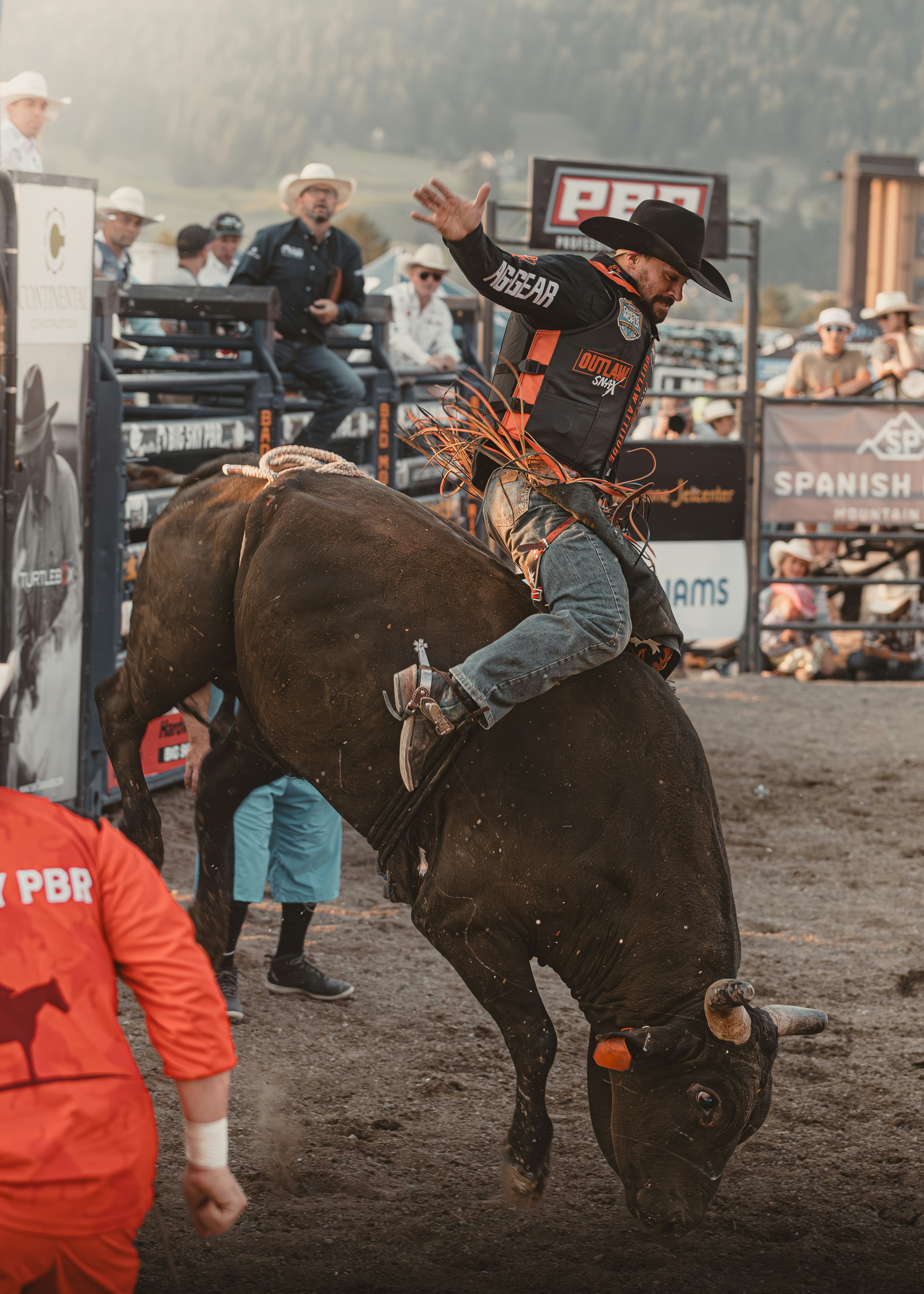
There’s tension in the air as the cowboy lowers himself into the shute. He knows he has drawn the biggest, meanest bull at the rodeo. The crowd knows it too. He hears the announcer tell them so. He tries not to listen, tries to concentrate on the details of getting ready to ride. He succeeds. Time stops. The bull erupts into the open arena and for those eight long seconds, all the cowboy’s years of training and practice fall into a pattern that has become second nature. At the end of eight seconds he’s a hero. He has done what few will attempt and landed without a scratch.
What makes a man think he can best a beast ten times his weight and strength? He believes he can do it because he has worked at developing the skills and he has paid his dues. The spectators haven’t seen all that has gone before. They aren’t aware of the scars, the broken bones, the cracked ribs, the gallons of lineament rubbed into swollen joints and torn muscles. The cowboy who has ridden an animal that could kill him has seen years of trial and error, years of being thrown off, years of watching and listening to other riders. By the time that cowboy lowers himself onto the biggest, meanest bull in the rodeo, he knows he has everything he needs to do it – the skill and the courage. That assurance can lead him to victory.
Every Christian has been given what is needed to overcome sin. There are no dues to pay, no injuries to suffer through. Someone else has done all that. Jesus paid the price for us. Once we have accepted that fact, our struggle is not how to overcome sin, but how to live as though we already have. The Apostle Paul wrote – “you have been given fullness in Christ, who is the head over every power and authority” (Colossians 2:10). He goes further in Romans 6:12-14 – “Therefore do not let sin reign in your mortal body so that you obey its evil desires … for sin shall not be your master, because you are not under law, but under grace.” Unlike that cowboy, we don’t rely on our own skill and courage. We rely on the grace and mercy of God.
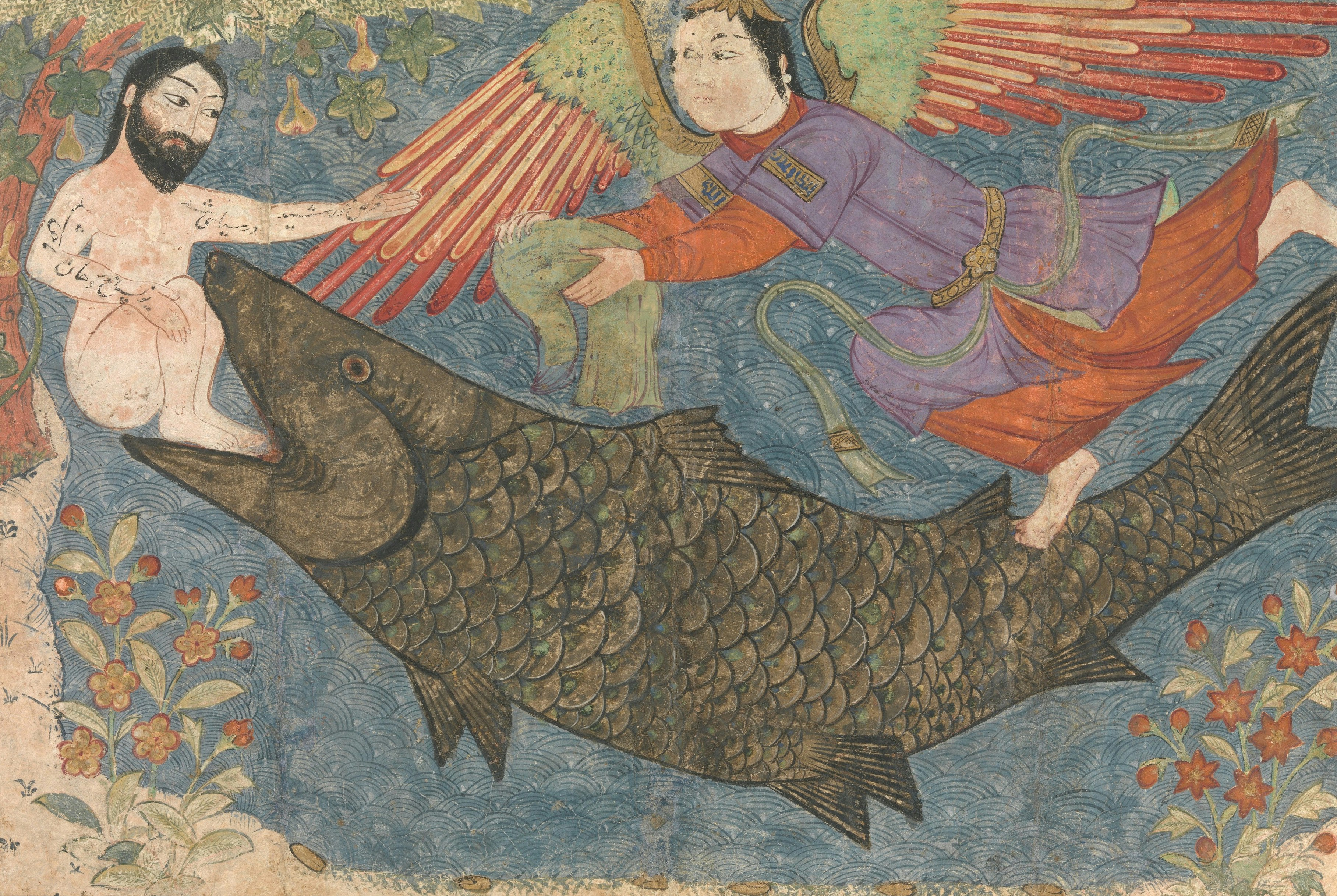
First of all, Mr. Albergotti, it was not a whale, it was “a great fish” (Jonah 1:17). And I don’t think Jonah did any of those frivolous things, just to pass the time. Well, perhaps he put notches in the ribs of the creature. Perhaps. But “Organize your calendar. Dream of the beach. Work on your reports?” I don’t think so.
I think Jonah had other things on his mind. Like, how long would God keep him there in that most uncomfortable place? And where was this fish taking him? Did he know he was on his way to Nineveh?
I think he pondered his foolishness. How could he have believed he could run from the almighty God? How could he have believed his disobedience would go unpunished?
He probably did “review each of (his) life’s ten million choices.” He probably realized many of them could have put him here sooner, if not for the grace and mercy of his God, or, perhaps, because of it. I think he prayed, petitioned that God for more of the same. He knew he couldn’t do what God called him to do without grace and mercy.
Jonah prayed a prayer of faith there, in the belly of that fish. He declared God’s faithfulness and knew he would once again worship in His temple. Jonah knew the story wasn’t over yet. He knew he would live; this was just beginning of the story.
But God had more to teach him, because Jonah was, indeed, a foolish man. He did not rejoice when he saw what God did in Nineveh. He was angry. He wanted those wicked people to perish in fire and brimstone.
So God gave him a shade plant and then took it away. When Jonah groaned and wanted God to end his life, God reminded Jonah that He was in control, it was He who created the people of Nineveh and He who created the plant. It was He who would control their destiny. Jonah had no agency in either case, other than to obey.
But God was merciful. He did not take Jonah’s life and though we do not know what happened to him after Nineveh it is safe to assume that God had more for him to do.
Perhaps Jonah finally learned the lesson God was trying to teach him. Perhaps obedience was a bit easier after the lessons he learned in Nineveh. Perhaps not. In either case, God did not give up on him.
God does not give up on any of us. That’s the most powerful lesson in the story of Jonah. Putting him in the belly of a fish was an act of love and grace and mercy. And we can be assured that all of that is poured out on us as well. “Grace, mercy and peace will be with us, from God the Father and from Jeus Christ the Father’s Son, I truth and love” (2 John 1:3).
****
Pre-order Flecks of Gold, my next book filled with stories, devotionals and poetry all about the Yukon.
If we had heard a weather forecast, we might have stayed home. It was only about 35 below when we headed to town, but by the time we came out of a meeting, close to midnight, it had dropped to minus 65. Our truck would not start. Neither would the other vehicles parked outside. As I watched from the warmth of the doorway, my husband and a few friends donned some unusual head gear and hovered over the one truck they thought might rise to the occasion.
Their head gear, hats woven of warm Alpaca wool, had tall peaks with tassles on the ends and long tapered ear flaps that bobbed with each step. They made the guys look a lot like Santa’s elves. None of them realized how comical they looked, as they scurried around the truck, trying to get it to start. Someone produced a propane torch to heat the oil pan. Someone else produced a tarp to cover the hood. Then we all huddled in the doorway, hoping for success. We cheered when the motor roared to life before catching on fire! As we crammed into the cab for the trip home, the guys left their hats on, still oblivious to how they looked.
We had only gone a few miles when we saw a faint light. It burned for a few moments, then died. We leaned forward as it appeared again, directly ahead. Our driver slowed down as we got closer. The dim light flashed one more time and we realized it was a truck in the middle of the road. All of us piled out as we pulled to the side to investigate. The truck door opened, and a young woman peered out. Her lips were blue, her bare hands, wrapped around a small kitten, were white with frostbite. She tried to swing her legs out but needed help. When she stood up, her feet, clad only in running shoes, wouldn’t move. As the men lifted her into our warm vehicle, I noticed she looked at them with an odd expression. It wasn’t until later we discovered she thought she was hallucinating. She didn’t expect to be rescued by a band of Santa’s elves!
Psalm 118:5 says – “In my distress I prayed to the Lord and the Lord answered me and rescued me.” Rescue. In the nick of time. If we hadn’t been on the road that night, that young woman would have died. I don’t know if she prayed, but, in desperate situations, most people do. Unfortunately, most of us don’t recognize we are in a desperate place when we are without God. We depend on things like trucks with heaters, refusing to believe they might break down in the worst places at the worst times. We think we are safe when in reality we are on the brink of disaster.
God is in the rescue business, and we all need to be rescued.
****
This story is one that will be included in my upcoming book Flecks of Gold, Yukon Stories
I’m very excited to let you all know that the Crowdfundr campaign for the book is now live. This book is a compilation of stories about my personal experiences in the Yukon, with a bit of poetry and fiction thrown in for flavour. The campaign will launch on my birthday, May 4th.
To be notified when it goes live just click the SUBSCRIBE button at the top of the crowdfundr page.
I’m excited about all the perks being offered, including some unique Yukon items.
Those who mourned most deeply had loved most deeply.
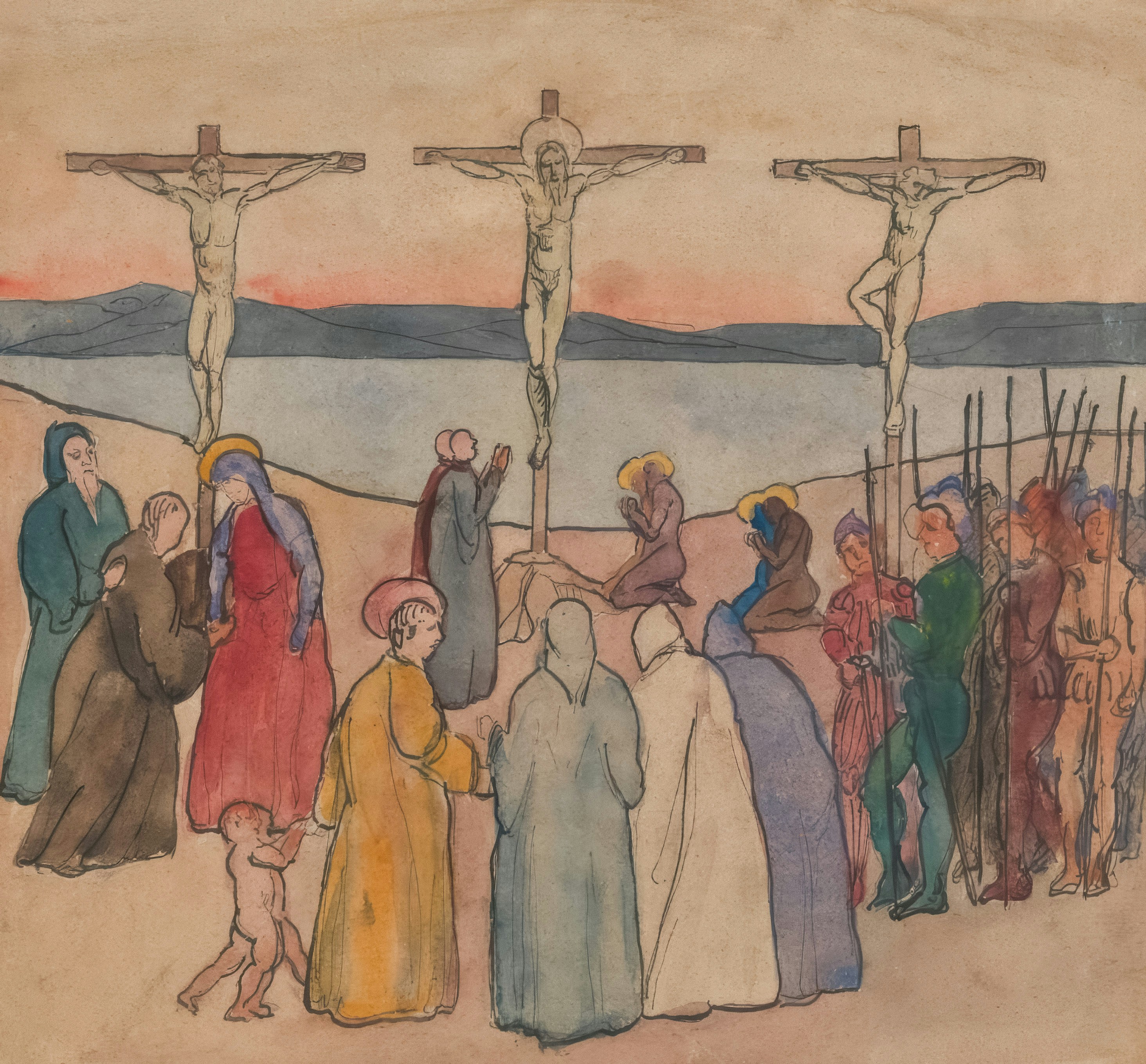
Not all the disciples attended the crucifixion. John was there, the one called “the most beloved,” and Mary Magdalene, the one freed from the torment of demons,
We can frown at the others, call them cowards, shame them for giving in to their fear. But would we do anything different? I fear I would not. I would not want to attend the execution of a man I had followed and honoured for three years, a man I believed was the one who would remove the oppressive yoke of the Romans from my neck and that of my family and friends. I don’t think I could bear it. My sorrow would have been, as I’m sure it was for those disciples, tangled up in fear and disappointment to such an extent that I would withdraw and hide, as they did.
So I have compassion for them. They didn’t understand. Perhaps there were things in their past that prevented them from being there to support Jesus in the midst of his tortuous death. Perhaps they had seen other friends crucified and just couldn’t face watching it again. We don’t know, so judging them puts us in the category of those who show no compassion, no empathy. And since it was Jesus Himself who modelled those behaviours, it would be good to take note and do the same.
Our church has recently started a program called grief share. We gather each week, watch a video about some aspect of grief and then talk about our own experiences. The group is varied, young, old, recently grieved and a couple whose loss was years ago.
It has been good for me to be there, though I have not recently been in that place of loss. Listening to those who have has infused compassion and empathy into me in a way I did not expect, in a way that has changed me. And I am grateful.
Jesus commands us to love in ways that are not always easy. Love your neighbours, even when they’re cranky, love your enemies even when they do despicable things like lie and slander those who are innocent.
There is only one way to obey such commands – rely on Him for the strength and wisdom to do so. Proverbs 3:5 tells us – Trust in the LORD with all your heart, and do not lean on your own understanding.
He will enable us when we open our hearts, minds and souls to His leading.
My father would tell me only one war story. He spent the first years of World War II in Canada, a clerk in a RCAF office. There’s a picture of him in uniform, brandishing a rifle, the Halifax harbour behind him. Then he was moved to England where he again worked at a desk. There’s a picture of him on a golf course in Ireland. Then the war was over, and my father was sent to Germany with the occupation forces. He found himself with the liberation army at the gates of Bergen-Belsen. It was at that point, after the allies had won and World War II was over, that my father’s war began.
He would never say what it was, specifically, that caused it to happen. Perhaps he looked too long into eyes glazed with hunger and shadowed with pain, eyes belonging to men who looked a hundred years old, ‘though they were in their twenties. Perhaps he could not stop staring at the piles of dead bodies, the bones and skulls, or perhaps he was required to record the numbers, the unfathomable numbers. Perhaps he could not bear the smiles of survivors who welcomed their deliverers in silence. He would never say what it was, but something that day, in that place, made my father’s mind stop. It stopped and could not go beyond the horror and the fear.
The fear put him in a psychiatric hospital. He was afraid to leave it, afraid even to go for a walk beyond the grounds. One day a nurse came with some clothes and told him to get dressed. Thinking they were taking him for a walk in the hospital gardens, he complied. The nurse returned and escorted him out the front gate. She locked it behind him and, without a word, left him there.
The familiar panic attack was immediate, but this time something else rang in my father’s mind. In the midst of his fear he became overwhelmed with the need to find a church. So he started walking. He found one of the huge gothic cathedrals so common in Europe. He stepped inside and sat down. Above the altar, high stained-glass windows glowed with light. As he stared, they began to move. My dad said he did not know how long he sat there watching, but the entire life of Christ flowed by before him, as though on a movie screen. When it was over, my father was no longer afraid. He returned to the hospital and told them it was time for him to go home.
My father’s war story is about a miracle, an event that healed his mind and his soul. In the midst of horror and fear, God was there. Isaiah said it well – “Surely God is my salvation; I will trust and not be afraid. The Lord, the Lord is my strength and my song; he has become my salvation” (Isaiah 12:2).
The men of Dawson City Gospel Chapel had just finished a prayer breakfast and were about to start work on the new church building. They were all anxious to get at it because the date of the dedication had been set and they were behind schedule. The pastor had prayed that morning for a couple more carpenters to help with the work.
They were about to begin when there was a knock on the door. The pastor answered and listened patiently to the man’s story. He and his son had been trying to leave town, heading for Alaska on their vacation. But every time they tried to drive up the long hill out of town their vehicle broke down. “I was told there’s someone here who is a good mechanic,” he said. “Could I get him to have a look?” The pastor invited him in and explained his situation to the other men. Then he turned to the man and asked his name. “Bud Carpenter,” the man responded. “And this is my son, Josh Carpenter.”
He was a little puzzled when the men started to laugh, until the pastor told him what he had just prayed a few moments before answering the knock on the door. Bud then laughed with them and explained that he was taking his son to Alaska as a graduation gift and they really had no firm time schedule. “I’m pretty good with a hammer. We’d be happy to help for a few days.” They stayed for a week. The mechanic looked at their vehicle and found nothing wrong with it. The work was finished on time and the pair continued on their way after the dedication celebration. Their car had no trouble climbing that hill.
I was thinking about that story the other day and thinking about how we are all like those Carpenters in a way. All of us are busily going on our way, with our own agendas and plans. But sometimes God throws a bit of a detour into the plan. We can react to it in two ways. We can fight it and keep on trying to climb that hill, or we can stop and listen for His voice to see if perhaps there is another plan in place.
For instance, a friend told me a story about going on a mission trip to India. The plans had been well made, the itinerary laid out and everything seemed in place. But when they arrived no-one met them. My friend said it was interesting to see how the group members handled it. Those from North America were stressed and some were angry. They wanted to call some one and get it all straightened out so they could get back on schedule. But there were two fellows from Africa who counselled a different way. They suggested the group wait and pray. So they slept in the train station that night and prayed.
The next day a young man arrived on a motorcycle. “I’ve been sent to get you,” he said. But he was not from the mission and had no idea why he was sent to get them. After some debate they decided to go with him and ended up having a tremendous time of ministry and growth in his village. Nothing was structured. Each day was a routine of waking up and praying to see what God wanted them to do. And each day they were blessed. They never did connect with the original group they were supposed to work with but they all knew they had done what God intended.
“Many are the plans in a man’s heart, but it is the Lord’s purpose that prevails.” Proverbs 19:21
Hello everyone! It’s a lovely spring day here in Southern Alberta. After a short dip back into snow, it’s warming up again, which makes the dog walking a lot easier! 🙂 I hope you’re enjoying fine weather wherever you are.
As you saw in my last post, Pond’rings, my writer’s memoir, was well launched on March 15th. If you have already purchased a copy, I thank you! If you enjoyed it, I have a favour to ask. Please post a review. 🙂
Posting a review on Amazon and Goodreads is a wonderful way to support your favourite writers. The Reviews draw Amazon’s attention and then they begin to recommend the book. Without reviews, the book goes unnoticed. It takes at least 25 reviews, or more (some say at least 50), before this happens. So as you see, I have a ways to go!
To make it a bit easier, I’ve attached a link to the cover image. Just click on it and it should take you directly to the form to fill out a review. If that doesn’t work, simply scroll down to where the reviews are listed and you’ll see a link or button that says, Write a Review.
Here are a couple of reviews that have already been posted on Amazon –
Laycock writes beautifully. In this writers’ memoir, she chronicles her journey as a Christian who has struggled with self-doubt and discouragement in her calling to write. Rather than providing pat answers or perscriptions, she shows how God lead her and accomplished His purposes for her work, ultimately allowing God to touch many lives with her work. Her memoir serves well as a devlotional for writers who sense God call to write Christian fiction and non-fiction.
“Pond’rings” details the author’s writing journey from childhood when she chronicled her thoughts in a journal to becoming a multi-published author whose books bless readers far and wide. Her story is a beautiful tapestry that shows how God has shaped and refined her message over time and through life experiences and how He has led her and opened doors for her work. It’s a testimony, really, to His faithfulness and to the importance of following His lead and sovereignty. As a published author myself, I found this book inspirational and filled with wisdom not just for writers, but for all believers who struggle with self-doubt when God calls them to a task that seems too big. A must-read.
****
Thanks SO much for helping me spread the word about this little book. Please pray that God will use my words to encourge those who read it to draw closer to Him.
IN OTHER NEWS:
I tried to run my 5 Day Easter Devotional Writing Challenge, scheduled at the beginning of the month, but sadly I came down with a flu virus and could not continue the teaching. My wonderful publisher, Colleen McCubbin, filled in for me and the replays showed it was a wonderful time for all. I was able to jump back in for those who purchased the next level, the Devotional Cohort, and we had some wonderful discussion through the week, then shared what we had written during the final session. I love hearing from these writers. Their comments are always full of rich insight.
I’m looking forward to the next two teaching events coming up in May and June –
5 Day Fiction Camp – May 19 – 23, windup 24th
5 Day Poetry Camp – June 2 – 6, windup 7th
I’ll be sending out the links for those sessions soon. If you’d like to receive a personal notification just email me – vinemarc@telus.net
****
I so appreciate your interest in my work. As Easter approaches I wish you many epiphanies. Here’s a short devotional to ponder.
“I think I’m having an apostrophe!” The character, Smee, in the movie Hook, had his words a little mixed up. He meant to say he was having an epiphany. My old Webster’s Dictionary defines the word Epiphany as a religious feast, celebrated January 6, to commemorate the manifestation of Christ to the Gentiles, through the visitation of the Magi. A more modern dictionary goes on to say it is a “sudden manifestation or perception of the essential meaning of something.”
I think I’ve had an epiphany. In fact, I think I’ve had several in my life. No doubt you have too. They have happened to me at the most unusual of times, and at the most ordinary of times, but they always leave me with a sense that there is something beyond the surface of things, something eternal. They have been sparked by a manifestation of love, the touch of a husband’s hand on his disabled wife’s cheek, and by beauty, a moment when I saw something so exquisite it took my breath away. They have happened in times of unutterable sadness, at the deathbed of a loved one, and at times of intense joy, at the births of our children. They have happened in times of quiet contemplation at home as I’ve read the Word of God, and in a canoe, drifting alone on the Yukon River. These moments stop time. They cause our whirling world to come screeching to a halt. They are gifts from the hand of God. He cracks a window into the spiritual realm and allows us to peek through.
In these moments of deep understanding, God reveals something of Himself. We have a choice at that moment, to open our eyes and see, or to shrug and return to our everyday lives without being touched. If we choose the former, each epiphany is like a re-birth. It is a new start, a new day and each one can lead to a greater understanding of the ultimate in epiphanies – the resurrection.
There has never been, nor will there ever be, a day that caused time to stop and humankind to stand in awe, as the day Jesus stepped out of his own grave, reborn, renewed, and resurrected. There was no cracking of a window on that day. The door was flung wide and all were invited, not just to have a peek, but to enter in. Jesus was the manifestation of God and proved it on that first Easter day.
Epiphanies lead us to Easter. We all have a choice, to pause and be captivated by the enormity of that true epiphany, or shrug our shoulders and go on with life as we know it. Christ resurrected is the manifestation of the essential meaning of life, not as we know it, but as it truly is. Will you step through the door He has opened, or turn away?
When I told my mother that my husband was going to be a pastor she said, “Well, you’ll never be rich. She was right. But she was also wrong. When we sold the log house we’d built on the banks of the Klondike River near Dawson City Yukon, to attend Bible College in Saskatchewan, I thought, well, we’ll probably never own another home. And I thought our travelling days were over. God had other plans.
I love travelling. The ability to go off to foreign places has been one of God’s gifts to me over the years, in spite of our lack of finances and my lack of faith. My first adventure came during university when a friend urged me to put my name on the list for a trip to Spain being organized by the faculty of Geology. I balked at first. “Impossible. There’s no way,” I told her. It was almost the end of the year and I was almost broke. But when extra seats opened up and I was offered one, the pieces fell into place and off I went. Travelling around Spain, Portugal, France and Switzerland opened my eyes to the wonders of Europe and gave me a thirst for more.
Then I found myself in the Yukon and travel to anywhere was expensive. “But everyone has to have a honeymoon,” my new husband said, so off we went to California, arriving in San Francisco on Chinese New Year. Now that was a cross cultural experience!
Not long after, we made the leap of faith, landed in Bible College on the flat Canadian prairie and then moved one province to the west to begin ministry in our first church. I thought our travelling days were definitely over. But God had more in store for us.
After seven years it was time for a year-long sabbatical. “Papua New Guinea,” a missions expert advised us, “That will be a good place for you to go.” I wasn’t even sure where PNG was, and I wasn’t sure I could take the heat of a tropical climate, but God made the doors open and before I could voice all the ‘what ifs’ we were there. Life in the third world was both challenging and exhilarating as God opened our eyes to the need to trust Him every moment of the day. Coming home was harder than going, but slowly God worked on our hearts and minds and souls and we adjusted once again to life in Canada.
We received a call from the head of our church’s association one day. “How would you like to go to Israel?” Impossible! But he explained it was sponsored by the Israeli government and a tourism organization, which made the price too good to refuse. Walking the land of the Bible was a profound experience.
Then seven years later God moved us from our comfort zone, where we’d pastored for 20 years, to begin a new work in a small community. My husband’s salary dropped into the bottom of the barrel once more. And once again, I thought our travelling days were over.
But God had another plan. It included eighteen months of cancer treatments and a slow recovery. “Take your wife somewhere warm,” the doctor said. Impossible, I thought, but before I could list all the reasons why not, we were walking on the warm sands of the Caribbean.
A cruise was not something I had ever envisioned in my future but when my husband’s mother turned 90 she decided she wanted to celebrate with the whole family – on a cruise ship off the coast of Alaska. All 23 of us wandered around the ship wearing pink Tshirts that said, ‘Betty’s Birthday Bash.’ It was indeed! When she turned 92 there was one more trip on Betty’s bucket list – the long cruise to Hawaii, and she wanted me to go with her. I had to think about that for just a second or two.
Last year my oldest daughter turned 40. She decided she wanted to celebrate in Italy and convinced a friend to go with her. The friend had to back out at the last minute and when K said she was going alone, I voiced my objections. “Then come with me,” she said. Impossible, I thought. But I remembered my art history professor telling me to put seeing Michaelangelo’s David on the top of my bucket list. Apparently, God thought that was a good idea. The David was amazing. St. Peter’s Bassilica was a highlight as a booming voice chanted, “Laudate Dominum, Laudate Dominum, Laudate Dominum.” Praise God, Praise God, Praise God. Indeed!
Spain, Portugal, France, Switzerland, the Yukon, Alaska, Papua New Guinea, the Caribbean, Hawaii, Itady. Not bad for someone who thought she’d never leave the borders of her own province, let alone her country.
Yes, it’s been a joy to see it all, to experience so much. But even more, it’s been a blessing to see what God wanted to teach us through it all. There have been many lessons about trust, about His provision, about His generosity and exceptional love. With every adventure we learned more about Him.
“Surely you have granted (us) unending blessings and made (us) glad with the joy of your presence.” Psalm 21:6
She’d make that statement several times every Christmas season. When we “kids” got older it seemed to be kind of a hint that we were too big for all the fanfare and fuss. But I always thought to myself, oh good, I get to act like a kid again! I suppose, in a way, my mother was right. It’s the kids who generate the excitement, the kids who take delight in all the presents and decorations. And sometimes it’s the kids who teach us what Christmas should be all about.
Now that I’m an adult, watching little ones in the shops and malls is a delight because they are so enthralled with everything they see. They seem to see all the tinsel and glitter as though it were silver and gold. They seem to have the ability to just believe in all the wonder and mystical possibilities of Christmas.
We recently watched the classic Christmas movie, Elf. The story is about a man who was raised by Santa’s elves and goes in search of his real father when he finally learns he’s human. (A little suspension of disbelief is obviously needed by adult viewers). The story is about a man with a child’s heart. Everything delights him. Of course, he slams up against the cynicism of the real world, time and again, but he manages to keep his child-like innocence and eventually manages to affect change in the hearts of the cynical adults around him.
Having a child’s heart isn’t only a prerequisite for enjoying Christmas, it’s also a prerequisite for belonging to the kingdom of God. Jesus said so Himself in the book of Luke, chapter 18, verse 16 – “Let the little children come to me and do not hinder them, for the kingdom of God belongs to such as these. I tell you the truth, anyone who will not receive the kingdom of God like a little child will never enter it.”
What is it that children have that we must have, in order to gain this kingdom? Their innocence, certainly; their willingness to accept that there is someone bigger than them who knows better; their immediate outpouring of love in response to love bestowed on them; their unabashed willingness to tell others what they believe, even if those others scoff.
And most of all, their wholehearted, unreserved faith. Children believe with their whole heart, their whole mind, their whole strength. It’s not something they have to force or work at, they just let it happen. They receive the love and forgiveness intended for them and then act accordingly. Oh, to be a child again! To open our hearts to God’s love and then let it pour out, that’s the message of Christmas we all need to receive. Yes, Christmas is for kids. And we all get to be kids again. Maybe, if we start today, it will last all year long.
I get a little nervous whenever my husband starts hmmm-ing around my – uh, excuse me, our – computer. It usually means he wants to change something. It usually takes him several weeks to convince me it’s a good idea. He managed to do so a while ago and it entailed some major changes to our internet connections. I reluctantly gave up my chair and let him sit at my – um, our – keyboard.
He fiddled for quite a while and was on the phone to get help a few times, but finally it was all set to go. Then he clicked into a menu with two rather scary options listed. The first selection was “release all,” the second, “renew all.” I held my breath. Spence double clicked. Then he grinned at me. “See? he said, “That was easy.” Well, not quite. It took a few more persistent phone calls, but eventually the new system was complete. And I had to admit it was a lot better than the old one.
Release all. Renew all. Two phrases that have parallels in our spiritual lives. In the book of Ephesians, the apostle Paul talks about the process. “You were taught, with regard to your former way of life, to put off your old self, which is being corrupted by its deceitful desires…” Perhaps if Paul were alive today he would say, ‘release all’ – release all the habits and ways of living that have taken us in the wrong direction. They are habits that have corrupted our connection to God.
Like a computer, a person cannot be renewed until he gives God the permission to begin the process in him that will get rid of the old ways. He then has to grow in an awareness of his new identity in Christ. And as he does so, he releases more and more of what used to be, the corrupted connections, the “old man” who is now a decaying corpse.
Paul goes on to say – “to be made new in the attitude of your minds; and to put on the new self, created to be like God in true righteousness and holiness.” Renew all. Once the old is dead and discarded, the new can begin to grow and flourish. Our new identity in Christ, the identity we were originally intended to have, is a clear connection to our Father, one that cannot be corrupted.
Does that sound easy? I wish I could say it’s as easy as double clicking a selection on a computer’s menu, but it’s not. Real life is never easy, but the rewards of persevering in this pursuit cannot be underestimated. The rewards lead us straight to God, to His holiness, His righteousness, His love. As we strengthen our connection with Him, He pours all of these and more into us and through us.