The Necessity of Water

Photo by Sonika Agarwal on Unsplash

 “Is it hot enough for you?”

The director of the Pacific Orientation Course grinned at me. I’m sure he knew what my response would be. Like most Canadians, I prefer the temperatures to be a bit on the cool side. When we were preparing to leave for Papua New Guinea a few years ago, I was quite concerned because extreme heat tended to make me ill. I’d get raging headaches, sometimes migraines. The idea of living just a couple of degrees off the equator did not thrill me. But I was given some wise advice by someone in the know, just before we left. When I told him how anxious I was about being able to take the heat, he said, “Oh yes, you Canadians. I have one word for you. Water.”

“Water?” I asked.

“Yes, water,” he said. “Dehydration is probably the cause of the headaches. Drink as much as you can. Never be without a water bottle. I guarantee you won’t get headaches if you drink enough water.”

I was dubious, but I made sure I took a large water bottle along for each member of our family.

We had opportunity to test the theory immediately, since our first two weeks were spent at the Pacific Orientation Centre, also known as “jungle camp,” in the lowlands of PNG where the temperatures sometimes reached into the high thirties, coupled with a humidity of about ninety-five percent. The director of the camp kept after us all to drink water. We spent a lot of time under the tropical sun, or in a class-room environment, (without air conditioning). Our water bottles were never left behind. And it worked. I did not have many headaches in PNG. Water. Such a simple thing, such a vital thing. Without it, we become ill and quickly die.

Jesus once asked a woman for a drink of water. He tells her if she knew who he was, she would ask him for water. She mocks him, asking how he plans to give her water when he has nothing with which to draw it from the well. And Jesus answered – “Everyone who drinks this water will be thirsty again, but whoever drinks the water I give him will never thirst. Indeed, the water I give him will become in him a spring of water welling up to eternal life” (John 4:11- 14, NIV).

Physically, human being can survive for only about three days without water. Spiritually, we won’t live long without the water of life Jesus speaks of. It is a simple thing, a necessary thing. Without it we become spiritually ill and eventually we will die. It is the water of His Spirit, the water of His forgiveness, the water of His grace, available for the asking. You don’t need a bucket to contain it, or even a cup. All you need is a longing heart waiting to be filled.

The exciting thing about the water Jesus gives is that it pours out again, like the spring he spoke of. His forgiveness, His grace, His Spirit pour out of the one who is indwelt by Him, flowing freely to others. And the spring never runs dry because it is connected to the source of all life.

Who would refuse such a gift?

****

To find out what I’m up to recently, please subscribe to my newsletter, Words to Take Us Home

You may also want to receive more content and support my ministry by opting for a paid subscription. But no pressure! 🙂

Remembering Mom

I attended a play at the Rosebud Theatre some time ago. It was a comedy about death. The dead person was a mother and two of us sitting in the audience had just lost our mothers to that very real and ever-present scourge, cancer. You wouldn’t think we’d find anything about that play funny, but we did. We laughed uproariously as the “Last Supper Committee” prepared the lunch in the kitchen and the harried funeral director tried to manipulate everything so that there would be at least a few people attending the “viewing.” You see the mother in this play wasn’t someone you would remember fondly. But I laughed and I cried and I thought of my mom.

Mom’s life wasn’t always easy. She was an only child of a single mother, raised in a small town during the 20’s and 30’s. She started to work in a florist’s shop when she was only twelve, met my father when she was sixteen, married him when she was seventeen but didn’t tell anyone for a year due to “complications” in both families. They had two children and then she said good-bye to her husband for almost six years as the Second World War raged. She welcomed a stranger home at the end of that time, had two more children and followed him five hundred miles to a new community and a new risk as they opened their first family shoe store. They opened a second store just as a large department store opened across the street. They lost their businesses, their home, more than a few friends. My mom’s mother came to live with us all and more challenges came with her. My father developed bleeding ulcers and almost died. More than once.

Through it all, Mom clung to her faith in God and tried to put a positive spin on even the most difficult of circumstances. When she was eighty years old someone gave her a new purse. When I admired it she said, “Yes, it’s nice but it’s kind of an old lady’s purse, don’t you think?” When I reminded her of her age she looked surprised, then laughed at herself. “But I’m not that old, really,” she said. It was many more years before she finally did seem “that old.”

My mother would have liked the play we saw in Rosebud. She had a strong sense of irony and a deep vein of humour that often rose to the surface for all to see. She would have liked the honesty of it – the way the characters finally admit their true feelings, their fears and their flaws. She would have liked the healing of it too – the healing that happened in the play and the healing that happened in the audience. Because Mom knew you couldn’t take life or death too seriously. She knew there was something more for us all. Now she’s enjoying that “something more” firsthand. I miss her. But I smile when I think of her. And that’s a gift for which I am very grateful.

****

To hear about my comings and goings and my writing/speaking ministry, subscribe to my newsletter Words to Take Us Home

The Man with a Broom in His Hands

 The day had been hot and the walk through the gardens longer than I had anticipated. I was among the first few people to return to the tour bus that day and it was a relief to step into the air-conditioned environment. As we waited for the others to return, our driver called our attention to a man in the parking lot. “See that guy?” he asked. The man was dressed in over-alls, with a base-ball cap pulled down to shade his eyes as he pushed a long broom toward the gutter. He looked like any other maintenance man you might see in a park. The driver paused for effect. “He’s the owner of this place.” He let the words sink in. “In fact, he’s the one who created it.”

 I stared out the window again. I thought of all the beautiful flowers, shrubs and trees we had just seen, the landscaping that had been done with skill and attention to detail. The gardens were world-renowned for good reason. I was shocked that the man who was responsible for it all was sweeping the parking lot. As our bus rolled away, I watched a large crowd heading for the entrance. They flowed around the man in the over-alls like water around a rock. No-one spoke to him. No-one even seemed to notice him. I wondered what they’d do and say if they knew who he was.

How often do we do that to God?

Even if we acknowledge that He did create the world we live in, we think of Him as the executive who stays in his office and calls the shots from there. We don’t expect to find Him with a broom in His hands. But that’s exactly where God is. He is present with us in every circumstance. Even better, His Spirit is living in us and working through us. He has His hands on the same broom we do. He walks the same roads, drives the same highways. He’s here, waiting for us to see Him, waiting for us to acknowledge his presence.

I still wonder what those people would have said and done, had they known who that man with the broom was. I wonder if they would have thanked him for the treasure he created and opened for their pleasure. I wonder if they would have been in awe, or just a little bit intimidated. And I wonder why it was we who knew sat in our seats and did nothing. We didn’t rush out and shake his hand. We didn’t express our thankfulness for the beauty we’d just seen and experienced. We drove away, watching that crowd ignore him.

There are a lot of verses in scripture that can be used to praise God, to thank Him, to give Him glory. The Psalms are full of them. Perhaps we should all take a moment to read a few, not just out of obligation or habit, but with heart-felt emotion, to acknowledge Him.

For, “Great is the Lord and most worthy of praise” (Ps.145:3).

An Easter Perspective on a Good Friday

Mark 15:16-20

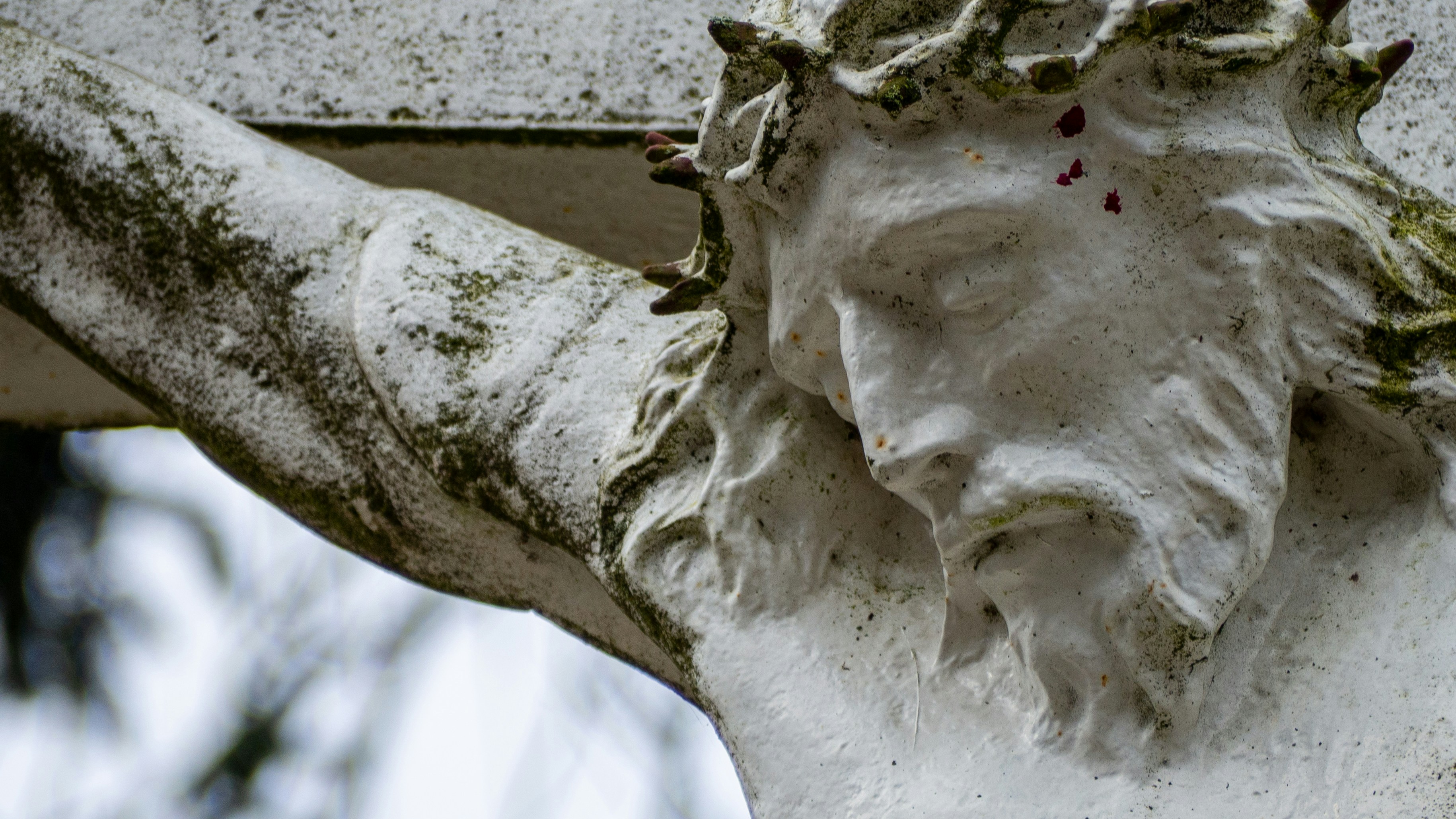
Photo by Wim van ‘t Einde on Unsplash

I moved slowly along the path laid out through the sanctuary, lit by tiny candles. Soft, rather mournful music set the tone. The stations of the cross were positioned along that path, each containing a passage of scripture and a piece of artwork. We had been encouraged to take our time, to let the visual depictions move our minds, our hearts and our souls as we focused on Jesus.

The very first image almost undid me. It was an impressionistic sketch of Jesus in the garden of Gethsemane. Our Saviour, bowed to the ground, mourning. Each successive depiction was powerful in its own right but, it wasn’t until I came to one of the largest displays that I caught my breath.

A high bower held a stylized crown of thorns, its spears facing out toward me, seeming to stab the air. You had to look through them to read the scripture, (Mark 15:16-20, ESV): “And the soldiers led him away inside the palace (that is, the governor’s headquarters) and they called together the whole battalion. And they clothed him in a purple cloak, and twisting together a crown of thorns, they put it on him. And they began to salute him, “Hail, King of the Jews!””

There was something powerful about that perspective, looking through that crown of thorns. The immensity of His humiliation left me stunned, my heart hurt by it, my mind trying to fathom it and my soul crying out because of it. The creator of the universe, enduring, indeed, allowing, such degradation, on my behalf. On your behalf.

I have seen many Easters over the 42 years since I became a believer. Many of them, to my shame, slipped by with barely any stirring in my heart, mind or soul. I pray it may not be so over the next span of however many years God allows me to sojourn on this earth. I pray I will always remember this perspective, peering through the crown of thorns, letting the words of scripture stab my soul. I pray I will never fail to take time to ponder the Via Dolorosa, the way of sorrow He endured willingly, in order to open the door to reconciliation with His Father.

I pray my face will always be wet with the tears I wept that day, in awe and thankfulness for so mighty, so merciful a Saviour.

In Good Company

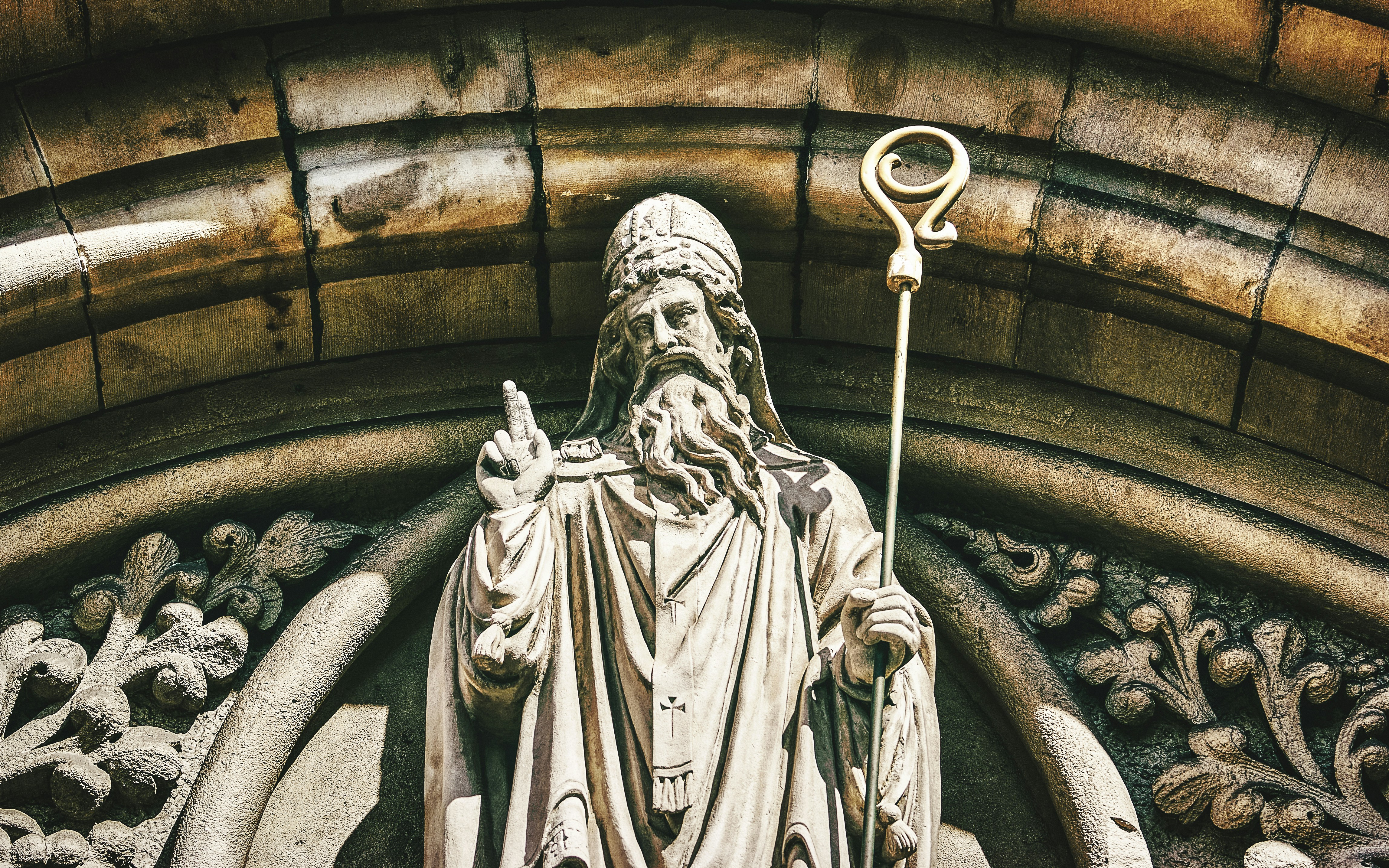
Photo by K. Mitch Hodge on Unsplash

With Saint Patrick, We Stand in Good Company

Both young men must have thought their lives were over. Taken into a country of foreigners where they were sold into slavery, they must have despaired of ever seeing their families and homelands again. They had to adapt to a new culture, learn a new language and suffer the humiliations of slavery. They must have believed God had abandoned them. But God does not abandon his people. These two young men, one who lived hundreds of years before Christ, the other hundreds of years after, would change the course of history. God gave their lives a purpose and meaning that could only have come through the struggles they endured.

Joseph, son of Jacob, father of the Hebrew nation, was responsible for saving not only the people of Egypt from starvation, but his own family, and therefore the Hebrew nation as well. And Patricius, a sixteen-year-old Briton who would become known as Patrick of Ireland, was the first to take the message of Christ to that nation, the very country where he had been enslaved.

 There is another man whose life took a turn for the worse. He was in the prime of his life. He had a huge following among common people and those of influence. It looked like he was going to take the nation by storm. But then he took his friends aside one day and told them he was going to die, and very soon. He told them be would suffer indignities and be treated like a criminal. He told them it would look like utter defeat. But God does not abandon His people. That young man’s name was Jesus.

As with the stories of Joseph and Patrick, God had a purpose for the suffering Jesus endured. It was a purpose that would change the history, not just of a nation, but of mankind. The suffering and death of Christ freed us all from slavery, slavery that was meant to separated us forever from our Father. But God’s purpose could not be thwarted. Through the death of Jesus, His will was accomplished. We were reunited with our true family, reinstated in our true country. What looked like defeat was in reality complete victory.

There are times in all our lives when it appears God has abandoned us. We see the horrors of wars and famines raging all over our world. We experience the loss of loved ones to the plagues of cancer and other diseases that seem to be out of control. We cry out at the injustices that happen every day.

But God has not abandoned us. He will bring all things to completion in His time and according to His purposes. Therefore we can stand in good company, with Joseph, Patrick and Jesus, and repeat the words of Paul, “Yet I am not ashamed, because I know whom I have believed and am convinced that he is able to guard what I have entrusted to him, for that day” (2Timothy 1:12).

Mourning Turned to Joy*

Photo by Mihail Tregubov on Unsplash

John burst through the door of the cabin. His voice rising to a high pitch, he yelled as all eyes turned toward him. “Gord, your house is on fire!” Everyone leaped up and headed for their vehicles. It was almost midnight but the sky was lit by an eerie glow. Gord and Wendy had built their two-story log home only a few months before. It was their dream house, but the building wasn’t what they were thinking about as they sped toward the blaze.

They had left their twelve year old daughter at home, babysitting her three younger sisters. As they pulled into their driveway it was obvious they could go no further. The heat from the flames shooting high into the air, was too intense. They held each other and watched their home burn to the ground, hoping against hope that their children had gotten out. It was a full hour before they knew the fate of their four girls. Wendy later said it was the longest hour in her life.

Their eldest girl, Leslie, had woken to a strange sound. As she came wide awake, she realized it was coming from the chimney of their wood stove. By the time Leslie ran downstairs, the roof was on fire. She woke her sisters, grabbed their winter boots and coats and got them out the door. In -50 degree temperatures, she knew they had to find shelter, so she led the girls to a neighbour’s cabin. When Wendy and Gord were reunited with their children, all the possessions they had lost in the fire were irrelevant. Relief and joy spilled out in thankful tears.

Their girls were alive! Nothing else mattered.

Some 2000 years ago, a group of men and women gathered in a closed room, hiding. Suddenly some women burst into the room, yelling. “He’s gone, His body is not there. He is risen!” Unlike Gord and Wendy, the men and women in that room knew their loved one was dead. They had watched his agony and been there the moment he called out, “It is finished.” No wonder they did not believe what the women told them. Imagine their relief and joy when Jesus suddenly stood among them, dispelling their doubts, telling them not to be afraid. Imagine the tears of thankfulness as they realized that what he had foretold had come true. Though he had been crucified, he had been resurrected. As the truth dawned on the followers of Christ, all the confusion and sorrow was swept away.

Jesus was alive. Nothing else mattered.

Nothing else matters. Jesus is alive, “and repentance and forgiveness of sins will be preached in His name to all nations” (Luke 24:47). “Consequently, he is able to save to the uttermost those who draw near to God, through Him, since he always makes intercession for them. “

That is the joy of the resurrection, the joy that lives in the heart of every person who believes. It filled the hearts of those men and women 2,000 years ago and it will fill your heart today. Say yes to Jesus and experience the joy.

  • Excerpt from Marcia’s devotional book, Spur of the Moment, available from the author or on Amazon.

Daffodils and the Longings of Our Hearts

I purchased a bunch of yellow flowers yesterday. Those who decide where to put what in grocery stores must have lived in Canada during the winter. The profusion of daffodils placed at the entrance of the store were not only eye-catching, they filled me with longing for spring and a need to relieve that longing. I had a bunch in my cart before I even thought about the price or the marketing strategy.

When I woke up this morning, the buds that were just starting to open had bloomed, their bright yellow faces greeting me cheerily. Then I looked outside and groaned at the swirling snow and howling wind. These daffodils obviously did not come from any garden in Alberta. As I admired them, I thought of a friend of mine. She told me they were her favourite flowers because they are among the first to pop up when spring has arrived. She knows about longing for spring too. She too has lived in cold and desolate places where people are sustained by the warmth of friendships and dreams of sunshine. She too knows about longing for colour and fragrant winds and the smell of the earth. Daffodils are a sign that we will not always have to wait, that the longing will be satisfied with good things. They are a sign of hope, telling us to hang on, spring is coming. When blizzards are blowing, we desperately need that hope.

When the storms of life are blowing we are in desperate need of another kind of hope. When the ordinary cares of daily life swirl around us, we need to know that the goodness of God is enough. We need to believe He will satisfy the deepest longings of our hearts. The longing for spring, for beauty and for good things are only shadows of that deeper need, the need for spiritual satisfaction. In Psalm 63, David says – “My soul thirsts for you, my body longs for you, in a dry and weary land where there is no water” (v.1). Then he declares – “My soul will be satisfied as with the richest of foods; with singing lips my mouth will praise you” (v.5). 

Nothing can satisfy that deep longing but God Himself. We can try to fill it will all kinds of “good” things, but that will only take the edge off, only satisfy temporarily. In the end, the longing increases. The daffodils on my kitchen table won’t really satisfy my longing for spring. As they die, they will only serve to increase it. The writer of Proverbs says – “Hope deferred makes the heart sick, but a longing fulfilled is a tree of life” (Proverbs 13:12). The longing will continue until our focus is turned to the One who can completely relieve it.

Jesus promises to satisfy that longing. He longs to meet us, to draw us into a relationship that will ease the ache of being apart from Him. Let Jesus satisfy the longing in your heart. Meet with Him today.

Excited About this

Coming Soon!

Last Minute Reminder for Writers

Hello folks –

I’m writing to remind you about the Meet & Greet to kick off the Abundant Rain Writing Pilgrimage.

This is a last minute invitation, because the Meet & Greet is this morning, Saturday, February 3rd at 11:00 am MST (Alberta). There’s a Zoom link below if you’re able to come — no need to rsvp.

During the Meet & Greet, Marcia will talk about why she wrote the Abundant Rain devotional journals for writers, and she’ll lead you in a writing exercise.

We will give out some prizes

  • A small handmade book (crafted by Marcia)
  • A physical copy of Abundant Rain, volume 1
  • PDF of Marcia’s Spur of the Moment devotional book

Here’s the Zoom link. Hope to see you soon! https://us02web.zoom.us/j/87149524537?pwd=MW1aN3A3VkxJUE5hMjcvT25IOVhFZz09

​If you miss the live event, we’ll share a replay.

​This event will be plenty of fun on its own, but there’s more! It’s also a kick-off and info session about Marcia’s Abundant Rain Writing Pilgrimage that begins next Saturday (10th).

We have put together some discounted bundles for you. For those who register by end of day on Saturday, February 3rd and purchase one of the bundles, we are offering a free writing assessment. www.siretona.com/abundantrain

Taking Time for a Pilgrimage

Have you ever been on a pilgrimage? Dictionary.com defines it as “a journey, especially a long one, made to some sacred place as an act of religious devotion.”

The closest I’ve come to going on a pilgrimage was the trip my husband and I took to Israel some years ago. It was a time of soaking up the word of God while being in the very places where the events of the Bible happened. It was a stirring time during which I experienced several moments of ‘epiphany’ and insight.

I remember one day in particular. I was alone, having had to stay behind with an elderly woman in our group who had taken a bad fall. While she rested in her room, I took a walk along the shore of the Sea of Galilee and stopped for a while to read my Bible. I landed on the calling of James and John in Matthew 4. When I finished and looked up, the sun was pouring through the clouds, striking the lake with a glorious stream of light and I was struck by the sudden realization that the very words I’d been reading had occurred in that place. And the words took on a deeper meaning, a more clear reality.

Going on a pilgrimage is a very old concept, one that began centuries ago. Some trace it back as far as Abraham, who was charged by God to leave his home and travel to a far country. It is believed Christian pilgrimages to the Holy Land began as early as the 4th century A.D.

True pilgrimage is not just about travelling to a far-away place. I like what Brian Morykon, Director of Communications at the Renovaré Institute, said about it. “It’s a journey undertaken with a humble heart and with an openness to be transformed. The pilgrim isn’t trying to get somewhere as fast as possible. She wants to become someone along the way. She’s willing to linger, to reflect, to slow down.”

That is exactly what I hoped for those who would read Abundant Rain, my collection of devotionals for writers of faith. I chose Deuteronomy 32:2 as the theme of the book: “Let my teaching fall like rain and my words descend like dew, like showers on new grass, like abundant rain on tender plants.” It has become my prayer for all my work, and I hoped it would be so for readers of Abundant Rain, that their writing would flow out to their readers with refreshment and enlightenment that would cause many epiphanies.

Although a pilgrimage is and should be a deeply individual thing, it is usually undertaken with others, and for good reason. The Christian walk is not a solitary affair. It is meant to occur in community.

After a time of prayer one day, I began to ponder the idea that writing is not done in isolation either, as many might suggest. Writing is a communal effort toward wholeness, both for the writer and all those who assist her, and for the reader as she takes in the words and then puts hands and feet to them in the world around her. So I launched the first Abundant Rain Pilgrimage, that I might share in a pilgrimage of words that bring epiphanies, with others.

That first group was small but mighty, committed to the process and the goal of “becoming someone along the way,” someone refreshed and rejuvenated by drawing closer to Christ.

I’m excited to launch a second pilgrimage in the days ahead, using Volume 2 of Abundant Rain as the catalyst.

As often happens, God has encouraged me along the way. I opened my email the other day to find a message from Malcolm Guite who has written a wonderful book called Word in the Wilderness, which “introduces poems about pilgrimage itself and our life as pilgrimage.”

I leave you with a few words from the poems Malcolm chose –

“At length I go unto the gladsome hill,
Where lay my hope,
Where lay my heart;”

(The Pilgrimage by George Herbert)

“And thus I’ll take my pilgrimage
… My soul will be a-dry before;
But after, it will thirst no more.”

(The Passionate Man’s Pilgrimage by Walter Raleigh)

And some words from Malcolm’s poem, First Steps, Brancaster:

“This is the day to leave the dark behind you
Take the adventure, step beyond the hearth
Shake off at last the shackles that confined you,
and find the courage for the forward path.”

And finally, scripture:

“Blessed are those whose strength is in you,
whose hearts are set on pilgrimage.”

(Psalm 84:5)

Here are the links you’ll need to participate in the upcoming pilgrimage for writers of faith, beginning July 3rd at 7:00 pm MST:

Would you join us? You can sign up here to receive your Zoom link. https://siretona.ck.page/journaling-pilgrimage

During the pilgrimage, participants will read and write using Marcia’s book, Abundant Rain: A Devotional Journal for Writers of Faith, vol 2 (revised). Check it out here:

​Abundant Rain Devotional Journal Volume 2

Ready to set out?

Learn more and register for the pilgrimage here! https://the-book-hatchery.mn.co/landing/plans/278126