My Father’s only WW2 Souvenir

There’s a blue hooked rug beside my bed. I step down onto it each morning and each morning I think of my dad. He made the rug in 1946, just after the end of World War II. He was living on the psychiatric unit of a hospital in Germany at the time, after joining in the liberation of Bergen Belsen, one of Hitler’s notorious death camps. What he saw there made my father’s mind stop and his soul shrivel. It would be many months before he was well enough to leave the hospital. He worked on the hooked rug a little each day. It was one of the few things he brought home with him when he returned to Canada. His only surviving souvenir, it was more precious to him than the medals he received. I often wondered about that, wondered why he would hold it so close. I never asked because he didn’t like to talk about the war and very few people knew he’d spent time in a psychiatric facility. My mother warned me not to mention it when she told me where the rug had come from.

But I think the reason he prized that hand-made item was because it had been part of his healing. As his hands performed the simple act of forming bits of blue wool into a pattern on a loom, his mind began to heal, his soul began to be restored. Todd Henry, founder of Accidental Creative once said “The creative process is a daily assault on the beachhead of apathy.” I believe it can be more. I believe it can be an assault on the evil and imbalance in ourselves and in the world, a beachhead against chaos and destruction.

I believe that as we write, as we sew or knit or quilt, as we paint or sculpt or weave, we are healed, we are made more whole and we draw closer to the Divine Spirit that guides us on. We also remind ourselves and those who will read our words or enjoy our created things, that complete health, in mind, body and soul, is the state in which we were meant to live. Thus hope is breathed out, made literal in words, in blankets, in hats and paintings and all artwork, and we are all encouraged.

That process brings us joy and satisfaction because it is what we were created to do. We were created to make life better by practicing and using the gifts He has given us, whether it be to write a novel or paint a portrait or hook a rug. Creating opposes the purposes of the evil one who is set on destruction, and flows with the purposes of God.

And, as Oswald Chambers is quoted as saying: “If you agree with God’s purpose He will bring not only your conscious life, but all the deeper regions of your life which you cannot get at, into harmony.” (Oswald Chambers, from Called of God in The Complete Works of Oswald Chambers) That is true health, true holiness.

“Therefore, my dear friends … continue to work out your salvation with fear and trembling for it is God who works in you to will and to act according to his good purpose” Philippians 2:12,13).

****

Thank you for taking the time to read. My name is Marcia Lee Laycock and I invite you to follow me if you’d like to read more of my work about finding your way home, into the arms of Jesus. 😊 You can also find me on Medium at https://medium.com/pondrings and https://medium.com/koinonia and a few other publications along the way.

For more information about my writing and speaking ministry, sign up for my newsletter to receive sporadic updates and a free short story.  😊https://storyoriginapp.com/giveaways/10812cf2-55f3-11eb-bb1c-177e9f3a62d2

Sometimes You Need to be Taught

Sometimes you need to be taught a little humility. Several years ago, after my first devotional book was published, I was asked to teach a workshop at a writer’s conference. That made me feel pretty good about myself and about my work. I prepared as best I could and stood smiling from the podium as the students arrived. I studied each one, putting them in little boxes I thought they belonged in. That one is writing fantasy, no doubt. That one isn’t sure why she’s here. That one looks like a retired missionary – she’s likely writing little stories for her grand kids. (Isn’t that sweet!).

The class went well and my head was pretty swollen by the time it was over (In Papua New Guinea they call arrogance having a “bik hed” and that was a good way to describe me at that time).

At the lunch break I ended up sitting beside that ‘retired missionary’ so I asked what she was working on. Her reply stunned me.

“Well, at the moment I’m editing a Greek manuscript by ….” (enter name of famous theologian). “He’s made a number of errors so it’s taking me a while.”

“So, you’re editing this in ancient Greek?”

“Yes, then translating it of course.”

“Oh right, of course!”

I wanted to slide down under the table and sink to my knees to ask forgiveness for my arrogance.

Then I thanked God for that valuable lesson.

****

Sign up to receive my newsletter, Home Words, and get a free pdf of one of my most popular short stories, Cassie.

The Power of Brokenness

It happened the moment Jesus broke the bread

Photo by Robert Bye on Unsplash

It seems there were two men, two of Jesus’ disciples, who were deeply loved by Him. He loved them so much that he took the time to chat with them as they walked away from Jerusalem toward their home in a town called Emmaus. That would not have been particularly unusual, except that Jesus had been crucified three days before. The account of this story in the book of Luke tells us that the two men were “kept from recognizing him” (Luke 24:16), even as Jesus “explained to them what was said in all the Scriptures concerning himself” (v.27). It wasn’t until they were eating with him that their eyes were opened and they saw.

It happened at the moment when Jesus broke the bread.

I don’t think that moment was a random act. I believe Jesus chose it to teach those two men something. I believe He was also teaching us something about brokenness.

The Psalmist David knew about brokenness. When the prophet Nathan confronted him about his sin with Bathsheba, David poured out his heart to God, acknowledged his sin and sought God’s forgiveness. He knew what was required –

“You do not delight in sacrifice, or I would bring it; you do not take pleasure in burnt offerings. The sacrifices of God are a broken spirit; a broken and contrite heart, O God, you will not despise.” (Psalm 51:16-17 NIV)

It’s not easy to think about that, let alone desire it. We don’t often pray, “Lord, break me.” We don’t often recognize that we are already broken people, damaged by our own sin. It’s common knowledge among those who work with alcoholics that they cannot be helped until they have “hit bottom.” Until they recognize their need for help they cannot change.

We are all in that place.

Until we recognize our need for God, for his mercy and grace and forgiveness, we cannot fix our brokenness. He is the only healer who can accomplish it.

Why brokenness? Because it leads us to our Saviour, to the one who loves us so deeply he takes the time to walk with us and reveal himself to us. He has broken the bread of his own body and offered it to His Father as a sacrifice to atone for our sins. He offers it to us. All we have to do is acknowledge our brokenness and reach out to take the gift that will give us complete healing in every way.

****

Thank you for taking the time to read. My name is Marcia Lee Laycock and I invite you to follow me if you’d like to read more of my work about finding the extraordinary in an ordinary life. 😊 You can find me at https://medium.com/pondrings and https://medium.com/koinonia and a few other publications on Medium.com.

For more information about my writing/teaching/speaking ministry just subscribe to my newsletter, Home Words When you do, you’ll receive a pdf of one of my most popular short stories to enjoy at your leisure.

Blessings to you all! M

Why I Will Celebrate Canada Day

Yes, I will celebrate, but with that pull of sadness that reminds me I’m not home yet. It’s a pull that tugs hard when I hear about the mass graves being discovered, the wars raging in too many countries, the injustices filtering the mercy so needed in our courts, the death count rising after a disaster directly resulting from greed.

It’s a pull I felt when a neighbour saw me as only a means to satisfy his sexual urges, and again when a teacher saw me only as a vulnerable child she could manipulate. I felt it when I was the victim of bullies and misunderstood by those who just didn’t take the time to listen.

We all feel it, here on this fallen earth. And the sadness and anger run deep.

But we must celebrate. We must remember those stories of bravery and glorious humanity in the midst of war and chaos. We must cherish the smiles of those who took the hands of all the children whose innocence saves us from insanity. We must praise those who take responsibility, who stand up and say, “I’m sorry. Forgive me.”

Because there is still goodness in this world. There is a thread of a Spirit that won’t let go of us, no matter how heinous the crimes and depraved the imaginations. That Spirit stands with us in the midst of the flames and destruction and the pain they cause and opens a way for healing. He gives us people, and sometimes whole countries, that still strive to choose what is right over what is expedient.

And that makes me want to wave a flag and sing an anthem that still mentions God with a note of thanksgiving.

Yes, I will celebrate Canada Day, though her history makes me weep, because I also feel the pull of her goodness and beauty that reveals the One who still stands with her and cries out, “Come to me, all you who are weary and burdened and I will give you rest (Matthew 11:28, NIV). Give ear and come to me; listen, that you may live” (Isaiah 55:3, NIV).

I will celebrate because to deny that goodness allows all that is evil to take another step forward in victory. And we must not allow that to happen.

News I Would Rather Not Know

Like most of us these days I receive a lot of news bulletins on my phone. A quick swipe to the left and I have access to all the latest happenings in our country and beyond. There are some days when I don’t bother, others when I wish I hadn’t. There are days when the news gives me information I would rather not know.

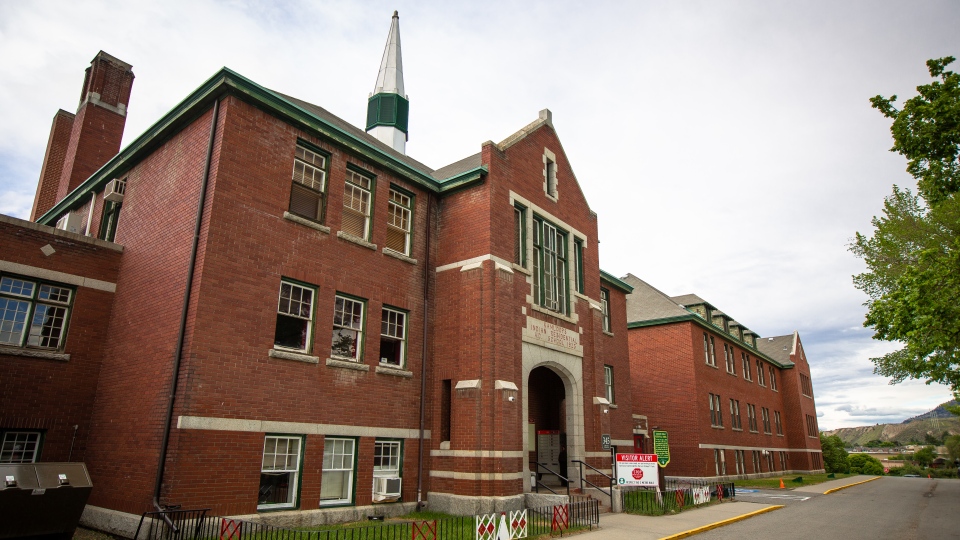
Yesterday was one of those days. The first item in the news feed read: More than 200 Bodies Found at Residential School in BC. I stared at the words, shock rendering me immobile for a moment. Then I clicked on the title and read the article and tears began to flow. Over 200 children buried in unmarked graves, their parents never notified. How could such a thing be true? That even one child would die and be discarded in such a manner should be unthinkable to us all. But 200? The word genocide cannot be dismissed.

Perhaps this news hit me hard because my grand-daughter’s eyes have a lovely slant to them. And this crime was committed at a Catholic institution. I was raised Catholic and what I read in that article went against everything I thought that institution stood for. I was raised to believe the sanctity of life was paramount, to the church and to God. How could those who were raised with that belief commit such a heinous crime?

My best friend in my high school years was an Ojibway girl who lived on a nearby reserve. She introduced me to some of her friends who were from remote communities in northern Ontario. Places like Moononee, Fort George and Attiwapiskat. Those kids were part of what is now known as the ‘Sixties Scoop.’ Hundreds of children across the country were taken from their homes and put into residential schools or foster homes without the consent of their parents. I often wondered at the time, in my innocence, why many of those kids seemed unhappy, why many of them were constantly in trouble, why many of them tried to run away from the places where they lived. Those children are now my age, in their 70’s and 80’s but the pain of the trauma they experienced still lives with them. Until recently, they were given no counselling to help them process it, let alone an acknowledgement that it had even occurred.

When I talked with my daughter about this news yesterday, her comment was insightful. “Why weren’t we taught about this in school?” she asked. “We learned about the Nazis and the holocaust. Why didn’t we learn about what had happened in our own country?”

Why indeed. I would like to believe, in my innocence, that it is because of the shame and the guilt. But sadly I suspect it is because of something more insidious, something more evil – racial prejudice.

Romans 12:15 tells us to “weep with those who weep.” Perhaps we should do more. Perhaps we should stand with those who are weeping at the mass burial sites. Perhaps we should voice our indignation and our horror. Perhaps we should demand that this history be taught in our schools. Perhaps we should demand that memorials be erected so that, like the cry to remember those who died in the world wars, a cry of remembrance might be raised each year for those innocents who died for no reason. Lest we forget. 

James 2:26 tells us that faith without works is dead. Yes, perhaps we should do more.

Nahor? Who’s he?

Image by falco from Pixabay

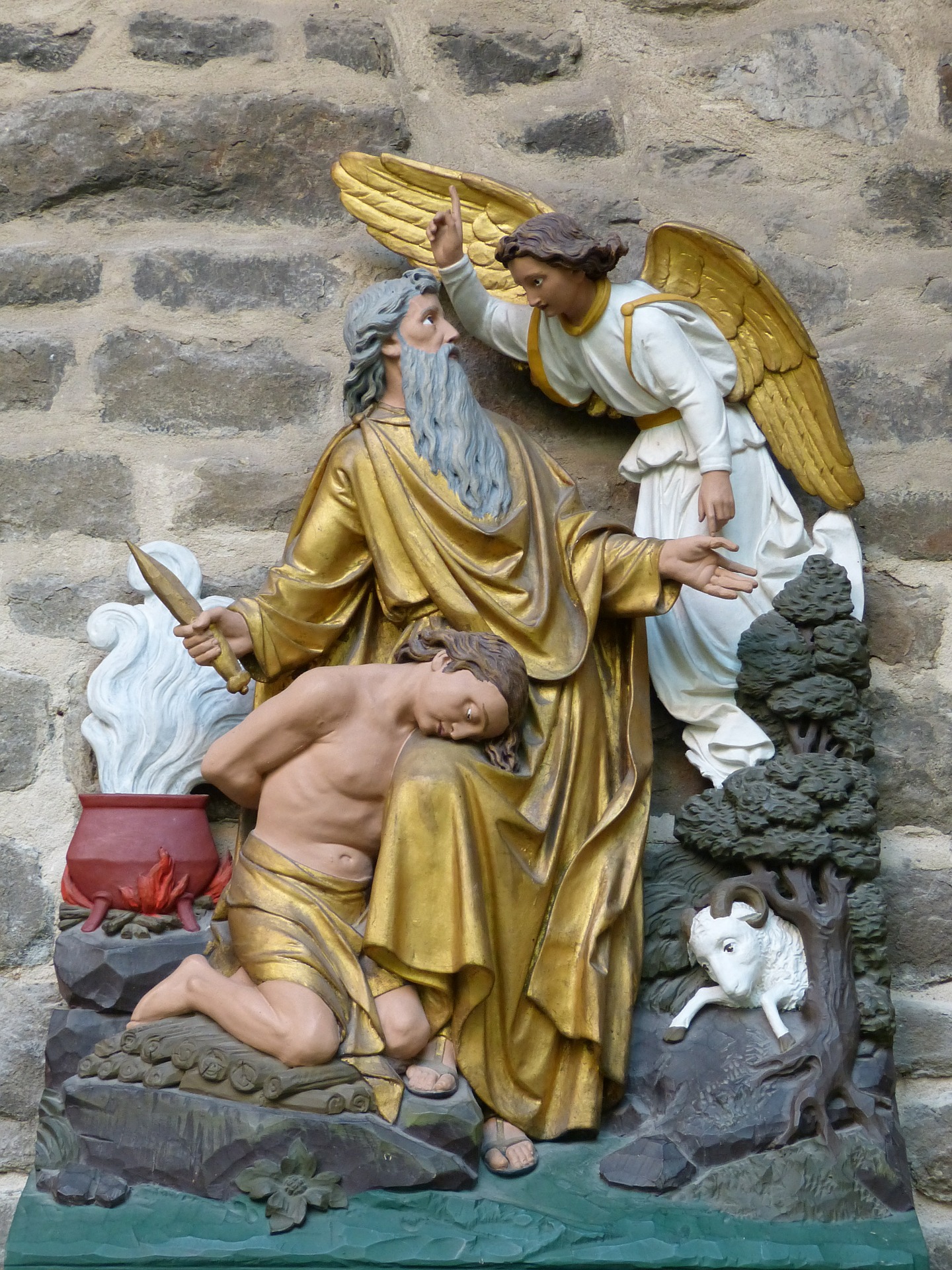
In a recent sermon at our church the preacher gave an excellent message on Genesis 22:1 – 24, which is primarily the story of Abraham and Isaac. The preacher’s insights were profound and timely for our culture and our current circumstances. (You can listen to it on Faith Community Church’s page on Facebook, if you wish). But it was at the very end of his sermon that I sat up and paid attention. Not that I wasn’t already, but I resonated deeply with his comment on verses 20-24.

Those last few verses aren’t about Abraham. They’re about his brother, Nahor.

We all know the story of Abraham, how God promised he would have descendants more numerous than the sands on the seashore and that all nations would be blessed through him. But Abraham and Sarah reached old age without having even one child. Sarah laughed when a stranger told her she was about to bear a son and Abraham went along with her when she told him to take her servant to bed. Logic said that was a reasonable thing to do. But then Isaac was born and they learned the faithfulness of their God.

Abraham’s obedience when God told him to take his son up onto a high place and sacrifice him as a burnt offering has long been a source of astonishment to me. That he would even consider saying yes to that command makes my jaw drop. But it was through that obedience that Abraham learned something about himself and his God, something he could have learned no other way. God is not only faithful to fulfill His promises, no matter how impossible they seem, He also cares deeply about those to whom He has made those promises. God wasn’t just concerned about the future plans that would unfold through Abraham, He was concerned about Abraham and Isaac, then and there.

Then we come to those verses about Nahor. They are in fact a genealogy of Nahor’s children – all twelve of them! The preacher did not dwell on how that fact must have rubbed Abraham the wrong way, but I could well imagine. Because I’ve been there. Perhaps you have too.

He’s the neighbour with the bigger house or fancier car. He’s the colleague who gets the promotion. He’s the man who reaches old age without having gone through a single medical crisis. He’s the one who publishes a single book but gets invited to speak around the world. He’s the author whose books hit the best seller’s lists even though the writing is mediocre at best.

Yes, those last two have been all too real for me.

So I sat up and took notice when the preacher said that after Abraham’s time on that mountain “he looked at his brother and all his children and then he looked at Isaac and smiled. It was Abraham who was given the greater portion.” It was Abraham whose progeny would bless the world. With just one son.

It is a lesson I must repeat to myself over and over again. God has a plan for my life and my work. Trusting Him with my life, even when it seems the blessings are flowing in other directions, will bring a lasting smile to my face. Trusting Him with my work, even when it seems it’s swimming in a very small pond, will bring a lasting peace and the knowledge that striving for what is fleeting is pointless if God is not directing it.

“The lines have fallen for me in pleasant places; indeed, I have a beautiful inheritance. (Psalm 16:6, ESV).

****

To read more of my work visit https://marcialeelaycock.com

Easter – Joy upon Joy

Easter Stories and More marks the eighteenth anthology in which my work has been published. It’s always such a joy to be part of a group effort, especially when you respect the work of the other authors in the collection. It’s always such an honour to be counted with them in a collection that you know will inspire and strengthen faith.

This one is especially dear to my heart because Easter is dear to my heart. What could be more exhilarating than celebrating the triumph of good over evil, the restoration of mankind to its God and, on a more personal level, the joy of resting in the assurance of one’s own salvation?

I thoroughly enjoyed writing the two monologues written in first person: The End of a Pilgrimage, which was written for Inscribe’s blog and Torn, written in response to the call for submissions for this anthology. Putting yourself in the place of a Biblical character brings the story of the life of Christ into a sharp perspective and causes you to dig deeper into the scriptures to discover more of the truths lying buried there.

The poem I submitted to Easter Stories and More, Easter Walk, was inspired by a stone I picked up as I was walking one spring day a few years ago. The stone was scored with two dark lines – one vertical, one horizontal. I wondered what had made the marks and as I walked my thumb traced the lines, my mind pondering again the mystery of the death and resurrection of our Lord and all that it meant to me.

It left me with a renewed sense of peace and thankfulness for His sacrifice and for the sacrifice His father made, in sending His only son to rescue such a ‘motley crew’ of humanity. It also left me rejoicing that Easter is my victory too, because He included me in it, called me into His family and secured my life with His death.

I hope you too are able to rejoice in that victory.

“O death, where is your victory? O death, where is your sting?” (1 Corinthians 15:55, NASB).

****

March 24 – Ruth L. Snyder https://ruthlsnyder.com/blog/

March 25 – Sally Meadows https://sallymeadows.com/blog

March 26 – Eunice Matchett https://albertastoryteller.com/

March 27 – Lynn Dove https://lynndove.com/

March 28 – Pat Gerbrandt https://patgwriter.wordpress.com/

March 29 – Denise Ford https://walkingwithdustyanddee.com/

March 30 – Marcia Laycock https://marcialeelaycock.com/thespur/

March 31 – Bob Jones revwords.com https://revwords.com/

April 1 – Valerie Ronald https://scriptordeus.wordpress.com

April 2 – Kimberley Payne https://www.kimberleypayne.com/blog/

April 3 – Marnie Pohlmann https://marniewriter.com/blog/

April 4 – Allison Lynn https://allisonlynn.blogspot.com

Lynn Simpson https://lynnjsimpson.com/ 

Blog Tour for Easter Stories and More

Easter Stories and More is a new anthology written by Inscribe Christian Fellowship members, and I’m excited to be one of its contributors. The book is filled with Fiction, Creative Nonfiction, Poetry, and Photography.

I have four pieces in the anthology – two written from the point of view of a Biblical character, a devotional about loss and redemption, and a poem inspired by a rock I found one day while walking.

Easter Stories and More can be purchased at Local bookstores, online vendors, e.g., Amazon, Nook, Kobo, or from any of the authors. My contact info is vinemarc@telus.net.

Below is the list of other authors participating in this blog tour. Please check them out to learn about them and their contributions.

March 24 – Ruth L. Snyder https://ruthlsnyder.com/blog/

March 25 – Sally Meadows https://sallymeadows.com/blog

March 26 – Eunice Matchett https://albertastoryteller.com/

March 27 – Lynn Dove https://lynndove.com/

March 28 – Pat Gerbrandt https://patgwriter.wordpress.com/

March 29 – Denise Ford https://walkingwithdustyanddee.com/

March 30 – Marcia Laycock https://marcialeelaycock.com/thespur/

March 31 – Bob Jones revwords.com https://revwords.com/

April 1 – Valerie Ronald https://scriptordeus.wordpress.com

April 2 – Kimberley Payne https://www.kimberleypayne.com/blog/

April 3 – Marnie Pohlmann https://marniewriter.com/blog/

April 4 – Allison Lynn https://allisonlynn.blogspot.com

Lynn Simpson https://lynnjsimpson.com/ 

Deliberate by Marcia Lee Laycock

ismael-paramo-ZBNr4T_4FLE-unsplash

You chose the way, crawled toward that day,

destiny drawn in blood before time began,

designed the way of sorrows,

staggered down that Via Dolorosa.

You forged the nails

for your own crucifixion,

grew the tree hewn

to bear your bloodied body, 

the bush that thrust out thorns.

You guided the hands that wove

the robe on which they gambled at your feet,

knew the Centurion who stabbed your side,

before his mother spoke his name.

You created the rocks that split,

the light that became darkness,

the angels who

turned their faces away.

You did it all.

Deliberately.

To rescue me.

****

Clinging to the Rock

Dwarf Fireweed. photo by Marcia Lee Laycock

The far north is a place where things are pared down, taken to the lowest common denominators of life. Rock, water, sun, insects and wind. And of course, in the winter, snow and ice. It is a place where the word survival is never far from one’s thoughts.

It was a marvel to me how the tiny delicate flowers of Baffin Island could survive. There is very little soil there, yet they spring up and cling to solid rock. Vibrant dwarf fireweed, saxifrage, anemones and the ever-present Arctic cotton. As my friends and I walked across it, the tundra seemed to be in motion as the tiny ones swayed in the constant wind, lifting their heads toward a far-away sun. We stepped around them, our heads bent in homage, our camera shutters clicking.

As I moved across that barren landscape I couldn’t help but think of the barren landscape of cancer I had been wandering in. The similarities were stark. After the diagnosis, there wasn’t much to hang onto at times. The winds of fear and loss seemed always in my face and the sun seemed oh so far away. But as I thought about beginning the first round of chemotherapy, I stared at a bright yellow anemone and took heart. If this little one can survive in this, her desolate place, then so shall I in mine, I reasoned, by doing what she does season after season. Cling to the rock.

My Rock was more solid and everlasting than those slowly disintegrating across the tundra. My Rock spoke and comforted and held my hand. My Rock carried me when my knees buckled and cradled my head when I just needed to cry. My Rock hid me in its cleft and set my feet on a firm foundation.

And when I “lift up my eyes to the hills,” and ask, “Where does my help come from?” He answers – “My help comes from the Lord, Maker of heaven and earth. He will not let your foot slip, he who watches over you will not slumber … The Lord watches over you, the Lord is your shade at your right hand; the sun will not harm you by day nor the moon by night. The Lord will keep you from all harm, he will watch over your life; the Lord will watch over your coming and going both now and forevermore” (Psalm 121:1-8, NIV).

****

Now in Paperback format on Amazon