Merry Christmas!

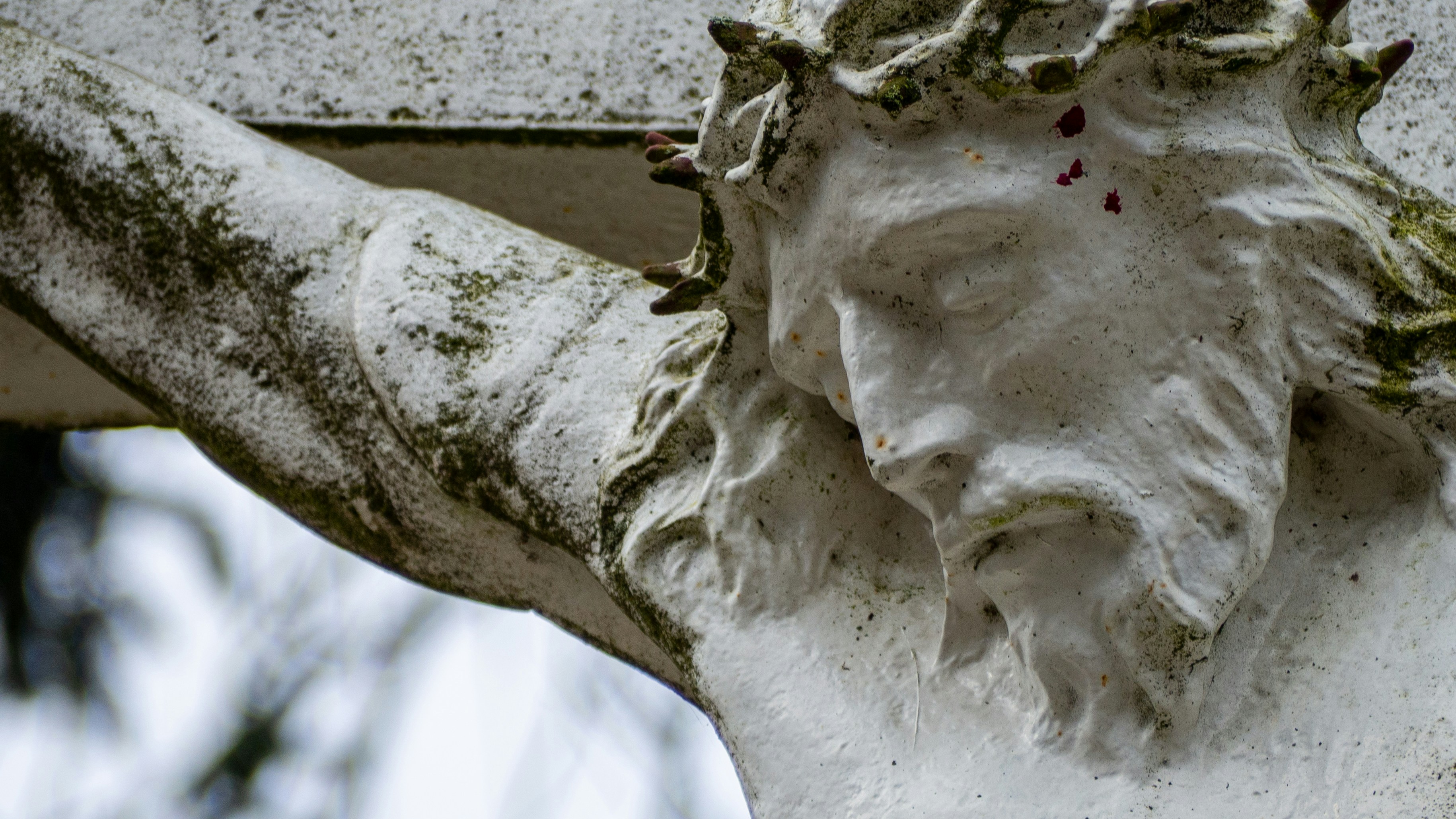
Photo by Myriam Zilles on Unsplash

Blessings of this Blessed Season to you all! In the midst of all the turmoil in the world, know that God is still on His throne. I’m sure He weeps with us and longs for His return when He will set all things right. But for now we must trust and pray and try to follow His path as best we can, ” to do justice, and to love kindness,and to walk humbly with your God.” Micah 6:8

Here is one of my favourite Advent poems by Malcolm Guite from his book, Sounding the Seasons. (If you don’t know Malcolm’s poetry I encourage you to look him up).

O Emmanuel By Malcolm Guite

O come, O come, and be our God-with-us
O long-sought With-ness for a world without,
O secret seed, O hidden spring of light.
Come to us Wisdom, come unspoken Name
Come Root, and Key, and King, and holy Flame,
O quickened little wick so tightly curled,
Be folded with us into time and place,
Unfold for us the mystery of grace
And make a womb of all this wounded world.
O heart of heaven beating in the earth,
O tiny hope within our hopelessness
Come to be born, to bear us to our birth,
To touch a dying world with new-made hands
And make these rags of time our swaddling bands.

****

And, for your reading pleasure, a Christmas story –

Missing Christmas By Marcia Lee Laycock

Sulking and soaking. For me, the two always go together. I know when I’m not fit to be around people, especially the people I’m mad at, so the bathtub is the best place to be. I run the water as hot as I can stand it and stay there until I feel like I can be civil again. That night, the night before Christmas, I thought I might be there till dawn.

Tim had dropped the bomb when he came home from work two days before we were to go home for the holidays. Somehow he’d managed to mess up making the flight reservations. How could he mess up something so important, so essential to my sanity? Bad enough he’d talked me into coming here, to the end of reason and any sign of civilization, just so he could have a “real northern experience.” Bad enough he didn’t once compliment me on how I’d bravely been enduring the minus fifty-degree temperatures. Bad enough we still had five more months to endure life in this town on the edge of the universe. Now we were stuck here for Christmas.

Even if we drove south till the temperature was warm enough for planes to fly, there weren’t any seats to be had. And what was his excuse? He thought he’d told the travel agent to book it, but he had only asked her to give him the details. When she didn’t hear back from him, she assumed we’d changed our minds but didn’t bother to check. There are too many people in this town who definitely aren’t the brightest bulbs on the tree.

And speaking of trees. To try and pacify me, Tim dragged a tree home today. I caught him going out the door, downed from neck to ankle, a toque on his head and wool scarf wrapped about six times around his face. When I asked him where on earth he was going, he said something unintelligible and walked out the door. Three hours later I heard him stomping around on the porch. I poked my head out, the cold hitting me like a slap. All I could see were his eyes. They were laughing. He tugged the scarf down long enough to tell me to wrap up and come out for a minute. Curious, I pulled on my parka and went outside.

He stood there like a little boy who’d just bagged his first bird. Only it was a Christmas tree he held on to. Or rather, it had been a Christmas tree. My mouth fell open and I sputtered through a mouth full of scarf. Tim pulled his away from his mouth and grinned.

“Just call me Charlie Brown,” he said.

The tree was almost bare. Tim described how the needles rained down with every blow of the axe. What else did he expect at fifty below?

Then we tried getting it inside. The few needles left on the branches showered the linoleum in the kitchen until it looked like a forest path. We stood it in a corner and stepped back. Tim glanced at me sideways just as I did the same and we both burst out laughing.

“I’ll go buy an artificial one,” I said. Tim didn’t argue.

I trudged off to the only store in town, but of course they were sold out of Christmas trees, artificial or otherwise. Then I went to the grocery store to buy a turkey. No turkeys left either. No cranberry sauce, no fresh vegetables. They had some Caribou steaks on special. Whoopdeedoo. By the time I got home I wanted to scream, “Baaah Humbug!” That’s when I locked myself in the bathroom and tried to soak away the frustration.

The next morning I wished Tim a halfhearted “Merry Christmas,” then told him his present was waiting for him at my parents’ house, three thousand miles away. The house that would be decorated so beautifully, with a six foot tree. The house that would be filled with the smell of roast turkey and pumpkin pie. The house where all our family would gather to sing carols by the fireplace. My pity party was complete when he told me my present was waiting there too.

I was choking down tears when the phone rang. A cheery voice said, “Ho, ho, ho, Merry Christmas.” I handed the phone to Tim. I heard his voice go up a few notches the longer he talked. He kept glancing at me, then finally said. “We’ll be there,” and hung up. When he told me we’d been invited to his boss’s house for dinner, I just turned and walked into the bathroom.

He gave me an hour to soak, then tapped on the door. “They have eggnog,” he said. “And it’s warmed up to minus forty.”

I sniffled a bit, dried off and opened the door. “Okay. Why not?”

We dressed in our Christmas best and arrived at the house just in time to see a dog sled scrape to a stop. Tim’s boss, Jerry, waved us over. “The Yukon version of a sleigh ride,” he said. “Hop in.”

Tim and I crawled under the down blanket and I let him wrap his arms around me as the sled jerked forward. The dogs trotted easily and the sled slid with a sighing ssshhh over the snow-packed ground. Jerry gee-ed and haw-ed and within minutes we were on the river. It seemed like we were floating now, whooshing around ice sculptures heaved up by the force of water and carved by wind. I rested my head on Tim’s chest and watched the reflection of a rising moon glint on nature’s statuary. By the time we got back to the house I was breathless with the thrill of the short ride.

Inside, Jerry’s wife, Sonya, handed me a hot spiced apple cider and, as we joined several others in the living room, I realized I almost had what you could call the Christmas spirit. The smell of roasting turkey helped. Sonya had decorated with impeccable taste, but my heart sank a little when I saw there was no Christmas tree. There was a rather odd shape draped in a sheet in one corner, but everyone seemed to ignore it, so I didn’t ask. I even sang along with the others as someone led the carols accompanied by some light finger-picking on guitar.

The meal was wonderful, the laughter and constant chatter enough to bring the spirit of the season into full bloom. But I was not prepared for what happened when Jerry tapped his glass and told us all to follow him back into the living room.

Sonya was behind me as we went. She leaned forward and whispered. “This is always the best moment.”

I followed the group and stood on tiptoe to see what the big secret was. I couldn’t see anything remarkable. In fact, all I could see, as everyone formed a semi-circle, was that we’d been led to the corner with the strange shape draped in a sheet. I held my breath.

Jerry turned and Sonya excused herself through the crowd to hand him a book.

“This has become a tradition for us ever since we moved north,” Jerry explained. “We gather our friends, feed them, entertain them, and then we read a bit.” He flipped the book open and adjusted his glasses. This is the book of Luke, chapter two, verses one through twenty. “In those days Caesar Augustus issued a decree …”.”

As the story unfolded, I watched the faces around me. Some were intent, some looked bored, but there wasn’t a sound in the room – just the words of an ancient story told with simplicity and grace. It thrilled me to know the story was true. Tim stepped to my side as it came to an end.

Jerry closed the Bible, looked around at everyone and smiled. “Now we unveil the tree.”

Sonya slipped through the crowd again and the lights went out. I heard the soft sound of the sheet falling to the floor. Then the room burst into white light. Before us stood, not a decorated Christmas tree, but a spindly birch. Thin branches reached up toward the ceiling. Each branch sprouted groups of bright green leaves. The leaves glowed with the twinkling of tiny white lights.

I stopped breathing and started crying at the same time. The sight filled my eyes with a color they’d been hungering to see and filled my soul with a light that made me forget about myself. I reached for Tim’s hand.

“We don’t like to cut down an evergreen for the sake of tradition,” Jerry said quietly. “So we grow one.” He waved toward the birch. “It seems to suit the spirit of Christmas, the Spirit that teaches that the birth of Christ was a point of new beginnings.”

Sonya stepped to her husband’s side. “Jesus was an ordinary man, nothing special to look at, the scriptures tell us, like this little birch, but he was also the Son of God and he brought new life and light to a dark world.”

Jerry’s eyes gleamed in the reflection from the tree. “Merry Christmas,” he said.

The words echoed from all the lips in the room, including mine.

****

And, just for a bit of a chuckle –

His expressions are so perfect. 🙂

Merry, Merry to you all. See you in 2024!

Taking Time for a Pilgrimage

Have you ever been on a pilgrimage? Dictionary.com defines it as “a journey, especially a long one, made to some sacred place as an act of religious devotion.”

The closest I’ve come to going on a pilgrimage was the trip my husband and I took to Israel some years ago. It was a time of soaking up the word of God while being in the very places where the events of the Bible happened. It was a stirring time during which I experienced several moments of ‘epiphany’ and insight.

I remember one day in particular. I was alone, having had to stay behind with an elderly woman in our group who had taken a bad fall. While she rested in her room, I took a walk along the shore of the Sea of Galilee and stopped for a while to read my Bible. I landed on the calling of James and John in Matthew 4. When I finished and looked up, the sun was pouring through the clouds, striking the lake with a glorious stream of light and I was struck by the sudden realization that the very words I’d been reading had occurred in that place. And the words took on a deeper meaning, a more clear reality.

Going on a pilgrimage is a very old concept, one that began centuries ago. Some trace it back as far as Abraham, who was charged by God to leave his home and travel to a far country. It is believed Christian pilgrimages to the Holy Land began as early as the 4th century A.D.

True pilgrimage is not just about travelling to a far-away place. I like what Brian Morykon, Director of Communications at the Renovaré Institute, said about it. “It’s a journey undertaken with a humble heart and with an openness to be transformed. The pilgrim isn’t trying to get somewhere as fast as possible. She wants to become someone along the way. She’s willing to linger, to reflect, to slow down.”

That is exactly what I hoped for those who would read Abundant Rain, my collection of devotionals for writers of faith. I chose Deuteronomy 32:2 as the theme of the book: “Let my teaching fall like rain and my words descend like dew, like showers on new grass, like abundant rain on tender plants.” It has become my prayer for all my work, and I hoped it would be so for readers of Abundant Rain, that their writing would flow out to their readers with refreshment and enlightenment that would cause many epiphanies.

Although a pilgrimage is and should be a deeply individual thing, it is usually undertaken with others, and for good reason. The Christian walk is not a solitary affair. It is meant to occur in community.

After a time of prayer one day, I began to ponder the idea that writing is not done in isolation either, as many might suggest. Writing is a communal effort toward wholeness, both for the writer and all those who assist her, and for the reader as she takes in the words and then puts hands and feet to them in the world around her. So I launched the first Abundant Rain Pilgrimage, that I might share in a pilgrimage of words that bring epiphanies, with others.

That first group was small but mighty, committed to the process and the goal of “becoming someone along the way,” someone refreshed and rejuvenated by drawing closer to Christ.

I’m excited to launch a second pilgrimage in the days ahead, using Volume 2 of Abundant Rain as the catalyst.

As often happens, God has encouraged me along the way. I opened my email the other day to find a message from Malcolm Guite who has written a wonderful book called Word in the Wilderness, which “introduces poems about pilgrimage itself and our life as pilgrimage.”

I leave you with a few words from the poems Malcolm chose –

“At length I go unto the gladsome hill,
Where lay my hope,
Where lay my heart;”

(The Pilgrimage by George Herbert)

“And thus I’ll take my pilgrimage
… My soul will be a-dry before;
But after, it will thirst no more.”

(The Passionate Man’s Pilgrimage by Walter Raleigh)

And some words from Malcolm’s poem, First Steps, Brancaster:

“This is the day to leave the dark behind you
Take the adventure, step beyond the hearth
Shake off at last the shackles that confined you,
and find the courage for the forward path.”

And finally, scripture:

“Blessed are those whose strength is in you,
whose hearts are set on pilgrimage.”

(Psalm 84:5)

Here are the links you’ll need to participate in the upcoming pilgrimage for writers of faith, beginning July 3rd at 7:00 pm MST:

Would you join us? You can sign up here to receive your Zoom link. https://siretona.ck.page/journaling-pilgrimage

During the pilgrimage, participants will read and write using Marcia’s book, Abundant Rain: A Devotional Journal for Writers of Faith, vol 2 (revised). Check it out here:

​Abundant Rain Devotional Journal Volume 2

Ready to set out?

Learn more and register for the pilgrimage here! https://the-book-hatchery.mn.co/landing/plans/278126

Letting Go and Holding On

When we made the decision to sell our home our middle daughter, Laura, was living with us. She had come home from Bangladesh where she’d worked with a mission group for a year. She was excited when she realized we would have to pare down our belongings. Every day she would ask, “What room can I de-clutter now, Mom?” She’d grin at me. I didn’t grin back. I would remind her we had six months before we had to move. She’d laugh and remind me that we were moving from a five bedroom into a two-bedroom house. It was like a cold cup of water – thrown in my face!

But it was reality. My husband had convinced me to follow the advice of the realtors and renovate our home before putting it on the market. We tore down and built up, we ripped out and replaced. We even bought new furniture. The process was not easy for me. I resented and resisted all these changes. I confess I am a packrat and I tend to hold onto things a little too tightly. I had a hard time letting go. I felt safe and comfortable in the midst of my clutter, my own little nest, surrounded by all my things.

And Laura, dear minimalist that she is, set about enthusiastically deciding what had to go. The problem was, she was a little too enthusiastic and my husband was cheering her on! For the next few months there was a litany that sounded in our house. “Laura, what did you do with… Laura, you didn’t throw that away, did you?”

Then came the day I couldn’t find my favourite potato peeler. I didn’t care that the handle was cracked, it was my favourite! Laura had thrown it away. And I was upset. In fact I was downright angry. The potato peeler was the proverbial last straw. Nothing in my house was the same anymore. It didn’t feel like my home, my nest. It had been disrupted and I was disturbed.

I realized that day that I’d forgotten something. My reaction was disproportionate to what was happening. I told myself that it was only stuff, that I shouldn’t be so attached, that it was good to let go. But when you let go of something you have to find something else to hold onto. I knew what that something else should be. Or rather, that Someone. I knew I had allowed my identity to be wrapped up in a house and a lot of ‘stuff’ instead of in Jesus Christ.

I remembered the passage in Matthew, one my husband would half jokingly point me to – “Do not store up for yourselves treasures on earth …” (Matt.6:19).

I realized then I needed to not only reorganize my home, but my heart as well. I pray we can all let go of those things that don’t matter and hold onto the One who does.

The Power of Brokenness

It happened the moment Jesus broke the bread

Photo by Robert Bye on Unsplash

It seems there were two men, two of Jesus’ disciples, who were deeply loved by Him. He loved them so much that he took the time to chat with them as they walked away from Jerusalem toward their home in a town called Emmaus. That would not have been particularly unusual, except that Jesus had been crucified three days before. The account of this story in the book of Luke tells us that the two men were “kept from recognizing him” (Luke 24:16), even as Jesus “explained to them what was said in all the Scriptures concerning himself” (v.27). It wasn’t until they were eating with him that their eyes were opened and they saw.

It happened at the moment when Jesus broke the bread.

I don’t think that moment was a random act. I believe Jesus chose it to teach those two men something. I believe He was also teaching us something about brokenness.

The Psalmist David knew about brokenness. When the prophet Nathan confronted him about his sin with Bathsheba, David poured out his heart to God, acknowledged his sin and sought God’s forgiveness. He knew what was required –

“You do not delight in sacrifice, or I would bring it; you do not take pleasure in burnt offerings. The sacrifices of God are a broken spirit; a broken and contrite heart, O God, you will not despise.” (Psalm 51:16-17 NIV)

It’s not easy to think about that, let alone desire it. We don’t often pray, “Lord, break me.” We don’t often recognize that we are already broken people, damaged by our own sin. It’s common knowledge among those who work with alcoholics that they cannot be helped until they have “hit bottom.” Until they recognize their need for help they cannot change.

We are all in that place.

Until we recognize our need for God, for his mercy and grace and forgiveness, we cannot fix our brokenness. He is the only healer who can accomplish it.

Why brokenness? Because it leads us to our Saviour, to the one who loves us so deeply he takes the time to walk with us and reveal himself to us. He has broken the bread of his own body and offered it to His Father as a sacrifice to atone for our sins. He offers it to us. All we have to do is acknowledge our brokenness and reach out to take the gift that will give us complete healing in every way.

****

Thank you for taking the time to read. My name is Marcia Lee Laycock and I invite you to follow me if you’d like to read more of my work about finding the extraordinary in an ordinary life. 😊 You can find me at https://medium.com/pondrings and https://medium.com/koinonia and a few other publications on Medium.com.

For more information about my writing/teaching/speaking ministry just subscribe to my newsletter, Home Words When you do, you’ll receive a pdf of one of my most popular short stories to enjoy at your leisure.

Blessings to you all! M

Love Transforms, Love Demands

heartredwhite

Do you remember your first love?

Picture a sixteen-year-old girl. She’s walking home from school, her shoulders hunched, her eyes on the ground. She’s wearing dark, somber clothing. Her hair often goes unwashed. She rarely makes eye contact with anyone and doesn’t smile much. She doesn’t have many friends.

Fast forward four years. That same girl is wearing a flowing floral dress. Her head is high and her eyes sparkle. Her hair flows out behind her, gleaming in the sun as she runs across her neighbour’s lawn. He hardly recognizes her. “You’re in love,” he says. She laughs and admits that it’s true. And it has made all the difference.

Love does that. It transforms us, it makes us believe that life is good and worth living. It makes us believe we are worthy of being loved. Yes, the discovery of love, especially God’s love, transforms us.

And the Demands of Love work to continue that transformation. Love is never easy. People tend to be complicated and their lives are often messy. Loving well inevitably leads to the need for sacrifice and a selflessness that most of us resist. But we are called to love unconditionally, as Christ loved us. We are called to give much, because much has been given to us. Luke chapter 7: 36 to 47 teaches us this truth. Jesus was invited to have dinner with a Pharisee. A woman who, the Bible tells us, had “lived a sinful life,” arrived with a jar of perfume, poured it on Jesus’ feet and washed them, wiping them with her hair.

When the Pharisee saw this, he said to himself, “If this man were a prophet, he would know who is touching him and what kind of woman she is—that she is a sinner.”

Then Jesus tells the Pharisee a story about two people who owed money to a moneylender. One owed him five hundred denarii, and the other fifty. Neither of them had the money to pay him back, so he forgave the debts of both.

“Now which of them will love him more?” Jesus asked. Of course, the Pharisee said the one who had the bigger debt forgiven.

Then Jesus said to him, “Do you see this woman? I came into your house. You did not give me any water for my feet, but she wet my feet with her tears and wiped them with her hair. You did not give me a kiss, but this woman, from the time I entered, has not stopped kissing my feet. You did not put oil on my head, but she has poured perfume on my feet. Therefore, I tell you, her many sins have been forgiven—as her great love has shown. But whoever has been forgiven little loves little” (v. 43-47).

Have you been forgiven a little or a lot? I think we can all agree that it is the latter. Yes, we have been forgiven much, we have been given much, and we are expected to forgive, to love well, and give much in return.

Love transforms but love also demands.


A Good Cleaning

Image

It’s that time of year again – time for spring cleaning. We’ve been doing a lot of it lately, and not just in our own home. We’re helping missionary friends get their home ready to be put on the rental market. It’s a big job and when we saw the condition of the house after the last tenants moved out, we despaired of getting it done quickly. But we were thrilled when several people showed up when we called a work bee. They came with rags and mops, rubber gloves and sponges, shovels and rakes, and they set about giving the place a good cleaning.

There was a team assigned to the garage, one inside the house and one outside. Before long the whole area was a hive of activity. I was working with the crew inside so didn’t see what was happening outside until it was almost time to leave. I was stunned when I saw the transformation. When we arrived the yard had been matted with old leaves and grasses, a web of winter mould laying on top. The flower beds were quite ugly, with dead growth carpeting the soil, smothering anything that might have been trying to grow.

Several men had gone to work with rakes and shovels and the result was obvious. I was surprised to even see some green shoots coming up in the lawn. Then a friend pointed out the bright green shoots in the garden – crocuses, tulips and irises were pushing through.

As I bent to examine them it made me think of the work God does in our lives. We sometimes must look as dreary and dead as that yard looked, layered with the leavings of old sin and smothered with the webs of guilt that threaten to smother us. But God is in the business of giving us all a good cleaning.

How thankful we should be that Jesus has cleared all the rubbish away, just as surely as those rakes and shovels cleaned that yard. He did it by his death, the death we will celebrate in only a few short days. It seems odd to say those two words in the same sentence – death and celebrate. His is the only death I know of that is celebrated, by the people who say they love Him. We celebrate it because His death means our release, His suffering means our freedom and His mercy means we will have life everlasting. That’s why we call it Good Friday.

And that’s why we celebrate not just his death but his resurrection.

As Jesus said to his friend, Mary, “I am the resurrection and the life. The one who believes in me will live, even though they die; and whoever lives by believing in me will never die. Do you believe this?” (John 11:25,26).

Mary said yes. Will you?