A Play in Two Acts by Marcia Lee Laycock
A few years ago I leaped into a new endeavour by taking a playwriting course at Rosebud School of the Arts, with playwright Lucia Frangione. The result was the play below. It is the only war story my father ever told me. I am posting it here as a tribute to him and to all the men and women who fought in WW2
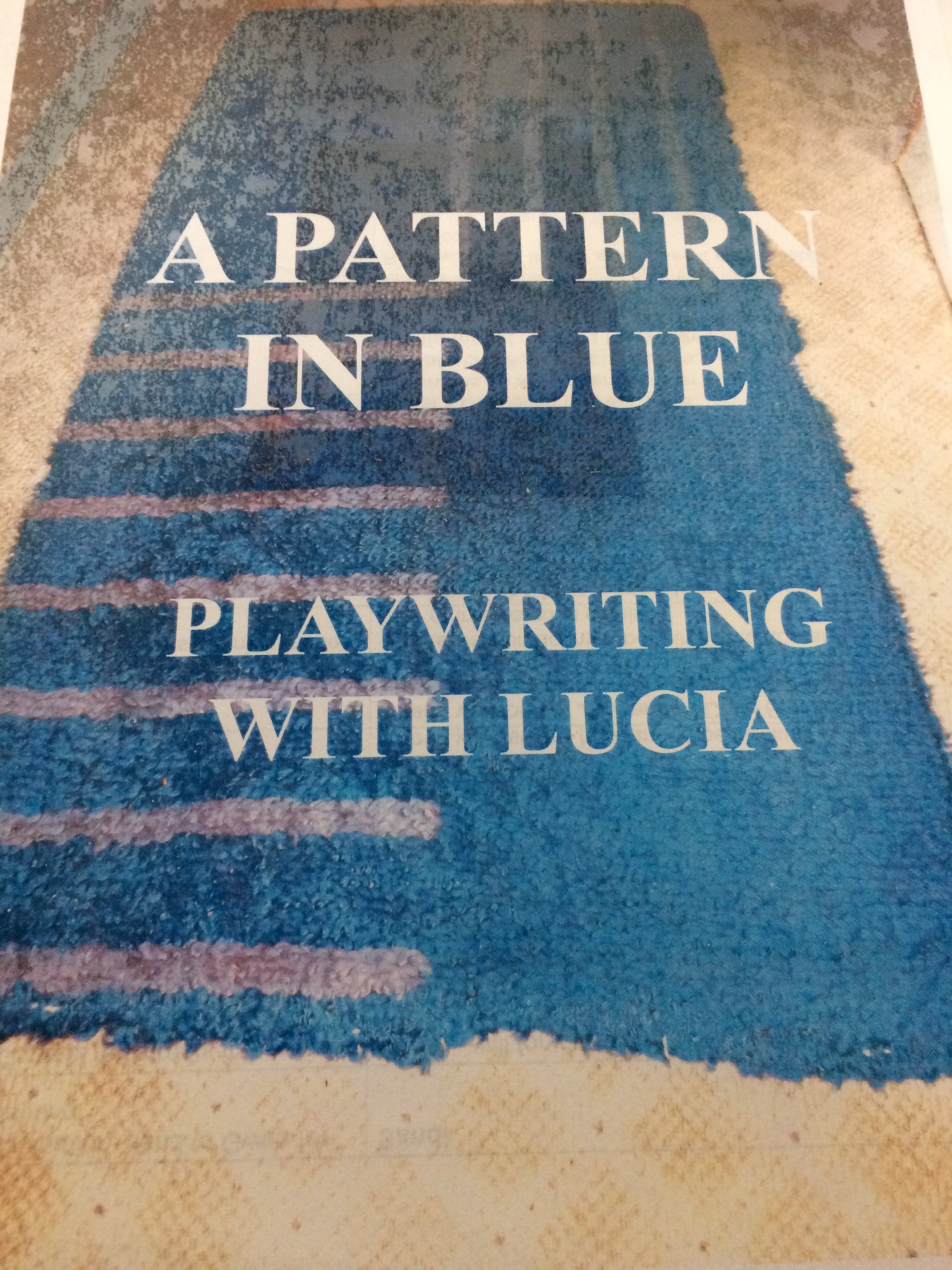
Cast: Five characters.
Doctor Wilhelm – A doctor on the psychiatric ward of a hospital in Germany
Rabbi – An older man, (could be double cast with Doctor Wilhelm)
Priest – A middle aged man.
Mel Lee – a patient on the psychiatric ward, a LAC (private) in the Royal Canadian Air Force. He is in his late twenties, early thirties.
Nurse Klara – Mel’s nurse – she is in her early to mid-forties.
Act 1 Scene 1 –
This scene takes place on the psychiatric ward in a hospital in Germany. WW2 has just ended.
There is a rug-hooking frame centre stage on a small table with two chairs, one in front of it and one beside it. The frame is at a right angle to the audience. (Cheticamp frame – https://hookingrugs.com/products/frame-solid-hardwood-cheticamp-rug-hooking-frame?variant=36964542212 )
There is a small screen or sheet on the wall to the left, clearly visible by the audience, a long window on the right. It is covered in heavy drapery.
Two stage hands appear, rolling a screen to centre stage, in front of the frame. They set it up, then exit stage right. Lights go down as a video begins to play. (video of Bergen Belsen taken from Youtube). When the video ends, the stage hands reappear, move the screen to the back wall and exit stage right. One image of Bergen Belsen remains on the screen.
Mel, dressed in grey hospital pajamas, stands by the wall, stage right, staring at the large screen. He appears to be hugging himself. He is swaying slightly.
Doctor Wilhelm and Nurse Klara stand in a doorway, stage left. The doctor is holding a medical chart. The nurse holds a small wooden box, a roll of white canvas that will fit on the rug hooking frame, and a roll of brown paper tucked under her arm. They begin speaking in German, then switch to English.
Dr. Wilhelm: Dieser hier kam letzte Woche von Bergen-Belsen ?
(This one came last week, from Bergen-Belsen?)
Nurse Klara: Ja, aus dem Horrorlager, die arme seele. (Yes, from the Horror Camp, poor soul.)
Dr. Wilhelm: looks at medical chart in his hand. Ich sehe dass er etwas an Fortschritt gemacht hat, ja ? (I see he has made some progress, yes?)
Nurse Klara: speaks in English Ya. Yes. He was catatonic when they brought him in, but he has come out of it now and is able to move and speak normally. But he still reacts violently if someone speaks to him auf Deutsch.
Dr. Wilhelm: speaks in English I understand that is why you were assigned to him, Nurse Klara – for your speaking of the English?
Nurse Klara: Ya, though I fear my English is not perfect, but he seems content with it.
Dr. Wilhelm: So, his progress has been slow, I see.
Nurse Klara: Ya. He still withdraws often and becomes detached from reality.
Dr. Wilhelm: And no wonder. Have you read the report, about that camp?
Nurse Klara: Some of it … I could not read all of it. It is hard to comprehend such horror.
Dr. Wilhelm. Ya. If I had not seen the trauma firsthand, of those who have seen it, I would not have believed the reports.
Nurse Klara: It is frightening, is it not, to know these things have been happening all around us, yet we did not see it?
Dr. Wilhelm: Frightening, ya, and more disturbing that …
Nurse Klara: Disturbing that? …
Dr. Wilhelm: Nothing, Nurse Klara. Nothing. Sighs No wonder this man’s mind stopped functioning. Such evil is incomprehensible. looks at medical chart But we must help him to move forward, now. Perhaps it is time to push him to respond a bit more, Nurse Klara. If we do not see results soon we will have to transfer him to a larger psychiatric facility.
Nurse Klara: I hope that will not be necessary, Herr Doktor.
Dr. Wilhelm: Of course, but our expertise is limited. It may be necessary.
Nurse Klara: I will do my best to help him advance. I believe the English would say it is time for him to move to the next step on the ladder. holds out the small box I have ein plan.
Dr. Wilhelm: I’ll leave you to it, then. I will expect comprehensive reports on his progress each day, Nurse Klara.
Dr. Wilhelm exits stage left. Klara enters the ward, puts the box on the table, leans the rolls of canvas and paper on the frame, turns to Mel.
Nurse Klara: Goot morning, Mr. Lee.
He does not respond, continues to sway and stare at the image on the screen.
Nurse Klara: approaches him. Mr. Lee?
Mel: jerks his head toward her, stares at the table. What?
Nurse Klara: I have something new for you to do today.
Mel: What’s that?
Nurse Klara: It is a frame for making a rug.
Mel: More useless therapy I suppose.
Nurse Klara: Ya. And you will learn to like it.
Mel: Says you.
Nurse Klara: she smiles Ya, says me.
Nurse Klara: places a chair facing the frame, waves her hand at Mel. Come.
Mel: hesitates for a couple of minutes, then shakes his head, pushes himself away from the wall, hesitates again, sighs, walks to the table Well I suppose. It’s not like I have anything else to do. Okay, Nurse Klara, show me what you want me to do now.
Nurse Klara: begins to unfold the sheet of paper, hands one corner out to Mel. Help is needed, please.
Mel takes a corner, they hold the sheet up so the audience can see a geometric pattern in shades of blue. Streaks of grey run vertically and horizontally through it.
Nurse Klara: We are going to make a rug. The pattern is simple. It is geometry, ya?
Mel: Geometric.
Nurse Klara: Thank you, ya, yes, geometric.
Nurse Klara: takes the paper from Mel, lays it on the table beside the loom. She sits, begins to attach the canvas to the frame First we must attach the …. (mumbles softly in GERMAN)
Mel: What are you saying? I can’t hear you.
Nurse Klara: I don’t know this word. Lifts the canvas. What do you call this, Mr. Lee?
Mel: Futility.
Nurse Klara: annoyed This. shakes the canvas. What material is this?
Mel: sighs Canvas. It’s called canvas.
Nurse Klara: Canvas. Goot. Good. Canvas. We attach it like this. tries to attach canvas to the frame, struggles with it, looks at Mel. He has turned away, stares at the large screen. A little help again, please, Mr. Lee. When he does not respond, she puts down canvas, stands in front of Mel. Mr. Lee?
Mel: suddenly becomes aware of her again, takes a couple of steps away from her What? What do you want?
Nurse Klara: I need your help, please. Waves at the frame. With the rug-making frame.
Mel sighs again, but allows Nurse Klara to lead him to the table. He helps her attach the canvas.
Nurse Klara: Thank you, Mr. Lee. traces the pattern on the canvas You see? The pattern is already drawn for you. Now, we use the hook to pull the wool through the holes. You see? I hold the wool with my other hand, under the fabric and pull it up. Very easy, no?
Mel does not respond. Klara takes his wrist, turns his hand and places a piece of wool in it, then holds up the hook.
Mel: Looks boring.
Nurse Klara: And perhaps boring is goot for you, for now.
Mel: Good. The word is good, with a d.
Nurse Klara: It will be good for you. stands, waves the hook at him Come.
Mel: takes the tool, sits, but does not do anything with it. This will take forever.
Nurse Klara: Not forever, but some time, yes. Time to create. Time to heal, more softly according to the Lord’s will.
Mel: angrily The Lord’s will? He stands, throws down the wool and the tool. The Lord’s will? Don’t talk to me about your lord. waves his hand at the far wall as pictures of the horrors he has seen at Bergen-Belsen flow across the screen. The only Lord in that place was the devil himself.
Nurse Klara: But that is not …
Mel: There is a loud droning sound, like a high-pitched swarm of flies. Mel puts his hands to his head, begins to mutter to himself. The flies. They’re everywhere. Driving me mad. The filth. Excrement, everywhere. And the stench… I can’t breathe. puts his arm over his nose. It’s in my mouth, in my hair, in my clothes. The stench … it will kill me. It will kill us all. I have to stop. Don’t move. Don’t speak. Just stop. He puts his arms over his face, remains in that position for several moments.
Nurse Klara: moves close to him, then puts her hand on his arms, draws them down That’s all in the past, now, Mr. Lee. The horror camp is no more.
Mel: stares at her for a moment It’s gone?
Nurse Klara: Yes. It’s gone, forever gone.
Mel: stares at the screen, shakes his head. No. No. Not forever. Not for me. It will never really be gone for me. turns, marches across the stage and back again a few times, turns sharply, salutes the loom, stands rigid. Record the numbers, yes sir. Record the numbers. turns toward audience, shouts. God damn them. God damn them.
Nurse Klara: picks up the wool and tool and places them in Mel’s hand. There are no soldiers here, Mr. Lee, no one you have to salute now, no counting to be done here. Here we will be concerned with making something beautiful, yes? Come. Sit, now. Sit.
Mel: stares at the chair, turns to the pictures on the screen, steps toward it. I have to count. Those were my orders. Record the numbers. Don’t bother with names. They won’t speak, can’t speak. There are so many. Hundreds. Thousands. Too many numbers, too many. stares at the frame for a moment, but turns back to the wall, his hand drops to his side, the hook and wool fall to the floor. Write down what I can, yes sir. salutes Type the report. Yes sir. Report. Report. Get the numbers on the page. bends over as though writing, rocks back and forth. Focus on the numbers. Forty thousand. Fifty thousand. marches away, whirls around, salutes again. Yes sir. Type it up. Type it up. Puts his hands out as though on a typewriter. Type. Type. Yes sir. Salutes Yes sir.
Nurse Klara steps close to Mel.
Mel’s head jerks toward her, his arm falls to his side.
Nurse Klara: takes his arm, draws him back to the chair. He sits. She picks up the wool and the hook, squats down beside him, takes his hand and wraps it around them. She leaves both hands on his. Focus on this, now, Mr. Lee, this new thing for you to do. Just follow the colours on the paper and the pattern on the canvas. It will take shape. It is simple, ya?
Mel pulls his hands from Klara’s, places his fingers gingerly on the canvas, traces the pattern.
Nurse Klara: draws away, stands That’s it. Just try, Mr. Lee. It will bring comfort, comfort from the order of it, the pattern.
Mel: opens his hand and stares at the wool and hook. He takes the piece of wool and rubs it between his hands, then on his cheek as he speaks. It’s soft. He is quiet for some time, rubbing the wool on his cheek. I had this stuffed toy when I was a kid, a little brown bear. I don’t remember playing with it much, but my mother always tucked it under my covers when I went to bed.
Nurse Klara: My son, too, had a little bear for his bedtime.
Mel: I remember how soft it was. He continues to rub the wool on his cheek, then stops But I didn’t play with it much. drops his hand, stares. I played with my building blocks, lined them up so I could count them. I always liked numbers – numbers were a real comfort. They were simple for me – black and white. Columns, even columns on a page. I liked the pattern of numbers … but now … pauses, looks up at Klara. What if I can’t do it? What if I can’t follow the design?
Nurse Klara: Then you will create your own, ya? There is always pattern and design, even when it seems there is only chaos.
Mel: looks toward the wall where the pictures of Bergen-Belsen have faded out but are still there. Maybe that’s all there is now, chaos. Maybe the design is illusion.
Nurse Klara: turns his head back to the frame again. She lifts the paper slightly off the table, moves it closer to the frame. See, the colours make the pattern. Follow it with your eyes. Work at it with your hands.
Mel: I can’t. I told you, I can’t see colours. waves his hand, his voice rises to a high pitch. It’s all grey. Everything is grey, it’s been all grey since … stands, takes a step away from the frame, slaps his leg rhythmically, paces.
Nurse Klara: What happened Mr. Lee? Tell me.
Mel: They said it was from the concussion, from the day the Gerries bombed the camp. I was on the far border, blown into the fence. Hit my head on a metal post or something. That’s what they told me. Turns to Nurse Klara, stares at her for a long moment. God damned Krauts. takes a quick step toward Nurse Klara.
Nurse Klara takes a quick step back.
Mel: They’d agreed to the cease fire. Said it was a mistake, the bombing … a clerical error they said. Ha! The Krauts don’t make clerical errors. He leans toward Nurse Klara. Do they Nurse Klara?
Nurse Klara takes another step back.
Mel: They were trying to erase their own records. That’s what they were doing. The commandant’s office took a direct hit. That’s where the records were. They kept records, you know, meticulous records, of everything. Do you know that word, Nurse Klara? he steps toward her again. Meticulous? It means detailed, like it was all some kind of God damned scientific experiment. turns away from Nurse Klara, stares at the pictures of Belsen again. The buzzing noise resumes more loudly. He strides away, slapping his leg rhythmically. But it wasn’t the concussion that made everything go grey. The whole world went grey when I walked through those gates. I was afraid to tell my CO. It was so … confusing, surreal. My mind wouldn’t make sense of what my eyes were telling me. Because we’d been smelling it, you know, for miles. Driving through this big pine forest. That valley … it reminded me so much of home at first, I could almost believe I was back in Canada, but then that rancid smell, it kept building and building until it overwhelmed the smell of the pines and then we saw it, the gates, the barbed wire, the people standing there in their striped pajamas, watching us in silence.
Nurse Klara: In silence?
Mel: As though they had all been struck dumb. Pauses Some of them didn’t look so bad at first. The Gerries had put the healthier ones by the gates, the ones who had just arrived, the ones who had been fed a bit. Then we saw the barracks – row after row of shabby green huts. And then, only a few steps inside, the piles of bodies, the walking skeletons. They stared at us too. If they made any sound it was a high-pitched whine, but most just stared and wept. They called it a liberation but nobody clapped, nobody cheered. Nobody even smiled. I saw this man, or maybe it was a woman, I don’t know, it was hard to tell … she fell down in front of my CO and started kissing his boots. He just stood there, like the rest of us, too stunned to know what to do. That’s when I noticed everything was grey … puts his hands to his head. That’s the only way you could take it in … all in grey … like a dog. Maybe it’s the only way I can take anything in now. Maybe I’ve become like an animal now too. Just like an animal. Just like them.
Nurse Klara: takes his arm, leads him back to the frame. No, No. You have made progress, Mr. Lee. Your mind was gone for some time, yes, in darkness, displaced from the world because of the horror of what you have seen, but you have come back to us. The colours will return. It will get better. You must have faith. Just a little faith, Mr. Lee.
Mel: Faith? Ha! Pulls away from her. Now there’s a word for you, Nurse Klara. Do you know what it means? Have you really thought about what that word means?
Nurse Klara: Yes, Mr. Lee. I know this word well. It means believing in what cannot be seen.
Mel: Believing in what you can’t see. Yes. That day … that day I couldn’t believe what I saw. I wish I’d gone blind. Pounds fists into his temples. I wish I’d never seen … I can’t get them out of my head.
Nurse Klara: approaches him, touches his arm. Hush. Hush. It will be all right. Now, for some time, you cannot see life as it is, with all its colour and the goodness there is around us. You cannot see yourself as a whole man, body, mind and soul. But it will be so one day again, Mr. Lee. It will be so. It just takes a little time. Guides him to the frame. Come. We will work on the rug together now, yes?
Mel: sits at the frame, stares at the wool and hook still in his hand, deliberately drops them to the floor. This is just … pointless. Totally pointless.
Nurse Klara: exasperated, takes a couple of steps away, mumbles to herself You Americans are all so stubborn.
Mel: Canadian.
Nurse Klara. Turns back to Mel Pardon me, please?
Mel: I’m Canadian, I’m no Yank.
Nurse Klara. Strides toward Mel, picks up the wool and puts it forcefully in his hand again Canadian, American. Is there any difference? You seem all the same to me.
Mel: stares back at screen, is silent for a time. That was the hardest thing.
Nurse Klara: Explain please. What was the hardest thing?
Mel: Knowing they were men, just like me, those walking skeletons. I kept telling myself they were like animals, filthy abject animals. Then I felt guilty for thinking such a thing, but … I couldn’t stand the thought that were just like me. Stares at the photos on the wall. Ironic, isn’t it? I am one of them now. Wipes his hands on his shirt. The shadow of a man in pajamas. throws the hook to the floor, turns toward the wall where the pictures have appeared again. The buzzing noise resumes, loudly, as he stands, takes a step toward Klara. And we … we are all …
Nurse Klara: takes two quick steps back. Her voice is low. We are all what, Mr. Lee?
Mel stops, flinches away, turns toward the wall, begins to rock back and forth.
Nurse Klara: watches him closely, looks toward the wall, then moves so that she stands between Mel and the wall. Her voice has softened. What are you seeing, Mr. Lee?
Mel: turns away, puts his hands over his ears, shakes his head. Nothing.
Nurse Klara: puts her hands on his arms Tell me. Tell me what you see.
Mel: pulls away from her. You don’t want to know. You don’t want to see. No one would want to see what we saw, in that place.
Nurse Klara: But to keep it all inside … it will continue to torment you, Mr. Lee. You must give it expression. Somehow, you must. Tell me.
Mel: Looks back at the wall where the pictures are still displayed. It was like this picture I saw once, of Dante’s inferno. We studied that poem in school. Do you know it, Nurse Klara?
Nurse Klara: Ya, a very famous poem. I know it.
Mel: That’s what it was like – a living hellish inferno. Bodies … piles and piles of emaciated bodies. Only they weren’t the guilty ones. They were the victims. The Germans didn’t bother to bury them, you know. The guards just walked around them, as though it was normal. The prisoners too, but what else could they do? They had no way to escape it. Takes a step toward the wall, begins tapping his leg There’s this woman, wandering around. Every now and then she stops and crouches down by the pile of corpses. I can’t understand what she’s saying but she seems to be begging them for something. I go to her, to try to help her. That’s when I see the baby. She has a baby in her arms. She comes at me, whining miserably. Then I get it. She’s begging me for milk for her baby. But it’s already dead. She tries to give it to me. Holds it out to me. But it’s dead. I turn away. I turn away and I run and I vomit on that pile of corpses. pauses That’s what I saw, Nurse Klara. He takes a couple of steps away. Death. Everywhere. Just rotting stinking death.
Nurse Klara: softly Kyrie eleison. Kyrie eleison. Kyrie eleison.
Mel: slapping his leg hard with his fist Christ have mercy, Christ have mercy. Christ have mercy. Christ have mercy, Christ have mercy. Christ have mercy. turns to her, speaks with hard edge And will you say the prayer of confession too, Nurse Klara? strikes his chest with his fist. Mea culpa, mea culpa, mea maxima culpa.
Nurse Klara: Through my fault. Through my fault. Through my most grievous fault. Yes, Mr. Lee, we are all … there is a word that comes from the Latin, is there not? That means we are at fault?
Mel: Culpable
Nurse Klara: Yes. Culpable. We all bear the guilt of these sins.
Mel: Yes. A priest once told me there’s a piece of the poisoned apple in all of us. I could feel it inside me there, in that place, like a devil’s claw digging, digging inside me. It revolted me, terrified me because …
Nurse Klara: Because?
Mel: turns to her, his face contorting in anguish. Because I am just like them. Falls to his knees, beats his breast I am. I am. I am. I am the Belsen commandant, Kruger. I am Himmler. I am Hitler. Looks up at Nurse Klara. Do you understand me? I am no better than any of them.
Nurse Klara: goes to him. But there is the possibility of something more in you, Mr. Lee. raises him up Light destroys the darkness.
Mel: There was no light in that place.
Nurse Klara: But you are here now, Mr. Lee. She moves to the window, draws the curtain aside. Light streams in. There is light in this place.
Mel looks around him, stares at the light coming from the high window.
Nurse Klara sighs, walks back to the frame, sits, picks up the hook, selects a piece of wool from the box and pulls it through the canvas. She repeats the process a few times, with slow and very deliberate movements. Mel slowly turns toward her, watches her for a few moments, slowly moves closer.
Nurse Klara: selects another piece of wool, walks to Mel and puts it in his hand, leads him to the chair. Make your hands work, Mr. Lee. Make your mind follow the pattern. It will be goot, good, for you, good for your soul.
Mel: My soul? My soul is dead. Like those corpses at Belsen. It was buried there, in the pits full of rotting flesh. My soul died in that horror camp.
Nurse Klara: But it can be revived, Mr. Lee. A man is meant to be reborn.
Mel cocks his head.
Nurse Klara: But you must make the first step forward.
Mel: hooks the wool through the canvas. Maybe. Maybe, if I can do just this simple thing.
He continues to work at it for several minutes. Nurse Klara watches him.
Mel: stops working on the loom suddenly, holds the metal hook up, stares at it. The buzzing noise gets louder. They must have tortured them with sharp things. He drops the hook as though it’s hot, stands and walks toward the screen where the pictures are more distinct again. He stares, sways, puts his hands over his ears and turns away from the wall. The women screamed when the doctors came near them with the needles. The doctors were just trying to help them. But they didn’t believe it. They didn’t understand.
Nurse Klara: Poor souls. Poor souls.
Mel: He paces, begins to slap his leg rhythmically. Don’t look at them. Just count. Just count. Forty thousand five hundred and six, forty thousand five hundred and seven …
Nurse Klara: picks up the hook and the box of wool, follows him, holds out the hook. It’s just a tool, Mr. Lee. You see? Just a rug-hooking tool. Nothing dangerous. holds out the box. Take another piece of the wool and return to the frame now.
Mel: No. No. I can’t. I’m stuck. I’m stuck there, in that place. puts his nose into the crook of his arm It’s inside me … the smell … part of me now … the bodies… the flies buzzing, buzzing, buzzing. All of it is part of me. Everything I look at takes on the shape of their emaciated bodies, their bones. his body begins to contort Twisted into tortured heaps like some kind of monstrous art – like sculptures in ice, frozen into my brain. My mind is stuck there. one arm raised, the arm and hand contorted. If I stay this way, maybe I won’t see them anymore … if I just stop …
Nurse Klara: slowly reaches up, puts her hand in his, tries to straighten it. Mel resists at first, then his hand grasps hers, wraps around it. She draws his arm down, holds out the box. You must decide for the healing, Mr. Lee. Choose to begin your healing.
Mel’s arms and body straighten, he reaches for the box, clasps it to his chest.
Nurse Klara: leads him to the frame Use your hands, now. As the hands move, the mind will follow.
Nurse Klara: takes the box from him, holds it out. Choose.
Mel: looks into the box, selects a piece of wool This one is darker?
Nurse Klara: Yes! Yes, it is darker than the rest.
Mel: takes the box and hook from her and returns to his seat. He begins to slowly sort the wool on the table. I see three shades. They’re all grey but there are three shades. Is that right?
Nurse Klara: Yes. Three shades. Very goot. Very good. That is correct.
Mel pulls a piece of the wool through the mesh, hesitates, then does it again.
Nurse Klara watches him for a while, smiles and nods, then turns to go.
Mel: half stands, reaches out for her. Don’t leave.
Nurse Klara: hesitates, then moves the second chair closer, sits. I will stay for a while.
Mel relaxes and pokes the hook through the canvas, continues to work at it.
Nurse Klara: There. You see? You are doing it. You are doing it very well.
Mel: Like a good Canadian boy.
Nurse Klara laughs.
Nurse Klara: Yes. A good Canadian boy.
Mel: works on the rug as he speaks You have a nice laugh. There is goodness in you, Nurse Klara, a kind of beauty.
Nurse Klara: A kind of beauty? Is that a compliment Mr. Lee?
Mel: Yes.
Nurse Klara: Then I thank you, Mr. Lee.
Mel: You can call me Mel.
Nurse Klara: That is short for Melville, yes? A French name?
Mel: shrugs I guess.
Nurse Klara: Is there French blood in your ancestry Mr. Lee?
Mel: No. Irish. On both sides.
Nurse Klara: Then your name, where does it come from?
Mel: I was named after a town in Saskatchewan.
Nurse Klara: Saska … chew … an? This is a place?
Mel: A province, back home, western Canada.
Nurse Klara: Melville. This is an unusual name for an Irish boy, yes?
Mel: Yes. And I never liked it much. I got teased for it, a lot, in school. It was different. Kids don’t like anything different. Why would you name your kid after a town anyway? Why not Billy or John or … anything else. shrugs again. Guess it was my father’s idea. He homesteaded there you know, for a while, so he could get the land. It was a government plan – the Dominion Lands Act. He had to work the land for a year, then it was his,160 acres near Melville.
Nurse Klara: Melville. It is a good name. I will call you Melville.
Mel: No one calls me that. Well, my mother used to, but only when I was in trouble. When she called me Melville Joseph I’d head for the hills.
Nurse Klara: laughs. I did the same for my son. His name was Johann Peter. (pronounced Pay-tar). There were many times I called him by his full name, for a warning to him.
Mel: You have a son?
Nurse Klara: I did have a son. He is no longer with us.
Mel: Dead?
Nurse Klara: hesitates, speaks softly Yes. Dead.
They are silent for a time, then Mel speaks as though they had not mentioned her son.
Mel: Not sure why they gave me that name. My dad didn’t even stay there long, in Saskatchewan. It was back-breaking work, clearing the land and he didn’t know much about farming. But he did it, he got the land after the year, then he sold out and went back east, to Ontario. He’d left my mother there, taking care of my two older brothers. She said she was glad he’d given up on the farming idea. She never wanted to leave Ontario. I guess she was really happy to see him. I was born about nine months after he got back.
Nurse Klara: Your mother – she must have been a pretty.
Mel: A beauty. Yeah, I guess she was, when she was young. She’s, well, I suppose you’d say she’s kind of plain looking now, but she’s a good woman. Snorts. Some might say she’s a saint for putting up with us – the six of us boys – we were little hellions sometimes, a pretty wild bunch.
Nurse Klara: She must have loved you all.
Mel: Yeah. I know she did. Still does, in spite of everything. He is quiet for a few moments. She went away, once, to a convent, for a whole week. I was starting to worry that she wasn’t coming back. But then, there she was, standing at the door to the kitchen. My dad had threatened us with the belt if we didn’t behave when she came home. But she stood there, this small suitcase in her hand and she was crying. Then she ran toward us, her arms wide, and she was crying and laughing and calling out, “Oh my boys, make noise, make noise!”
Nurse Klara: chuckling. The convent was a little too quiet for her.
Mel: Yeah. She was a good mother, a good woman. That’s the best kind of beauty, maybe.
Nurse Klara: I agree. The beauty that is inside is more enduring, yes? Of greater value, I think.
Mel: looks at the wall. The women … the women there, in Belsen, they had a kind of beauty. shakes his head I shouldn’t say that. I shouldn’t even think that.
Nurse Klara: Why not?
Mel: They were dying, of starvation and typhus. Most of them, just skeletons. But they still wanted … he looks toward the screen.
Nurse Klara: touches his arm, he jerks What did they want, Mel?
Mel: I think they wanted to be beautiful again, or … to believe we saw them as beautiful, still.
Mel: stands, looks toward the pictures on the wall. One photo of a woman is prominent. We were so totally unprepared for what we saw in that place. Not that anything anyone could have told us would have prepared us. They told us it was a typhus hospital. Hospital! Ha! It was anything but that. It was a death camp. He is quiet for a moment. We gave them food, when we arrived, you know, our own rations. All of us did. How could we not? But it killed them.
Nurse Klara: Killed them? But surely food of any kind …
Mel: The bully beef – it was too rich. It went right through them. We killed them with our kindness. Later they made a thin stew of what we had, but even that … and there were so many. It took weeks just to organize them, weeks watching them die in front of us. Some of us Canadians were stationed in towns and villages not far from the camp. We brought what supplies we could, even drove into the camp sometimes with deer we’d shot in the woods, strapped to the hood of our jeeps. But it wasn’t enough. It was too late. There was nothing any of us could do. The doctors did what they could, but the war was still on, supplies were scarce, and the roads were blocked by troops and all the DPs.
Nurse Klara: DPs? What is this please?
Mel: Displaced persons. There were thousands of them, wandering God knows where. It took days for a convoy to move just a short distance. There weren’t enough doctors or nurses either. Not enough medicine. They had to decide which ones to treat, which ones to let die. If a man could stand, they marked him as well. If he couldn’t … they just kept dying, even after the German’s handed it over. That seemed the worst thing of all, to have gone through all that, just to die there, in that horrifying place, in the end.
They are both quiet for a moment.
Mel: snorts A strange thing happened. A clerical error, maybe. They sent lipsticks.
Nurse Klara: Lipsticks?
Mel: nods, stands, walks toward the pictures. The buzzing noise is loud again. He turns away and taps his leg in time with his words Bright red lipsticks. Bright red lipsticks. Bright red lipsticks.
Nurse Klara: Tell me about the lipsticks, Mel.
Mel: They sent boxes of them. The women grabbed for them as though they were the very food that would save their lives. stares at the screen There’s this woman … she has typhus. She’s screaming because they’re trying to take the lipstick out of her hand. She was still clutching it when she died. Turns away Add her to the count, my Lieutenant is saying. swaying Forty thousand nine hundred and fifty-six, forty thousand nine hundred and fifty-seven. My lieutenant – his lips keep moving but I don’t hear him anymore. I just count, count, count. Too many. The bodies heaped in piles, ploughed into ditches. Too many. Too many to count. Forty thousand nine hundred and fifty-eight, Forty thousand nine hundred and fifty-nine. Save their lives. Save their lives. Save their lives. Type the numbers. Type the numbers. Yes, sir. salutes, slaps his leg again Type, type, type.
Nurse Klara: You did what you were ordered to do.
Mel: I had to go into the barracks, to get the numbers. They were lying there, silent, in their own vomit and urine. Some dead, some barely alive. He puts an arm across his face. The stench … you could only take it for so long inside those buildings. So, I go outside and they’re making the Gerries carry the bodies to the pits. And I stop. I just stop and I can’t do it anymore. I can’t … my mind … it just stops.
Nurse Klara: But praise God, it is again now working, Mel.
Mel: God? You really believe there is a God, Nurse Klara? What kind of God would …
Dr. Wilhelm calls nurse Klara’s name from off stage.
Nurse Klara: stands, I must go now. takes a step away but stops when Mel speaks.
Mel: I liked going to church, once, you know? Went every Sunday when I was a kid, with my parents. I loved it there – sitting in the quiet, the feeling of being holy just by being there. Pauses, looks away, remembering Especially when I watched my father pray. He’d be kneeling, mimics the posture bent over the pew in front of us, his long thin fingers folded together. Sometimes he’d put his head in his hands. I’d lean into the softness of my mother’s arm and watch him till he crossed himself and sat back. Sometimes he’d wink at me then. Pauses, stands Sometimes I’d pray too. Looks toward the light streaming through the window. I was an altar boy for a while. I loved that – loved the sameness of the things they trained me to do, the routine, loved the feel of the vestments I laid out for the priest, moves his hand through the air as though smoothing a garment the way the chalice gleamed when I polished it, the smell of the wine and the Eucharist. I keep trying to remember that smell, but I can’t quite bring it back stops speaking, stares off at the wall opposite the Belsen pictures. (Perhaps a picture of his father or of a cathedral.) I remember walking by our church one day – it was a big cathedral, with green lawns and a high wrought iron fence all around it. I was, I dunno, maybe five or six years old. I picked up a stick and dragged it along as I ran, making a racket on the rails. Then I stopped ‘cause I was scared I’d wake God up and he’d be mad at me. I could see him coming after me – a giant with a long white beard, fire coming out of his eyes and a big stick in his hand. pauses. I always wanted to make God happy. Tried really hard. It seemed important, then, you know? Even thought about becoming a priest for a while. He snorts. Like all good Catholic boys, eh? But I grew out of it. Grew into … stares at pictures of Belsen.
Nurse Klara: A good man.
Mel: A good soldier. sarcastically Like all good Catholic boys.
Dr. Wilhelm appears in the doorway.
Dr. Wilhelm: Nurse Klara?
Nurse Klara holds up one finger, signaling the Dr. to wait a moment. The Doctor exits stage left.
Nurse Klara: I am needed. We will talk again soon but I want you to keep working on the rug, Mel. Will you do that for me?
Mel hesitates, looks toward the pictures of Bergen-Belsen. Nurse Klara reaches to turn his head toward her. Mel jerks away
Nurse Klara: Will you do this for me, Mel? Leads him to the table
Mel: I’ll try. He pulls a piece of wool through the canvass. Yes, I’ll try.
Nurse Klara: watches him for a moment, rests her hand on his shoulder. Goot. Good. And there is something I want you to think about, Mel. We have a high fence here, too, round the garden, waves hand toward the window just outside. It has a gate that is locked always, to keep us all safe. The colours are beautiful out there. And the smell is so sweet, like the perfume of heaven, ya? The perfume of roses, as lovely as the incense at mass and … as lovely as the smell of the wine and the Eucharist. The fence is very high. Will you imagine walking in that garden, Mel?
Mel: stands, strides across the stage shaking his head No! I … I can’t go outside. It’s not safe. Someone might … someone might speak to me in that language. You know I can’t stand to hear that language. That language will kill me. It will kill me just like the typhus killed all those wretched men, women and children. You can’t escape. No one can escape. They’ll speak that language and it will kill me. It will kill me.
Nurse Klara: goes after him, takes his arm and leads him back. Just imagine a garden, Mel, imagine a lovely garden. A safe garden.
Mel: shakes his head but allows her to lead him back to the frame, sinks into chair I can’t.
Nurse Klara: sighs, taps the frame Then make something – something beautiful, ya? To defeat the monsters.
Mel: Right. Like that’s even possible.
Nurse Klara: The madness has ended, Mel. The war is over. People are singing and dancing in the streets again, here in Europe, and in America too.
Mel: They are?
Nurse Klara: Yes! The Jive and the Jitterbug. They are such joyful dances. But I still love the Charleston. Do you know it? dances a few steps of the Charleston as she sings Some dance, some prance, I’ll say there’s nothing finer than the Charleston, Charleston...
Mel: he stands, watches her for a moment I used to dance. looks at the wall to the left of the screen where the pictures of Bergen-Belsen appeared. A picture of a young woman appears My wife and I … we used to dance. Sometimes we danced all night long at that old hall in Perth. It wasn’t a fancy place. They just had a small band, sometimes just a singer and piano player, maybe a trumpet too. But sometimes they brought in a bigger group. It was great music – big band music. All our friends were there, everybody dressed to the nines. Marg had this red dress that … well, it made me sweat just looking at her. I kept her on the dance floor so she couldn’t dance with anyone else. We were really good – the best – we won prizes – even a trophy once, at a dancehall in Ottawa – the Fred and Ginger Trophy. Marg wanted to put it in our living room but I wouldn’t let her. I should have. I should have let her do that. It would have made her happy.
Mel stares at the wall. The pictures are fading. He turns to the screen where the pictures of Belsen grow stronger. The buzzing noise returns.
Mel: I had to dance with the women there.
Nurse Klara: Other women? At the … what did you call it? The hall for dancing?
Mel: loudly, annoyed, No. There. points to the wall In the camp – at the horror camp, at Bergen-Belsen.
Nurse Klara: You danced …. in that place?
Mel: They organized social events. The British officers. My C.O. too. I guess they were trying to make life seem somehow normal again. They ordered us to dance.
The music changes to a waltz tune.
Mel: puts his arms up as though holding a woman in his arms, dances in a circle. So we danced. We danced and danced. He stops, stares at the wall. The buzzing noise overwhelms the music. He covers his ears. We danced with skeletons with crimson lips. And we drank. We drank a lot. But now … I can’t dance any more. I won’t dance anymore. You understand? The dancing … the music … it denies them …
Nurse Klara: Denies them?
Mel: Denies their suffering, their pain. I shouldn’t, I won’t dance. Ever again.
Nurse Klara: But …
Mel: No! No dancing. No laughing. No happiness. It’s gone. All gone. All I can do now is knot these stupid bits of wool together sweeps his arm across the table, throwing the wool to the floor … What point is there in that? … What good … is there such a thing as goodness anymore? Or hope? What is there to hope for now?
Nurse Klara: takes the box and slowly picks up the pieces of wool Begin with a simple thing. Hope to make something beautiful, ya? Something with pattern and order, to bring back the pattern and order in your mind and soul. Hope will return. puts the box in Mel’s hands There is still goodness, Mel, in small things. Perhaps it seems that it has been overwhelmed by the evil in the world, but it is not so. Goodness is in us, still, in us all. It will rise again. It has already begun. And then, one day, you and I, we will walk in the garden.
Mel drops the box, begins shaking his head hard.
Nurse Klara: Then we will walk on the street.
Mel: walks away, shaking his head harder. No! No!
Nurse Klara: Then one day you will go home, ya, to your wife and your children.
Mel: My children?
Photos of a woman, a small boy and girl scroll across the wall, to the left of where the pictures of Bergen-Belsen appear.
Mel: moves to the frame, stands in silence for few moments, then leans down, picks up the sheet of paper, runs his hand over it, begins tracing the pattern with his fingers. I have a daughter, and a son. Did I tell you that? My son was born just after I enlisted. Marg said he was her good-bye present. He must be almost five now, I think. I don’t know if … maybe I’ll never see him again.
Nurse Klara: puts her hand on his shoulder. You will. You will, Mel. To see him again, that is reason alone for hoping, yes? smiles and nods, watches him trace the pattern. See, your fingers know the design. You will see the colours soon, ya?
Mel: I think … just for a second I think I saw … I think I saw a colour. Holds the paper out Blue. Is it dark blue?
Nurse Klara: claps her hands. Ya, dunkelblau und hellblau.
Mel: throws the paper to the floor, puts his hands over his ears Aaarhhgg. Don’t. Don’t. He staggers, then charges toward Nurse Klara. Don’t! The buzzing noise increases.
Nurse Klara: takes several steps away from Mel. What is it? What did I do?
Mel: stops, turns away his hands slapping his ears Don’t speak that language. Returns to the chair, slumps down into it, bends over, rocking It will kill me. It will kill me. Speak English, only English.
Nurse Klara: puts her hands on his and pulls them down I am sorry. I was excited for you. I did not realize I was … I will speak only English, only English now, Mel. I make the promise of it. The colours – yes, they are dark blue and light blue, like the sky outside, where you will walk again soon.
Mel: rocks back and forth for a while moaning. Nurse Klara leads him back to the frame. He slowly picks up the paper, stares at it for a moment. There is a thread of grey, too. Part of the pattern – it’s grey.
Nurse Klara: Ya. The grey. It is part of the pattern.
Mel: replaces the paper by the frame, picks out another piece of wool and attaches it to the canvas. He works at it for some time, in silence. Are there roses in the garden?
Nurse Klara smiles Yes, yes. Beautiful red roses and other flowers too – purple Dahlias, yellow Tulips. There are some lovely Irises beside a small pond. And Forget-Me-Nots – they grow like a carpet between … between the trees. pauses They are my favourites – so tiny, so delicate. So perfect for …
Mel: peers at her For what?
Nurse Klara: Never mind.
Mel: You were remembering something, weren’t you? Tell me.
Nurse Klara: It is not proper for me to speak about myself. We must speak only about you, Mel.
Mel: Oh. So I have to rip open my soul and yours gets to stay hidden.
Nurse Klara: It is to remain professional.
Mel: Right. Professional. Puts the hook down.
Nurse Klara: hesitates, then sighs I planted Forget-Me-Nots over the place where we buried my son.
Mel: Your son? Was he … how did he die?
Nurse Klara: An accident, just before the war began, on my father’s farm. We were all so happy there, before the war. I moved back to live with my parents when my husband died from the disease … I forget how to say it in English. His legs, his body, they were slowly unable to move.
Mel: Polio?
Nurse Klara: Yes. The polio. She is quiet for a time. I loved being in the country. I thought it would be good for my son. pauses And it was, for a time, until that day … my son … he was trying to help for the ploughing. Something frightened the horses and they dragged him on many miles. We thought he might recover, but … he was only fifteen. She stops, looks away as though remembering. So, the forget-me-nots. They will always be my favourite. Pauses, turns back to Mel. But you will see many other flowers too, in the garden. You will see many colours. You will smell their perfume. And there is a tree, Mel, an oak tree that has stood to many years.
Mel: For many years.
Nurse Klara: It has stood for many years. Thank you. It is so green, so beautifully green, spreading like a … I do not know the word waves her hands over her head something that gives shelter?
Mel: A canopy.
Nurse Klara: Ya, yes. A wide green canopy that makes a shade from the summer sun. It is a place for … how do you say … having a small meal outside under the trees. There is a word, yes?
Mel: A picnic.
Nurse Klara: Yes! A Picnic. Have you ever done a picnic, Mel?
Mel: Yes, when I was dating my wife. She loved going on picnics. There was this big old willow tree, by the river in the park near where we lived. It was our favourite spot. Marg loved that old tree. turns toward the back wall again. The pictures flow across it. Long ago. It seems so long ago. In another world.
Nurse Klara: reaches out to touch Mel’s chin, draws her hand back, steps between him and the wall. We can sit in the shade of that oak tree, Mel. Perhaps I can arrange to, no, for? She waits for Mel’s nod for a small picnic. And we will watch the robins in its branches and hear them sing. It is a lovely sound. moves away from Mel, turns to the window. My son used to try to copy … no, not copy … there is another word, ya?
Mel: Imitate?
Nurse Klara: Ya, he used to imitate their song. tries to make a bird song, laughs. I could never do it like he could.
Mel makes a bird song.
Nurse Klara: smiles Yes, that’s it. We will go outside soon, to see the tree and listen to the birds. Perhaps tomorrow. Ya?
Mel: Maybe. Maybe tomorrow. He turns his head slightly toward the wall. The buzzing noise builds. He jerks his head away and looks out the window. Buzzing noise fades. There is a faint sound of birds chirping. Maybe tomorrow.
Dr. Wilhelm: reappears in the doorway, calling more insistently Nurse Klara!
Nurse Klara: squeezes Mel’s shoulder Think about the tree, Mel and the birds and the roses. Moves away, looks back Remember the smell of the Eucharist. exits stage left.
Mel picks a piece of wool from the box, bends over the frame. Stage goes dark.
Act 1 Scene 2
This scene takes place in the hospital garden. Nurse Klara is sitting alone on the bench. There is a small lunch bag beside her, a half-eaten sandwich on it. She is hunched over, weeping.
Dr. Wilhelm enters stage left.
Dr. Wilhelm: Schwester Klara? (Nurse Klara?)
Nurse Klara: turns away, wipes her face with a hanky Ya, Doktor, tut mir leid, bin ich zu spaet? Ich bin soeben mit meinem Mittagessen fertig geworden . . . (Yes, Doctor, I’m sorry, am I late? I was just finishing my lunch …)
Dr. Wilhelm: Nein, nein. Es ist schon in Ordnung. Haben sie geweint? (No, No, it’s all right. You have been crying?)
Nurse Klara: Crying? Well … a little, yes.
Dr. Wilhelm: May I ask why?
Nurse Klara: shakes her head. I do not want to bother you with my foolishness.
Dr. Wilhelm: That is not a true sentiment for one who works in the field in which we do, Nurse Klara. As a nurse under my supervision, I would hope you know you may talk to me about these things that bother you?
Nurse Klara: Yes, Doctor. You have been kind enough to listen on more than one occasion, when there was need, but this …
Dr. Wilhelm: This ‘foolishness’ as you say, is not something you wish to share?
Nurse Klara: takes deep breath It is all just … sometimes I am overwhelmed with the sadness. I’m sorry, Doctor. she picks up lunch bag, stands I am fine. I will go in now.
Dr. Wilhelm: puts a hand on her arm. Nein, Sit, Nurse Klara. Sit. He sits beside her, sighs. I too am overcome at times with … well, with everything. Our country torn apart, our young men dead or dying, or lost to us because of their trauma, like those under our care here. Pauses, speaks more softly. Even our own sons … lost to us. It is difficult to go on, sometimes, I know.
Nurse Klara: Yes, all of that … it is hard, yes …
Dr. Wilhelm: But there is something else?
Nurse Klara: looks at him. It is the guilt. At times, I feel that I am not able to bear it. It crushes me.
Dr. Wilhelm: Guilt? Guilt over what?
Nurse Klara: I was talking with Mel … Mr. Lee … one of the patients from Belsen? She pauses as he nods and I realized … we are responsible.
Dr. Wilhelm: We?
Nurse Klara: We have done this to ourselves, Doctor, have we not? This war … our people have done these … such horrible things, atrocities. Germans have done these things.
Dr. Wilhelm: Atrocities have been committed by all sides. Why should we bear the heaviest burden?
Nurse Klara: What German does not? Our country does bear the guilt for this war. History will record it, and God knows it.
Dr. Wilhelm: Perhaps, sighs, is quiet for a moment but this guilt is not ours, not yours and mine to bear, Nurse Klara. I cannot agree that all of us are guilty.
Nurse Klara: You astound me, Doctor Wilhelm.
Dr. Wilhelm: Why? Because I refuse to take on the blame for what others have done?
Nurse Klara: We should have seen … it has been happening all around us. We should have done something to stop it. But we did nothing. Does that not make us guilty, Doctor?
Dr. Wilhelm: And what could we have done, Nurse Klara? I did what I could, as have you, I don’t doubt.
Nurse Klara: I do not know …
Dr. Wilhelm: Surely giving our lives to care for these helpless wretches is atonement enough for any sin, be it corporate or personal.
Nurse Klara: Atonement is one thing, Doctor. Forgiveness is another. That is what my soul longs for. Forgiveness.
Dr. Wilhelm: And you believe it is denied to you?
Nurse Klara: In my mind I know God forgives, but in my heart and soul … when I see what has been done to so many who were innocent, while we did nothing, I wonder if even God could forgive. I fear He will not. I fear He has abandoned us in our wickedness.
Dr. Wilhelm: Does God not see the intent of the heart? Does he not condemn those who are evil according to their works and reward those who do good with a place in heaven?
Nurse Klara: she is quiet for a moment, then she shakes her head. No. He does not. She stands, paces He does not. You have given me great hope again, Doctor.
Dr. Wilhelm: Hope? You take hope from this?
Nurse Klara: Yes. Yes, I do. God will judge, you are correct, but our place in Heaven is secured, Doctor, not by what we have done, or not done, but by whom we have believed. She smiles, sits. Thank you, Doctor Wilhelm. You have helped me see what I already knew, what I had forgotten.
Dr. Wilhelm: I do not understand you.
Nurse Klara: We do not deserve His forgiveness. No one has ever deserved it. No one has ever earned it. Neither have we earned his love, yet it flows steadily toward us and into us every day. Grace and mercy, Doctor, grace and mercy. Without those two blessings from God, none of us would live. It is why He came among us, is it not? God will forgive us, though the world may not.
Dr. Wilhelm: I have tried to do what is right all my life, Nurse Klara. Surely that will satisfy God in the end.
Nurse Klara: But have you not read the prophet Isaiah, Doctor Wilhelm? I believe it is in the sixty-fourth chapter that he says we are all as an unclean thing and all our righteousnesses are as filthy rags.
Dr. Wilhelm: Then all of us are indeed doomed.
Nurse Klara: No, no. That is the astounding thing. Christ has secured our very lives in giving His own, that we may be welcomed as righteous before His father. Do you not know the story of the prodigal son, Doctor?
Dr. Wilhelm: Of course. From my childhood. My mother often told me this story to warn me away from being disobedient.
Nurse Klara: Ya, ya, but it is so much more than that. It is a story about forgiveness and redemption. We are all like the son who disgraced his father and did everything wrong but when he returned to his father, he was given the ring of authority and the robe that covered his filthy rags. He was shown not only mercy through the forgiveness of his father, but grace with a banquet in his honour. All of the gospel is contained in that one story. They sit quietly for a moment.
Dr. Wilhelm: I have never thought of it in that way.
Nurse Klara: Are you familiar with the name Dietrich Bonhoeffer, Doctor?
Dr. Wilhelm: The theologian? Yes. I have heard he was hung by the S.S., only days before the war ended?
Nurse Klara: Yes, sadly, they took his life, but I believe they could not take his soul. He once said, the whole of the past is embraced by the word forgiveness; the whole of the future is preserved in the faithfulness of God.* I have been reading and pondering some of his writings lately, things he wrote in prison. He believed that what we find repulsive, what we shrink back from with pain and hostility, namely, real human beings, the real world, this is for God the ground of unfathomable love. **
Dr. Wilhelm: The ground of unfathomable love. … they are quiet for a moment. Such a thing is hard to comprehend.
Nurse Klara: Yes, as it has been hard to comprehend the evil that has overtaken our world, it is perhaps even more difficult to comprehend the love that can forgive it.
Dr. Wilhelm: I fear such comprehension may be beyond me, Nurse Klara.
Nurse Klara: It is beyond us all, I think. Yet it exists, and we can know it when we know the person of Jesus Christ. Then that same love and forgiveness will exist in us, and flow out of us, if we allow it.
Dr. Wilhelm: Perhaps that is the real issue, Nurse Klara. Perhaps we don’t want to allow it to flow out of us. Perhaps we don’t want to forgive.
Nurse Klara: Because our sense of justice rails against it.
Dr. Wilhelm: Ja, so ist es (Yes, exactly). How can you forgive the diabolical brutes who tried to turn your Johann into a monster?
Nurse Klara: It is a struggle, I admit, one that I take a step at a time, day by day.
Dr. Wilhelm: I do not think I am that strong, Nurse Klara.
Nurse Klara: I do it in God’s strength, Doctor, not my own.
Dr. Wilhelm: stands, paces. But how? How is it possible?
Nurse Klara: Study his word, Doctor. Proverbs 3 verses five and six, for instance.
Dr. Wilhelm: I’m afraid I am not the theologian you are, nurse Klara.
Nurse Klara: Trust in the Lord with all thine heart; and lean not unto thine own understanding. In all thy ways acknowledge him, and he shall direct thy paths.
Dr. Wilhelm: strides away, comes back. I have not told you … I have not told anyone, because of my shame… They did the same to my son, as they did to Johann.
Nurse Klara: stands, touches his arm. I am sorry.
Dr. Wilhelm: They succeeded, Nurse Klara. My Heinrich became an officer in the S.S.
They are both silent for a moment.
Dr. Wilhelm: I saw it happening. I saw the evil infecting him and I could do nothing against it. His goodness was destroyed, perverted, and I could not prevent it. I know, Nurse Klara, I know in my bowels that if given the opportunity, I would murder the men who did that to my son.
Nurse Klara: I understand. I too have been in that place. But if we are to survive, if we are to be more than the brutes we have seen around us, we must find a way through our anger and hate, to forgiveness and love. We must see them as God sees.
Dr. Wilhelm: You believe this is possible?
Nurse Klara: Mr. Lee … he said one of the most difficult things for him, as a witness in that horror camp at Belsen, was that he realized they were just like him. The victims, and the perpetrators – he came to understand that he was no different than any of them. That’s what terrified him above all else.
Dr. Wilhelm: A profound thing, to recognize one’s own human frailty.
Nurse Klara: Ya, and a terrifying thing to recognize one’s own depravity. We are all guilty, Doctor. But we should rejoice because like Mr. Lee we can face that reality and respond to it. That is the first step toward freedom, is it not? To recognize that we are all caged?
Dr. Wilhelm: Perhaps. But to recognize it is one thing. How are we to accept it?
Nurse Klara: We are able only because we know we are not destined to remain there. We were created to be free, to live in the joy that only Christ can give us. For He has broken the gates of bronze and cut the bars of iron in two, as David tells us in Psalm 107. We were all created to be redeemed.
Dr. Wilhelm: softly, pondering Created to be redeemed.
Nurse Klara: Ya. This is what will give Mr. Lee hope. It is the hope we all can share. Redeemed and made like Christ himself.
Dr. Wilhelm: sighs These are deep things, Nurse Klara. You have given me much to ponder.
Nurse Klara: As all of us must, Doctor, so that we may rest in the truth. And stand firm.
Dr. Wilhelm: Ya, Und bleiben sie fest. (Yes, and stand firm) pats her hand. Und bleiben sie fest. (And stand firm) I must go in. Finish your lunch, now, Nurse Klara. gives a slight bow Vielen Dank. Vielen Dank. (Thank you. Thank you.)
Dr. Wilhelm, exits stage left.
Stage goes dark
Act 1 Scene 3
This scene opens on the therapy ward. Mel is working at the rug-hooking frame. The rug is half finished. Dr. Wilhelm and Nurse Klara stand in the doorway, talking quietly. There is a small lap desk leaning against the wall. Nurse Klara holds a paper bag. They begin speaking in German.
Dr. Whilhelm: So, wie geht es unserem Herrn Lee, Schwester Klara ? (So, how is our Mr. Lee, Nurse Klara?)
Nurse Klara: Er macht langsam Fortschritte. Ich wuerde gerne in englisch sprechen wenn sie es erlauben wuerden Herr Doktor. (He makes progress slowly. I would like to speak in English, if you would allow it, Herr Doktor).
Dr. Wilhelm: As you wish.
Nurse Klara: Thank you. Ya, Yes, he is progressing. He does not have so many delusions now that pull him from reality. The nightmares are not as frequent. But there are still times when he withdraws deep into himself. The memories still haunt him.
Dr. Wilhelm: The memories will always haunt him, I fear. But he is learning to cope with it, yes? He will be ready to be assessed soon, then, for release.
Nurse Klara stares at Mel, does not answer.
Dr. Wilhelm: Nurse Klara?
Nurse Klara: Soon, perhaps, but not yet.
Dr. Wilhelm: And you, Nurse Klara? How are you doing?
Klara: cocks her head I am fine, doctor.
Dr. Wilhelm: This man is close to the age of your son, is he not?
Nurse Klara: Close to the age he would have been, ya, had he lived. looks at Mel He is much like him, in some ways.
Dr. Wilhelm: You must be careful, Nurse Klara.
Nurse Klara: Careful?
Dr. Wilhelm: To maintain a professional attitude with this patient.
Nurse Klara: Of course, Herr Doktor, but …
Dr. Wilhelm: But?
Nurse Klara: We must show him compassion, yes? Is it not compassion that will speed the healing and help him overcome the damage that has been done?
Dr. Wilhelm: Compassion is important, of course, but do not get too attached, Nurse Klara. Attachment may blind you to his needs.
Nurse Klara: Yes, Doctor, I understand.
Dr. Wilhelm: I will schedule an assessment then. In two weeks.
Nurse Klara: Two weeks? But that is …
Dr. Wilhelm: We need beds, Nurse Klara. You know how desperate the need is now that the war is over. Many more arrived today, in need of our care. If Mr. Lee is no longer delusional he is ready to leave. Abgemacht? (Agreed?)
Nurse Klara: nods Abgemacht. (Agreed).
Nurse Klara enters the room, carrying the small lap desk and the bag.
Nurse Klara: How are you today, Mel?
Mel: You were right, Nurse Klara.
Nurse Klara: Of course.
They smile at one another. Nurse Klara puts desk down.
Nurse Klara: And what was I right about now, Mel?
Mel: I am enjoying this … enjoying working on this rug. I thought it would be monotonous, but it has a rhythm to it that I like and I think it’s … I think it is helping me.
Nurse Klara: I see, and I am very glad. The pattern in blue is showing up very well now. And it is beautiful. She watches him work at it for a few moments. I have heard that the patients in Belson are doing such things.
Mel: They are? I didn’t ever see that.
Nurse Klara: Perhaps it was after …
Mel: After I was taken away. Yes. Maybe some of them … but most … they would not have been able.
Nurse Klara: I have been told the therapy is being of help to them, too. We are learning that it is the act of creating – it keeps the nightmares away. It is something that helps to defeat the darkness.
Mel: slides his hand over the rug. I think I understand that. Yes, I think you are right.
Nurse Klara: Puts the desk on the table. I have brought you something. Now you can write to your wife in comfort, ya? Instead of over your lap.
Mel: On my lap.
Nurse Klara: On your lap, yes. Thank you.
Mel: Mel runs his hand over the smooth wood. This is beautiful.
Nurse Klara: Yes. Beautiful and useful, yes?
Mel: That’s … thoughtful. Thank you. peers at her. Where did it come from?
Nurse Klara: Why do you ask that?
Mel: There has been a lot of looting, on both sides. Things being taken from people, from their homes. I know everyone is doing it, it’s the war … but … it isn’t right.
Nurse Klara: This came from the convent here, where I live, Mel. The mother superior thought perhaps someone would find it useful. I thought of you.
Mel: drops his head. Oh. Well then … thank you. Puts desk down You have been good to me. I didn’t mean to accuse you of …
Nurse Klara: It’s all right.
Mel: You live in the convent? But you’re not a nun.
Nurse Klara: No, I did not ever intend to become a nun. Smiles. It is not in my nature. But I came to the convent after my son died. There was a great need for nurses and I had had some training before I married, so they were glad to have me. It was hard to leave my parents, but I needed a new purpose for my life. I have found that purpose here.
Mel: Working with whackos like me.
Nurse Klara: I do not know this word, whackos?
Mel: It means someone who’s not right in the head.
Nurse Klara: Your head is not so bad now, Mel. It is better, yes?
Mel: shrugs, nods at the bag What’s that?
Nurse Klara: opens the bag and lifts out a uniform. Something that belongs to you.
Mel: I don’t want to wear that.
Nurse Klara: But you cannot wear …. waves her hand at Mel’s clothing what is the word?
Mel: Pajamas.
Nurse Klara: Pajamas. Yes. You cannot wear pajamas forever.
Mel: Then bring me something else. Civilian clothes.
Nurse Klara: But you are not a civilian, Mel. You are still in the Royal Canadian Air Force.
Mel: gives her a mock salute God save the King.
Nurse Klara holds out the cap.
Mel: begins to reach for it, then withdraws his hand I just want to finish this rug.
Nurse Klara: sighs, hesitates, then puts the uniform back in the bag Perhaps tomorrow, then. sits beside him, watches as he works at the frame. Do you like the pattern?
Mel: I like the dark blue.
Nurse Klara: But it would not look so vibrant without the light blue, and the grey. They are needed, ya?
Mel: Yes. They are needed.
They sit in silence for a moment while he works.
Nurse Klara: It is like grace and mercy.
Mel: What?
Nurse Klara: Forgive me, I have just come from the morning mass and it is something I have been pondering lately … It was a good homily. God gives what we do not deserve and withholds what we do deserve. Two things that are also needed, in our lives. Grace and mercy.
Mel: stands, paces, angrily Did I deserve this? The buzzing noise starts up, the pictures appear on the screen. He stares, waves his hand toward them. Did they? Did they deserve to suffer, to live in such horror? Did they deserve to die that way?
Nurse Klara: puts her hand on Mel’s arm No. No, Mel, they did not, but …
Mel: shakes off Nurse Klara’s hand, strides away Don’t. Don’t talk to me about grace and mercy. Save your homilies for someone else. Don’t try to tell me God is good. Stops, breathes heavily for a few moments, takes a deep breath, speaks more quietly I’m sorry, Nurse Klara. I should not speak to you that way but … it took my faith, that place, that horror camp. Crushed it. Do you understand? Destroyed it. I can’t believe … so don’t … don’t try to tell me God is good.
Nurse Klara: stands, picks up the bag No. I will not tell you that, Mel. You must tell yourself. She turns to go.
Mel: watches her walk away Is that what you did? When your son died?
Nurse Klara stops but doesn’t turn to him.
Mel: I’m sorry. Forget I said …
Nurse Klara: turns to him At first, no. At first … there was just the pain of losing him, the pain of never seeing his face again, knowing I would never hear his voice again. At first, I saw no reason to live, no reason to even take another breath. I wished to also die. But I could not. There were others, family I had to care for. My mother, my father. So I got out of bed every morning and cooked and cleaned and helped my father with the chores in the farm. I could not afford the luxury of such a death.
Mel: Luxury?
Nurse Klara: It would have seemed to be that, yes, to die, to stop my own life’s blood, to end the pain and sorrow. But we must not. We must go on, as God wills it, and yes, takes a deep breath find a way to call Him good. takes a few steps away
Mel: Forgive me.
Nurse Klara: Forgive you?
Mel: For being so harsh. I don’t mean to … I don’t want to bring you pain.
Nurse Klara: I know. It is our own pain, it makes us angry. After Johann died, I too sometimes lashed out at those around me.
Mel: Pain. It degrades us.
Nurse Klara: Pardon me, explain please.
Mel: The pain. It was the pain the prisoners in Belsen suffered that made them act like animals. The guards too. Their pain … maybe it was even deeper. I knew that, I could see it, even understand it a little, but still I blamed them. I blamed them all, the guards, the prisoners. sits, works on the loom in silence for a few moments. Nurse Klara begins to walk away, until he speaks I’ve been having this dream …
Nurse Klara: takes a few steps toward him A dream? Another nightmare?
Mel: stops working, stares at back wall No, not exactly. There’s a priest and a rabbi … Ha! Sounds like the old joke doesn’t it? A priest and a rabbi walk into a concentration camp … shakes his head I’m sorry.
Nurse Klara: Dark humour, it sometimes helps, yes?
Mel: Yes. There was a lot of that, among us, especially when we were away from the camp. But it’s not a joke. He stops, threads another piece of wool onto the canvas. It’s not a dream either. I think it’s a memory. Shivers. I don’t want to talk about it.
Nurse Klara: But it is good to talk, Mel. Talking relieves the burden of it. The darkness does not seem so dark when it is exposed. Talking takes its power away.
Mel: No. Not today.
Nurse Klara: sighs Then finish your rug, Mel. Finish your rug and we will talk more tomorrow.
Mel resumes working on the frame.
Nurse Klara watches him for a few moments, exits stage right. Stage goes dark.
Act 1 Scene 4
This scene takes place in the horror camp. On the screen, a photo appears of a Rabbi standing over a mass grave. Below it there is a wooden wall, it is green like the wall of one of the barracks in Bergen-Belsen. Mel is leaning against it. He is in uniform, a gun is over his shoulder. A priest enters, staggering, carrying a bottle of wine.
Mel: reaches to steady the priest Easy there, Father.
Priest: Thank you, private. Thank you. I’m a little bit off balance tonight, I’m afraid. tries to hide the bottle, peers into Mel’s face. Lee isn’t it?
Mel: Yes, Father.
Priest: Thought I recognized you. One of the faithful, eh? Oh yes, I keep track of all you Catholic boys. But … wags his finger at him I haven’t seen you at mass. Have you been to confession lately?
Mel: Well, I …
Priest: Laughs derisively. Oh, that’s all right, Private. Pats his arm, takes a drink from bottle No, no, it isn’t all right. Nothing is all right. waves his hand as though to dismiss something, staggers, grasps Mel’s arm I’ll tell you a secret, Private. I haven’t been at mass either, not really. Oh, my body is there, yes, yes, going through the motions of the sacrament, the ritual of it. I say the words because I know them so well. I could do it in my sleep, you know. Ha! Sometimes I do! Or I used to. I used to love those words, Private. Makes the sign of the cross as though blessing the Eucharist. In nomine Patris et Filii et Spiritus Sancti. Amen. Yes, truly, I used to love … but there is no meaning now. Nothing touches my mind, nothing grips my soul. There is nothing left to feed my spirit … but I keep doing it. I keep doing it for all of you, and for them, the pajama people. claps his hand over his mouth. I should not call them that, should I? It is disrespectful, I know, but that’s who they are, in my mind that’s what I call them. God help me. lifts the bottle waves it in the air, then raises it toward Mel, as though in a toast, takes a sip from it, slips down to the floor, pats spot next to him Sit with me, my son.
Mel hesitates, glances around, then sets his rifle aside and sits
Priest: I suppose I should apologize. I want to apologize.
Mel: No need.
Priest: No need. snorts Oh, but there is, my boy, there is, great need in us all. Takes a sip from the bottle, offers it to Mel. Communion wine. Blessed by the priest. He gives a derisive laugh.
Mel stares at the bottle for a moment, drinks, hands it back.
Priest: wags his finger at Mel again, leans forward, as though telling him a secret. I tried to cancel the mass, one day, you know, last week. I didn’t see the point in it anymore and it was raining. Pouring. There was this unearthly blue mist swirling along the ground, like the breath of Satan himself. He shivers I thought no one would show up but I went to the place where they’d put up the temporary altar. And they were there. A huge crowd of them in their filthy blue and grey striped pajamas standing in the rain, waiting, drenched to their skin, milling around in silence, their jerky movements making them look almost comical, like marionettes on a dark macabre stage. But I saw them, Private, just for that moment I truly saw them. So I said the mass. I gave them communion and told them they were absolved of their sins. Takes a sip from bottle. And I wept with them. Wept all through it. Oh yes, there is need in us – need in us all. Gulps from bottle, waves it in the air. I just had a conversation with one of the Rabbis. He would agree, I think. There is great need in us all.
A Rabbi enters, stage right. His head is covered with a Hebrew prayer shawl.
Priest: He is a good man, that Rabbi. You’ve seen him, haven’t you? He stands with the rest of us, who are supposed to offer comfort, over the mass graves, just before they plough them in. I know how hard it is for him, so see his people buried like that, like refuse thrown into a bin. It’s hard. Hard for us all, but he’s there, at every one, day after day after day. He prays, you know. Yes, yes, he does. He prays! Ha! I saw him, just yesterday, Takes a sip from the bottle Praying! Yes! He was praying the Kaddish over them. Do you know what that is, Private?
Mel opens his mouth to speak but the priest continues.
Priest: It’s a prayer for mourners, to magnify God, to show that in spite of their sorrow they still praise their God. He prays the Shema, too, every morning, every evening. That’s a call to Israel, a call to proclaim their love for their God. Snorts Love for their God. Imagine that. Love. God. In this place.
Rabbi: begins to recite the Shema in Hebrew ***Shema Yisrael, YHVH/(Adonai) Eloheinu YHVH/(Adonai) Echad. [Barukh Shem kevod malkhuto le’olam va’ed.] ve’ahavta et YHVH/(Adonai) Eloheykha bekhol-levavkha u’vekhol nafshekha u’vekhol me’odekha. ve’hayu hadevarim ha’eileh asher anokhi metzavekha haiyom al-levavekha. veshinantam levanekha vedibarta bam beshivtekha beveitekha u’velekhtekha vaderekh u’vshakhbekha u’vkumekha. u’kshartam le’ot al-yadekha vehayu letotafot bein einekha. u’khtavtam al-mezuzot beitekha u’visharekha.
Priest: I was dumbfounded, private. I fell to my knees, dumbfounded. Do you know why?
Mel does not respond.
Priest: Leans in and speaks in a loud whisper. Because I can’t pray anymore. Ha! How’s that for a priestly confession, eh? What good is a priest who can’t pray, can’t even say the mass from a true heart?
Mel: Father, don’t …
Priest: Don’t what? Don’t tell the truth? It’s the only thing I have left, Private, as wretched as it is. The truth is all I have left. Drinks from bottle That rabbi … he came to me, he lifted me up. As he speaks the Rabbi approaches, lowers the prayer shawl, extends his hand. The priest takes his hand, stands. He started the conversation. I couldn’t even talk. Dumbfounded. That’s the word. Dumbfounded.
The priest and rabbi walk together.
Rabbi: Do you know what it means, my friend, this prayer I say morning and night? Hear, Oh Israel, the Lord our God is one Lord. Blessed be the Name of the glory of His kingdom forever and ever. You shall love The Lord your God with all your heart and with all your soul and with all your might.
Priest: How can you do that? How can you say a prayer like that, standing in a place like this?
Rabbi: Because I have faith, not in what has happened but in what yet will be. Israel lives, in spite of all. There is a remnant remaining. So I choose to do it.
Priest: Just like that.
Rabbi: Yes. As difficult, and as simple as that. Faith is a gift, my friend, but there will always be a time when we must choose it. Where better than in such a place, at such a time?
Priest: Go on, then, say your prayers for your people.
Rabbi: My people? Are they not yours, my friend? In their suffering have they not become everyone’s people?
The Rabbi puts prayer shawl on his head, walks away, praying, turns back once, then exits stage left.
Priest: That’s the trouble, you see, Private Lee? I can’t choose to do it anymore. I can’t choose to practice the sacraments I’ve relied on, loved, all my life. They don’t belong here in this profaned place. drinks from the bottle Surely God does not want me to say the mass here, take confession here, over and over again. Would he? Would he want me to do those things here, Private Lee? And anointing the sick. Do you know how many times I say the last rites in a day, Private? Do you?
Mel: shakes his head. No, Father.
Priest: No. But penance, oh, now that is something we are all doing, aren’t we? We’re good at that. Paying the price. Every day, in this wretched hole that reeks of hell. Have you been to confession? Have you done your penance, Private?
Mel: softly No, Father.
Priest: No. The whole world is full of no now isn’t it? No to love. No to hope. No to faith. drinks again. But Jesus is supposed to be yes, isn’t he? The scriptures tell us that. He is supposed to be ‘yes’ to the world. “For all the promises of God are yea, and in him Amen, unto the glory of God…” That’s Second Corinthians 1:20. I gave a rather good homily on that once, if I do say so myself, gives a loud belch years ago it was, a lifetime ago. Before waves his arm, slams it into Mel’s chest before all this. leans toward Mel as though telling him a secret again. But it’s not true anymore. puts his finger to his lips as though to shush Mel Because He isn’t here. I can’t find Him anymore. Where did He go, Private? Where did He go? Can’t find him. staggers to his feet, screams I Can’t find You … looks at the bottle in his hand, throws it down, exits stage right.
Mel stands, looks off in direction the Rabbi went, then exits in direction priest went.
Stage goes dark.
Act 2 Scene 1
This scene opens on the hospital ward. The drapery on the window is pulled back. Mel is looking out as light streams in. There is a bed along one side of stage, with a paper bag at the foot of it, holding Mel’s uniform. The Air Force cap rests on top of the bag. There is a large folding screen beside or behind the bed. The other side of the stage is in darkness.
Nurse Klara approaches Mel quietly.
Nurse Klara: I have something for you, Mel.
Mel: does not turn around. Another present? Dr. Wilhelm will not like that, Nurse Klara.
Nurse Klara: Dr. Wilhelm does not have to know everything. holds out a large orange. What colour is it?
Mel: turns toward her Orange.
Nurse Klara: Take it. It is for you for eating.
Mel: takes the orange, rips the peel, holds it up to his nose, closes his eyes and breathes in deeply. I’ve always loved the smell of oranges. They make me think of Christmas.
Nurse Klara: Christmas?
Mel: When I was a kid, sometimes we’d get one at Christmas. A whole orange, all to ourselves. I haven’t even seen one in years. How on earth did you get it?
Nurse Klara: The SS had everything they wanted. Now it has all been taken from them.
Mel rips the peel off and offers a piece of the orange to nurse Klara.
Nurse Klara: shakes her head I have already eaten one. This is just to you.
Mel: Just for you.
Nurse Klara: Just for you. Yes.
Mel: holds the orange up to his nose again, then puts a segment into his mouth, rips the rest of the peeling off. Nurse Klara laughs as he stuffs large chunks of the orange into his mouth, letting the juices run down his chin. He gulps it down, wipes his chin, smiles. That was very good.
Nurse Klara: takes his arm, leads him to his bed. She picks up the bag holding his uniform. The Air Force cap is on top; she holds it out, speaks forcefully. Today you get dressed.
Mel: stares at the bag, takes a step back, shaking his head. The images of Bergen-Belsen appear on the back wall, accompanied by the ominous buzzing noise. No.
Nurse Klara: takes the uniform out of the bag and steps toward Mel, presses the uniform into his hands. It is washed, clean now, ya?
Mel: turns away from the back wall, rubs his hand along the clothing. The cloth is so course, so rough. It always made me itch. holds it out to Nurse Klara I don’t want to wear this.
Klara: But it will keep you warm, when we go outside.
The buzzing noise gets louder.
Mel: tries to hand the clothing back to Nurse Klara I don’t want to go outside. I can’t.
Nurse Klara: refuses to take the uniform, turns Mel toward the window Look how the sun shines today. I think it is just to … just for you. Do you see that tree? How beautiful and how vibrant it is? So full of life. Just for you.
The buzzing noise fades.
Mel: looks out for a moment, looks down at the uniform in his hands. You’ll go with me?
Nurse Klara: Ya. Yes, of course I will.
Nurse Klara takes his arm, leads him toward the bed.
Mel stops, looks down at clothing again.
Nurse Klara lets go of his arm and steps back.
Mel looks at her, then toward the window, then steps behind the screen.
Nurse Klara: moves to the window My son also loved oranges. His name was Johann. Did I tell you that?
Mel: Yes, I think so. Johann Peter, wasn’t it?
Nurse Klara: Yes. We named him after his grandfather. He was a good boy, when he was a child, and so handsome, like my husband was, eyes as clear as the blue sky. she is quiet for a moment. It would have been better if they had been dark, his eyes, better if his hair had been black like the pitch.
Mel: What? Why do you say that?
Nurse Klara: My father said it and he was right. We knew Johann was too perfect – a perfect choice for leadership in Hitlerjugend, Hitler’s youth brigade. He wanted to join, of course, as soon as he turned fifteen. All the young people did. They taught them that the future belonged to them. They told them they were invincible. They wanted to believe it. I suppose we all did. It gave us hope in our future. It all began in such … I have forgotten the word… it means without the malice?
Mel: Mel steps back out to centre stage, holding the cap. Innocence?
Nurse Klara: You look very handsome.
Mel: Like your son?
Nurse Klara: Yes, like my Johann. Yes, it all began in innocence. But it gave me a chill every time, to see him in that black and tan uniform. To see what he was becoming, day by day. He was still my boy, but there were times when he made me fear of him.
Mel: Made you afraid of him.
Nurse Klara: Thank you. Afraid of him. Yes. He often repeated to us what they were teaching him. The depths of the hatred I began to see in him … I was afraid that he might report his own grandfather to the SS for some of the things he heard him say. My father hated the Nazis, hated what Hitler was doing. Takes a deep breath I counted it a blessing that Johann died before the war began, before they could turn him completely into a monster.
Mel: rubs the rim of the cap but does not look at Nurse Klara I’m sorry.
Nurse Klara: It was very hard. Hard to be glad your son is dead. Perhaps it was I who was turned into the monster. she is quiet for a time, then steps to his side But now there are other things to be concerned with. slips her arm into his. Private Lee, will you please escort me to the outside?
Mel: takes a deep breath, straightens up, raises his arm so Nurse Klara’s hand is resting on his arm. He puts his cap on bedpost, then takes a step forward. Yes, Nurse Klara. I will.
As Mel and Nurse Klara step toward stage right the lights come up. There is a path leading to a bench under the oak tree. It is surrounded by grass, flowers and greenery. They follow the path, walking in a circle around and around the bench as they talk. There is a high wrought iron fence in the background.
Nurse Klara: Tell me what you see, Mel.
Mel: Flowers. Grass.
Nurse Klara: And the colours? Do you see the colours?
Mel: Yes. Green – so many shades of green – dark and light, like the hills of Ireland. I went there, you know, just after I arrived in England. I’d never seen a place so green. My family came from there, my great grandfather – he landed in Canada back in 1812. They chased him out of Ireland. They say he had a price on his head, got himself involved in some sort of rebel group, so he fled to Canada. Fled away from the battle. Ironic isn’t it? I fled right back to it.
They walk for a while in silence.
Mel: I spent most of the war in an office, you know, in Halifax. That’s on the eastern coast, in Nova Scotia. I made the mistake of telling them I could type. I kept applying to go overseas. My brothers were in the fight. I felt almost like a coward, like I was hiding in that office. But they kept refusing me. Guess I was useful to them where I was. I thought I was going to miss the whole war, miss it all. Couldn’t believe it when I got the transfer at last. Now I wish to God I never had.
They are quiet again.
Nurse Klara: What other colours do you see, Mel?
Mel: Purple – dark purple, like the colour of the eggplants our Italian neighbours used to cook all the time. Yellow, pale and soft. I love the reds – reminds me of my wife’s dancing dress. looks up. The tree I saw from the window. Is this the oak?
Nurse Klara: smiles Ya. The oak tree. It has stood here for over one hundred years.
The sound of a crow cawing. Mel flinches, gives a short cry and puts his hands over his ears, pulls away from nurse Klara.
Nurse Klara: moves around him, puts both hands on his arms. It was a bird, Mel. Just a bird. There is no danger.
Mel: looks up at the tree. What?
Nurse Klara: Just the sound of a common crow I believe.
Mel: I hate crows. stares into the distance. There were a lot of crows at Belsen. Crows and ravens. Scavengers, all of them. With so many dead … there were a lot of wretched black birds. And flies. begins tapping his leg Everywhere. I can still hear the buzzing … it drove me mad. Looks up at the tree, stops tapping his leg
Nurse Klara: But it’s quiet here. Peaceful, yes? takes his arm, leads him to the bench. They sit. They have told me it was peaceful there, in a way, in the end, after all the bodies were buried and the camp was empty.
Mel: Shakes his head. No. No, I don’t believe that. It was quiet, maybe, but not peaceful. It could never be peaceful.
Klara: They burned it down, you know. Because of the typhus. They say the soldiers stood in ranks and watched. They say someone nailed up a huge picture of the Fuhrer on the wall of one of the barracks.
Mel: I’d like to have seen that. It must have been really satisfying to watch the flames eat away at your Fuhrer’s face.
Nurse Klara: He was not my Fuhrer, Mel.
Mel: shoulders slump I know. I know. I’m sorry I said … I didn’t mean that …
Nurse Klara: pats his arm. It’s all right. takes a deep breath. I love this little garden.
Mel: The roses are beautiful. And the forget-me-nots.
Nurse Klara: Yes.
Mel: You were right, once again, Nurse Klara.
Nurse Klara: About what?
Mel: There is goodness, still, in small things. And sometimes it is enough.
Nurse Klara: Your rug is almost finished.
Mel: Yes. What will I do when it’s done? Make another one?
Nurse Klara: Perhaps there will be no need.
Mel: looks up The sky is as blue as that rug. closes his eyes. The sun is so warm. It’s been a long time since I felt the sun. opens his eyes Sometimes there was sun there, in Belsen, but it was never warm, never seemed to touch us, never touched anything there. looks at Nurse Klara I have been here a long time.
Nurse Klara: Not so long, really. Only a few weeks.
Mel: stands suddenly, paces Is the war really over?
Nurse Klara. Ya. Yes, it is over.
Mel: What will we do now?
Nurse Klara: Live in peace, God willing.
Mel: snorts Or start another one.
Nurse Klara: Melville Joseph …
Mel: There is a grey line.
Nurse Klara: Pardon me?
Mel: stops, faces her In the rug. There is a grey line in the blue rug. It’s part of the pattern.
Nurse Klara: Ya. Part of the pattern. And it is all beautiful, no?
Mel: shrugs Is it? It’s so simple really, so plain.
Nurse Klara: Ya, but it has a kind of beauty. A beauty that came from your hands, Mel, from inside you.
Mel: I want to go back inside now. I want to finish it.
Nurse Klara: stands Gut
Mel: Good. smiles With a d.
Nurse Klara: Good. Yes. It is good. takes his arm.
They exit stage left. Stage goes dark.
Act 2 Scene 2
This scene takes place on the psychiatric ward and outside. The screen at the back of the stage is gone, replaced by a high wrought-iron fence. There are two or three beds stage right. The table and rug-hooking frame are gone. Mel is sitting on one of the beds, in uniform. He is writing a letter on the lap-desk. The finished rug is draped across the footboard of the bed. His Air Force cap is on the bedpost. Nurse Klara enters.
Nurse Klara: Good afternoon, Mel. You are writing to your wife?
Mel: Yes. Another letter arrived this morning. That’s two in one week.
Nurse Klara: And she is well? And your children?
Mel: Yes. She says they are all well. My daughter has learned to braid her own hair and my son has started going to school now.
Nurse Klara: That is very good. Very good, ya? And soon you will see them.
Mel: My wife asked when … One of my brothers is home. She says two others are on their way.
Nurse Klara: And soon you too will be on your way home.
Mel: Maybe … maybe by Christmas. He bends over the desk, resumes writing.
Nurse Klara: You will take the rug with you?
Mel: he looks up Yes. I think …
Nurse Klara: What?
Mel: It is the only souvenir I want to take home. Though, paces his hand over the desk it would be nice to take this with me too if I can. He resumes writing. I want to finish my letter now.
Nurse Klara: watches him for a moment, then puts a hand on his arm Come, we are going for a walk.
Mel: But my letter …
Nurse Klara: There will be time to finish it later. Come.
Mel: hesitates, slowly puts the lap desk aside, stands. Out into the garden?
Nurse Klara does not answer but motions for Mel to go ahead of her. He hesitates again, then moves. She takes his cap from the bedpost and steps forward. They enter the garden.
Mel: The flowers are fading.
Nurse Klara: Ya, another season is upon us.
Mel heads toward the bench.
Nurse Klara: takes his arm and walks him directly to the gate in the high fence. Today you will go for a walk. Outside.
Mel: shakes his head, pulls away No. I’m not ready. Not yet.
Nurse Klara: Dr. Wilhelm thinks you are ready now.
Mel: No. Tell him no, not yet.
Nurse Klara: I too believe it is time, Mel. It is time for this next step. You must conquer this last fear.
Mel: I need more … I can’t …
Nurse Klara: grabs his arm, turns him to face her You are a strong man, Melville Joseph Lee, not the child you were, afraid of a fanciful giant of a God chasing you with a big stick. You are a man who has seen unspeakable things – things that took you to the edge of madness, yes. But you have come back from that place. You have chosen to come back. Now you must make one more choice, for yourself and for your family. hands him his cap.
Mel takes the cap, stares at it for a moment, then puts it on.
Nurse Klara goes to the gate, unlocks it and opens it.
Mel does not move for some time, then finally takes a step to the other side of the fence.
Nurse Klara closes the gate and locks it behind him, moves away, but watches Mel.
Mel: stands with his back to the audience for several moments, then turns, puts his hands on the iron bars. Nurse Klara!
Nurse Klara steps closer but does not approach the gate.
Mel: I need to find a church.
Nurse Klara: steps closer. A church?
Mel: Yes. I need … any kind of church. Is there one close by?
Nurse Klara: Down the street, only two blocks, there is a cathedral, but it was bombed. It is not being used now.
Mel: looks in direction she has indicated, then turns back. Come with me. Please?
Nurse Klara: This is something you must do alone.
Mel: No. I can’t. Please. Come with me.
Nurse Klara hesitates, then unlocks the gate and steps out. They exit together stage left.
Stage goes dark.
Act 2 Scene 3
This Scene takes place in an old cathedral. It is partly destroyed. Nurse Klara and Mel are sitting in a pew. There is one pew in front of them. There is some rubble around them – broken statues, glass etc. There is an altar, slightly askew, a large cross leaning against it. A stained- glass panel is behind and above the altar. It depicts the life of Christ – His birth, death and resurrection.
Mel: I don’t know why I wanted to come here. I still can’t even pray.
Nurse Klara: Sometimes it is not necessary to speak.
They sit in silence for a while.
Mel: All I can think of is, God help me.
Nurse Klara: Perhaps that is the only prayer we need.
Mel sinks to his knees, leans over the pew in front of them, rests his head on his hands. There is the sound of battle, men and women screaming, children crying. Mel puts his hands over his ears, sways back and forth. Then there is the sound of dance music, then the Rabbi’s voice reciting the Shema.
Mel: in loud voice Love the Lord your God. Love the Lord your God. Love the Lord your God.
Slowly the sounds fade. Nurse Klara begins to hum.
Mel: straightens, looks up What are you humming, Nurse Klara?
Nurse Klara: A very old hymn. I learned it as a child.
Mel: Will you sing it? Will you sing the hymn for me?
Nurse Klara: I only know it in my language, Mel. I do not know the words in English.
They are quiet for a moment.
Mel: Sing it then, in your language.
Nurse Klara: looks at Mel. You are sure?
Mel: Yes. It’s all right. Please. Sing.
Nurse Klara sings Be Still My Soul.**** Mel sings with her,(or may recite the words) in English.
Nurse Klara: Sei still, meine Seele: Der Herr ist auf deiner Seite.
Mel: Be still, my soul: the Lord is on thy side.
Nurse Klara: Bear geduldig das Kreuz von Kummer oder Schmerz.
Mel: Bear patiently the cross of grief or pain.
Nurse Klara: Lassen Sie zu Ihrem Gott, um zu bestellen und zur Verfügung zu stellen;
Mel: Leave to thy God to order and provide;
Nurse Klara: In jeder Veränderung wird Er treu bleiben.
Mel: In every change, He faithful will remain.
Nurse Klara: Sei still, meine Seele: dein bester, dein himmlischer Freund
Mel: Be still, my soul: thy best, thy heav’nly Friend
Nurse Klara: Durch dornige Wege führt zu einem freudigen Ende.
Mel: Through thorny ways leads to a joyful end.
Nurse Klara: Seien Sie still, meine Seele: thy Gott doth verpflichten
Mel: Be still, my soul: thy God doth undertake
Nurse Klara: Die Zukunft zu leiten, wie Er die Vergangenheit hat.
Mel: To guide the future, as He has the past.
Nurse Klara: Deine Hoffnung, dein Vertrauen ließ nichts schütteln;
Mel: Thy hope, thy confidence let nothing shake;
Nurse Klara: Alles jetzt geheimnisvoll wird endlich hell sein.
Mel: All now mysterious shall be bright at last.
Nurse Klara: Seien Sie still, meine Seele: die Wellen und Winde noch wissen
Mel: Be still, my soul: the waves and winds still know
Nurse Klara: Seine Stimme, die sie regierte, während er unten wohnte.
Mel: His voice Who ruled them while He dwelt below.
Nurse Klara: Seien Sie still, meine Seele: wenn die liebsten Freunde abreisen,
Mel: Be still, my soul: when dearest friends depart,
Nurse Klara: Und alles ist im Tal der Tränen verdunkelt,
Mel: And all is darkened in the vale of tears,
Nurse Klara: Dann sollst du besser wissen, Seine Liebe, sein Herz,
Mel: Then shalt thou better know His love, His heart,
Nurse Klara: Wer kommt, um deinen Kummer und deine Ängsten zu beruhigen.
Mel: Who comes to soothe thy sorrow and thy fears.
Nurse Klara: Sei still, meine Seele: dein Jesus kann zurückzahlen
Mel: Be still, my soul: thy Jesus can repay
Nurse Klara: Aus seiner eigenen Fülle nimmt er alles weg.
Mel: From His own fullness all He takes away.
They sit quietly for a moment.
Mel: sits back Thank you, Nurse Klara. stands, steps out of the pew, offers his hand to her.
Mel: I think it’s time for me to go home now.
Nurse Klara takes his hand, Mel places it on his arm. They exit through the back of the stage.
Stage goes dark.
*Dietrich Bonhoeffer, Ethics
** Deitrich Bonhoeffer, A Year with Dietrich Bonhoeffer
*** Translation of the Shema: Hear O Israel, The LORD our God, The-LORD is One. Blessed be the Name of the glory of His kingdom forever and ever. You shall love The Lord your God with all your heart and with all your soul and with all your might. And these words that I command you today shall be on your heart. You shall teach them diligently to your children, and shall talk of them when you sit in your house, and when you walk by the way, and when you lie down, and when you rise. You shall bind them as a sign on your hand, and they shall be as frontlets between your eyes. You shall write them on the doorposts of your house and on your gates.
**** Be Still My Soul by Catharina Von Schlegel (public domain)
THE END

